

Other
Sharon Squassoni
{
  "authors": [
    "Sharon Squassoni"
  ],
  "type": "legacyinthemedia",
  "centerAffiliationAll": "dc",
  "centers": [
    "Carnegie Endowment for International Peace"
  ],
  "collections": [],
  "englishNewsletterAll": "democracy",
  "nonEnglishNewsletterAll": "",
  "primaryCenter": "Carnegie Endowment for International Peace",
  "programAffiliation": "DCG",
  "programs": [
    "Democracy, Conflict, and Governance",
    "Nuclear Policy",
    "South Asia"
  ],
  "projects": [],
  "regions": [
    "India"
  ],
  "topics": [
    "Political Reform"
  ]
}
REQUIRED IMAGE
The White House reached a deal late last month to provide India with U.S. civil nuclear cooperation, reversing a ban on such cooperation that had been in place since 1978. After India's first nuclear test in 1974, the United States decided to halt nuclear exports to countries that have not signed the Nuclear Nonproliferation Treaty, and persuaded the rest of the world's nuclear suppliers to make this a global rule in 1992. India, Israel and Pakistan refused to sign the treaty and instead produced nuclear arsenals. The Bush administration now wants to remove the longstanding restrictions on India, and to persuade the rest of the world to do the same.
Source: International Herald Tribune
The White House reached a deal late last month to provide India with U.S. civil nuclear cooperation, reversing a ban on such cooperation that had been in place since 1978.
After India's first nuclear test in 1974, the United States decided to halt nuclear exports to countries that have not signed the Nuclear Nonproliferation Treaty, and persuaded the rest of the world's nuclear suppliers to make this a global rule in 1992.
India, Israel and Pakistan refused to sign the treaty and instead produced nuclear arsenals. The Bush administration now wants to remove the longstanding restrictions on India, and to persuade the rest of the world to do the same.
Critics argue that special treatment for India is unwise at a time when the United States is attempting to turn the screws on Iran. Iran signed the nonproliferation treaty, but was caught violating its obligations over an 18-year period. To build confidence that these violations and other Iranian nuclear activities are not part of a nuclear weapon program, Iran has been asked to give up uranium enrichment and reprocessing activities.
India, which has nuclear weapons but has not violated any agreement because it never signed the nonproliferation treaty, is being rewarded. To many, it seems hypocritical to bend the rules to offer nuclear goodies to an India that has the bomb, while seeking ever tougher sanctions on Iran, which doesn't have it.
The Bush administration's approach on nonproliferation is deeply flawed, but not for that reason. Iran's situation is not like India's, so treating them differently is appropriate. Iran agreed not to acquire nuclear weapons. It cheated on its agreements. It should be brought back into compliance, and be penalized to the extent that it refuses. Iran should not be allowed to produce materials that could be used in nuclear weapons until it has satisfied the International Atomic Energy Agency's outstanding doubts about its program and heeded legally binding UN Security Council resolutions.
Rather than hypocrisy toward Iran, the big flaw of U.S. policy is how it undermines the principles and political coalitions needed to win support for new rules to manage nuclear fuel-making technologies. In February 2004, President George W. Bush told the world that "enrichment and reprocessing are not necessary for nations seeking to harness nuclear energy for peaceful purposes."
The United States is currently arguing that those nuclear activities are too risky even for non-nuclear weapons states inside the treaty. A winning strategy requires convincing states they can afford to rely on existing suppliers with a few extra assurances.
But the recent deal with New Delhi changed all that. India emerged from the negotiations as a "legitimate" reprocessing state. The United States agreed in principle to let India reprocess American reactor fuel and to transfer to India sensitive nuclear technology - for enrichment and reprocessing. To clinch the deal, India offered to build a new reprocessing facility under the UN atomic energy agency's safeguards. While this may seem like a concession, it's really not. Before this, India faced choices about whether to separate plutonium for weapons or to fuel new breeder reactors. Now, it no longer has to choose. The cost of a reprocessing plant? $10 billion to $20 billion. The cost of legitimacy? Priceless.
The Indian nuclear establishment is the big winner here - in return for ending its objections to the deal, it gets a new multi-billion plant, legitimacy and technology for its reprocessing program, and an end to difficult trade-offs between separating plutonium for bombs and for electricity development. If an objective of U.S. nonproliferation policy is to reduce the number of nuclear weapons in the world, this deal is a huge loss.
The accord also guarantees that fuel will not be cut off to Indian reactors for any reason, including a future nuclear weapon test. This flies in the face of Congress's insistence last year that a nuclear test should spell the end of nuclear exports to India, and not just from the United States, but from all suppliers. Now the United States will lobby other nuclear suppliers to step into the breach if India tests again. It's hard to see how this helps the nuclear non-proliferation regime.
India is indeed a vitally important country and a friend that America should treat well. But the United States is also a global leader - and the country with the greatest interest in promoting an international system based on rules and respect for the law. When the leading rule-maker and enforcer tries to rewrite or bend the rules for its special friends while nailing its adversaries, the rest of the world loses confidence both in the rules and in the United States.
This article was originally published in International Herald Tribune:
http://www.iht.com/articles/2007/08/16/opinion/edsquassoni.php

Former Senior Associate, Nuclear Policy Program
Squassoni came to Carnegie from the Congressional Research Service. She also served for nine years in the executive branch. Her last position at the State Department was director of Policy Coordination in the Nonproliferation Bureau.
Recent Work
Sharon Squassoni
Sharon Squassoni
Carnegie does not take institutional positions on public policy issues; the views represented herein are those of the author(s) and do not necessarily reflect the views of Carnegie, its staff, or its trustees.

A humanitarian crisis in Lebanon deepens, and Syrian refugees face a perilous choice: remain in a war-torn environment or return to Syria where they risk encountering significant dangers and discrimination. There are significant challenges and risks to their search for safety in Syria.
Haid Haid
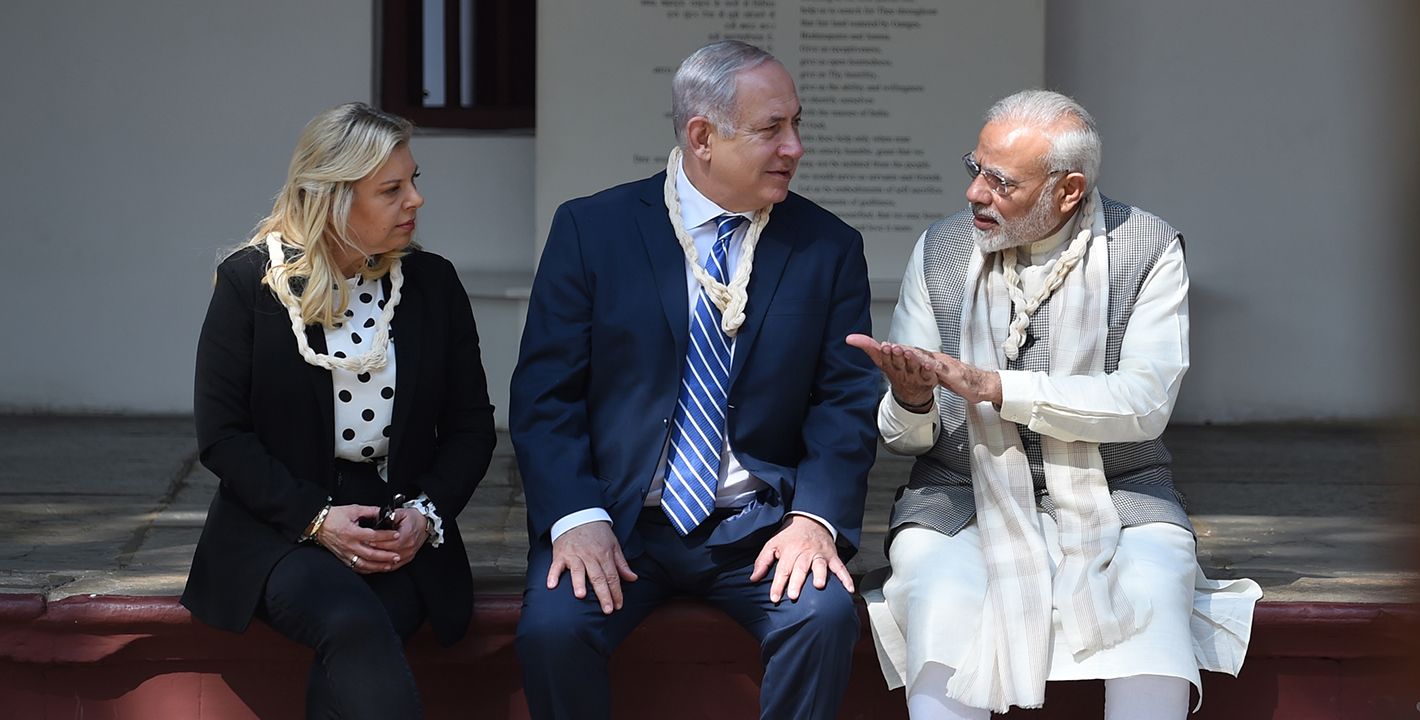
In an interview, Abhinav Pandya discusses the multiple facets of India’s ties with the Middle East.

Armenak Tokmajyan
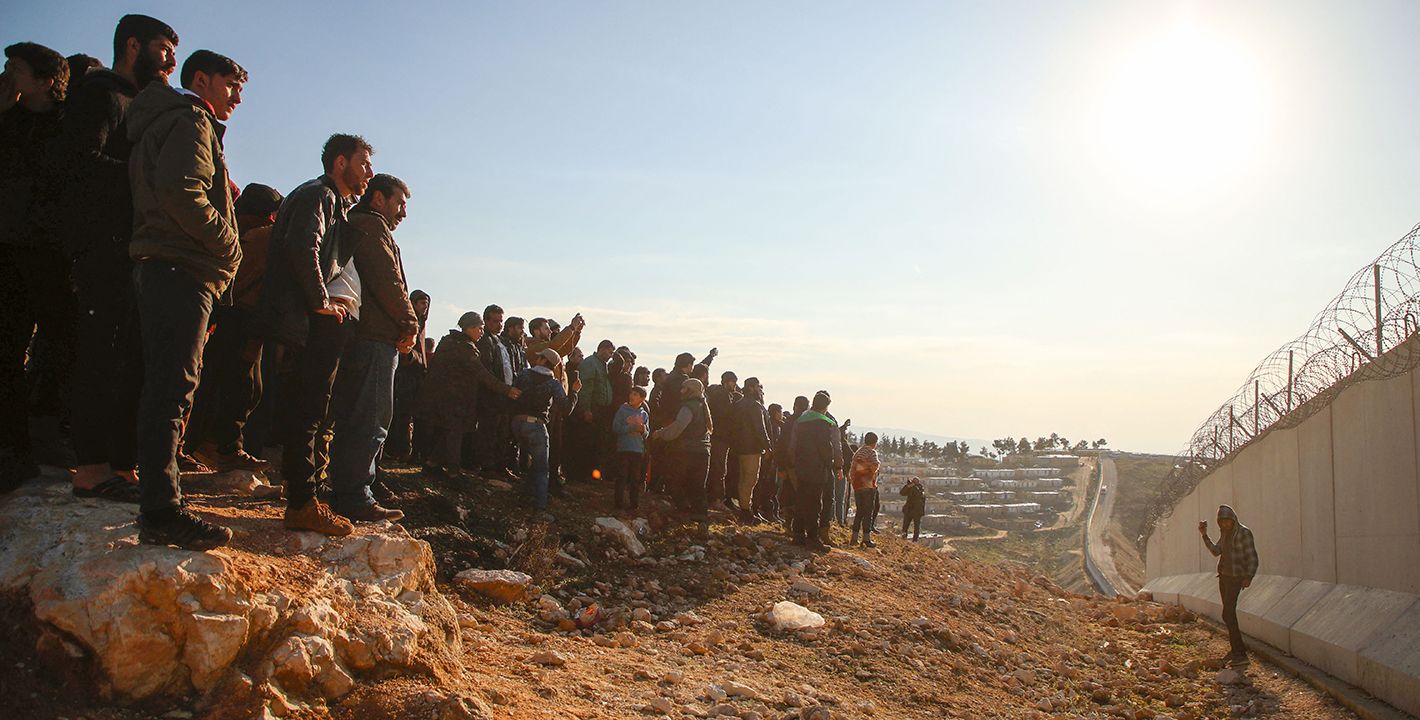
In Syria’s border regions, changes in demographics, economics, and security mean that an inter-Syrian peace process will require consensus among main regional powers that Syria must remain united, that no one side can be victorious, and that perennial instability threatens the region.
Kheder Khaddour, Armenak Tokmajyan

For many in the society, the post-Ben Ali years were mainly about successive economic crises and political instability.
Jasmine Khelil

The Gulf Cooperation Council has shifted its energy export focus to Asia, particularly India and China. This is part of a broader shift as GCC members look to expand their geopolitical alliances away from the West.

Alexandre Kateb