• Research
  • Diwan
  • About
  • Experts
Carnegie Middle East logoCarnegie lettermark logo
LebanonIran
{
  "authors": [
    "Michele Dunne"
  ],
  "type": "legacyinthemedia",
  "centerAffiliationAll": "dc",
  "centers": [
    "Carnegie Endowment for International Peace"
  ],
  "collections": [],
  "englishNewsletterAll": "menaTransitions",
  "nonEnglishNewsletterAll": "",
  "primaryCenter": "Carnegie Endowment for International Peace",
  "programAffiliation": "MEP",
  "programs": [
    "Middle East"
  ],
  "projects": [],
  "regions": [
    "North America",
    "United States",
    "Middle East"
  ],
  "topics": [
    "Foreign Policy"
  ]
}
Source: Getty

In The Media

Is Obama's Middle East Agenda Realistic?

President Obama's recent address to the Muslim world dissapointed many democracy promotion supporters, who felt it did not strongly address the issue.

Link Copied
By Michele Dunne
Published on Jun 5, 2009

Source: The New Republic TV

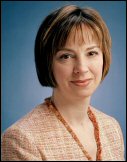
President Obama's recent address to the Muslim world dissapointed many democracy promotion supporters, who felt his speech did not strongly address the issue. As Michele Dunne explains, "This is very much a contrast with President Bush who promised a lot of support for democracy in the Middle East and promised, for example, support for activitsts who would be imprisoned by their governments... President Bush learned over time that it was very difficult to deliver that and it was very difficult to square that with some other U.S. interests. Obama is now trying to take a more low-key approach. In other words, to articulate his support for democracy as a general principle; not to directly or indirectly criticize any of the governments. The Obama people are saying that they are going to pursue this issue but a lot more quietly than Bush did."

About the Author

Michele Dunne

Former Nonresident Scholar, Middle East Program

Michele Dunne was a nonresident scholar in Carnegie’s Middle East Program, where her research focuses on political and economic change in Arab countries, particularly Egypt, as well as U.S. policy in the Middle East.

    Recent Work

  • Research
    Islamic Institutions in Arab States: Mapping the Dynamics of Control, Co-option, and Contention
      • +6

      Yasmine Farouk, Nathan J. Brown, Maysaa Shuja Al-Deen, …
  • Research
    From Hardware to Holism: Rebalancing America’s Security Engagement With Arab States
      • +8

      Robert Springborg, Emile Hokayem, Becca Wasser, …

Michele Dunne
Former Nonresident Scholar, Middle East Program
Michele Dunne
Foreign PolicyNorth AmericaUnited StatesMiddle East

Carnegie does not take institutional positions on public policy issues; the views represented herein are those of the author(s) and do not necessarily reflect the views of Carnegie, its staff, or its trustees.

More Work from Malcolm H. Kerr Carnegie Middle East Center

  • Commentary
    Diwan
    Shockwaves Across the Gulf

    The countries in the region are managing the fallout from Iranian strikes in a paradoxical way.

      • Angie Omar

      Angie Omar

  • Commentary
    Diwan
    The U.S. Risks Much, but Gains Little, with Iran

    In an interview, Hassan Mneimneh discusses the ongoing conflict and the myriad miscalculations characterizing it.

      Michael Young

  • Commentary
    Diwan
    The Greatest Dangers May Lie Ahead

    In an interview, Nicole Grajewski discusses the military dimension of the U.S. and Israeli attacks on Iran.

      Michael Young

  • Commentary
    Diwan
    Firepower Against Willpower

    In an interview, Naysan Rafati assesses the first week that followed the U.S. and Israeli attack on Iran.

      Michael Young

  • Commentary
    Diwan
    What Is Israel’s Plan in Lebanon?

    At heart, to impose unconditional surrender on Hezbollah and uproot the party among its coreligionists.

      Yezid Sayigh

Get more news and analysis from
Malcolm H. Kerr Carnegie Middle East Center
Carnegie Middle East logo, white
  • Research
  • Diwan
  • About
  • Experts
  • Projects
  • Events
  • Contact
  • Careers
  • Privacy
  • For Media
Get more news and analysis from
Malcolm H. Kerr Carnegie Middle East Center
© 2026 Carnegie Endowment for International Peace. All rights reserved.







