• Research
  • Diwan
  • About
  • Experts
Carnegie Middle East logoCarnegie lettermark logo
LebanonIran
{
  "authors": [
    "Karim Sadjadpour"
  ],
  "type": "legacyinthemedia",
  "centerAffiliationAll": "dc",
  "centers": [
    "Carnegie Endowment for International Peace"
  ],
  "collections": [],
  "englishNewsletterAll": "menaTransitions",
  "nonEnglishNewsletterAll": "",
  "primaryCenter": "Carnegie Endowment for International Peace",
  "programAffiliation": "MEP",
  "programs": [
    "Middle East"
  ],
  "projects": [],
  "regions": [
    "North America",
    "United States",
    "Middle East",
    "Iran"
  ],
  "topics": [
    "Political Reform",
    "Foreign Policy"
  ]
}
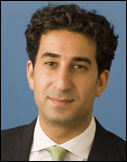
Source: Getty

In The Media

Obama Has 'Accentuated Iran's Internal Rifts'

Whereas the Bush administration united Iran's disparate political factions against a commmon threat, Obama's overtures have accentuated deep internal rifts amongst Iranian political elites.

Link Copied
By Karim Sadjadpour
Published on Jun 22, 2009

Source: BBC Radio 4 Today

In addition to debates that have arisen in Washington over how hard-hitting President Obama should be in response to the situation in Iran, there is also debate over whether the existence of these protests can be attributed to the election of Obama himself. Karim Sadjadpour comments, "I do think there is a real link between the election of Barack Obama and some of the fissures which we are seeing now in Tehran. The argument I would make is that whereas the Bush administration united Iran's disparate political factions against a common threat, Obama's overtures to Iran have really accentuated these deep internal rifts amongst Iranian political elites. Between a small minority faction that wants to continue this "death to America" culture of 1979 and the vast majority of the Iranian population, but I would also argue the vast majority of the Iranian political elite."

About the Author

Karim Sadjadpour

Senior Fellow, Middle East Program

Karim Sadjadpour is a senior fellow at the Carnegie Endowment for International Peace, where he focuses on Iran and U.S. foreign policy toward the Middle East.

    Recent Work

  • Q&A
    What’s Keeping the Iranian Regime in Power—for Now

      Aaron David Miller, Karim Sadjadpour, Robin Wright

  • Q&A
    How Washington and Tehran Are Assessing Their Next Steps

      Aaron David Miller, David Petraeus, Karim Sadjadpour

Karim Sadjadpour
Senior Fellow, Middle East Program
Karim Sadjadpour
Political ReformForeign PolicyNorth AmericaUnited StatesMiddle EastIran

Carnegie does not take institutional positions on public policy issues; the views represented herein are those of the author(s) and do not necessarily reflect the views of Carnegie, its staff, or its trustees.

More Work from Malcolm H. Kerr Carnegie Middle East Center

  • Commentary
    Diwan
    Shockwaves Across the Gulf

    The countries in the region are managing the fallout from Iranian strikes in a paradoxical way.

      • Angie Omar

      Angie Omar

  • Commentary
    Diwan
    The U.S. Risks Much, but Gains Little, with Iran

    In an interview, Hassan Mneimneh discusses the ongoing conflict and the myriad miscalculations characterizing it.

      Michael Young

  • Commentary
    Diwan
    The Greatest Dangers May Lie Ahead

    In an interview, Nicole Grajewski discusses the military dimension of the U.S. and Israeli attacks on Iran.

      Michael Young

  • Commentary
    Diwan
    Firepower Against Willpower

    In an interview, Naysan Rafati assesses the first week that followed the U.S. and Israeli attack on Iran.

      Michael Young

  • Commentary
    Diwan
    What Is Israel’s Plan in Lebanon?

    At heart, to impose unconditional surrender on Hezbollah and uproot the party among its coreligionists.

      Yezid Sayigh

Get more news and analysis from
Malcolm H. Kerr Carnegie Middle East Center
Carnegie Middle East logo, white
  • Research
  • Diwan
  • About
  • Experts
  • Projects
  • Events
  • Contact
  • Careers
  • Privacy
  • For Media
Get more news and analysis from
Malcolm H. Kerr Carnegie Middle East Center
© 2026 Carnegie Endowment for International Peace. All rights reserved.







