• Research
  • Diwan
  • About
  • Experts
Carnegie Middle East logoCarnegie lettermark logo
LebanonIran
{
  "authors": [
    "Karim Sadjadpour"
  ],
  "type": "legacyinthemedia",
  "centerAffiliationAll": "dc",
  "centers": [
    "Carnegie Endowment for International Peace"
  ],
  "collections": [],
  "englishNewsletterAll": "menaTransitions",
  "nonEnglishNewsletterAll": "",
  "primaryCenter": "Carnegie Endowment for International Peace",
  "programAffiliation": "MEP",
  "programs": [
    "Middle East"
  ],
  "projects": [],
  "regions": [
    "Middle East",
    "Iran"
  ],
  "topics": [
    "Political Reform"
  ]
}
Source: Getty

In The Media

Viewpoints: What Next for Iran

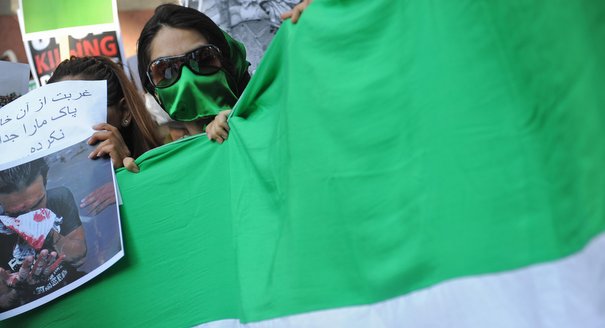
The Iranian opposition is entering a new phase. Instead of mass rallies they are now focusing on civil disobedience, including strikes among merchants, labourers, and key industries of the Iranian economy.

Link Copied
By Karim Sadjadpour
Published on Jun 23, 2009

Source: BBC News

Viewpoints: What Next for Iran There is an uneasy stand-off in Iran after a deadly weekend of clashes, and skirmishes on Monday between police and protestors. Karim Sadjadpour explains that although the protests may be decreasing in size, the force of the opposition is unlikely to calm down; "the demonstrations may decrease in scale, given the regime's ability to limit people's movements in Tehran (which as a city is large and spread out, like Los Angeles) and prevent large masses of people from gathering in the same place. There are already signs that the opposition is entering a new phase. Instead of mass rallies they are now focusing on civil disobedience, including strikes among merchants (bazaris), labourers, and key arteries of the Iranian economy (like the petroleum industry and oil ministry). So while the crowds may not be as large as before, the conflict is certainly far from being resolved."
 

About the Author

Karim Sadjadpour

Senior Fellow, Middle East Program

Karim Sadjadpour is a senior fellow at the Carnegie Endowment for International Peace, where he focuses on Iran and U.S. foreign policy toward the Middle East.

    Recent Work

  • Q&A
    What’s Keeping the Iranian Regime in Power—for Now

      Aaron David Miller, Karim Sadjadpour, Robin Wright

  • Q&A
    How Washington and Tehran Are Assessing Their Next Steps

      Aaron David Miller, David Petraeus, Karim Sadjadpour

Karim Sadjadpour
Senior Fellow, Middle East Program
Karim Sadjadpour
Political ReformMiddle EastIran

Carnegie does not take institutional positions on public policy issues; the views represented herein are those of the author(s) and do not necessarily reflect the views of Carnegie, its staff, or its trustees.

More Work from Malcolm H. Kerr Carnegie Middle East Center

  • Commentary
    Diwan
    What Does the Strait of Hormuz’s Closure Mean?

    In an interview, Roger Diwan discusses where the global economy may be going in the third week of the U.S.-Israeli war with Iran.

      Nur Arafeh

  • Commentary
    Diwan
    Tehran’s Easy Targets

    In an interview, Andrew Leber discusses the impact the U.S. and Israeli war against Iran is having on Arab Gulf states.

      Michael Young

  • Commentary
    Diwan
    The Gulf Conflict and the South Caucasus

    In an interview, Sergei Melkonian discusses Armenia’s and Azerbaijan’s careful balancing act among the United States, Israel, and Iran.

      Armenak Tokmajyan

  • Commentary
    Diwan
    Israel’s Forever Wars

    The country’s strategy is no longer focused on deterrence and diplomacy, it’s about dominance and degradation.

      Nathan J. Brown

  • Commentary
    Diwan
    Shockwaves Across the Gulf

    The countries in the region are managing the fallout from Iranian strikes in a paradoxical way.

      • Angie Omar

      Angie Omar

Get more news and analysis from
Malcolm H. Kerr Carnegie Middle East Center
Carnegie Middle East logo, white
  • Research
  • Diwan
  • About
  • Experts
  • Projects
  • Events
  • Contact
  • Careers
  • Privacy
  • For Media
Get more news and analysis from
Malcolm H. Kerr Carnegie Middle East Center
© 2026 Carnegie Endowment for International Peace. All rights reserved.










