

Commentary
Huawei pushed hard to enter the Egyptian data centers market, until the Americans made a better offer.
Angie Omar
{
  "authors": [
    "Eduardo Zepeda",
    "Timothy A. Wise",
    "Kevin P. Gallagher"
  ],
  "type": "other",
  "centerAffiliationAll": "",
  "centers": [
    "Carnegie Endowment for International Peace"
  ],
  "collections": [],
  "englishNewsletterAll": "",
  "nonEnglishNewsletterAll": "",
  "primaryCenter": "Carnegie Endowment for International Peace",
  "programAffiliation": "",
  "programs": [],
  "projects": [],
  "regions": [
    "North America",
    "United States",
    "South America"
  ],
  "topics": [
    "Economy",
    "Trade"
  ]
}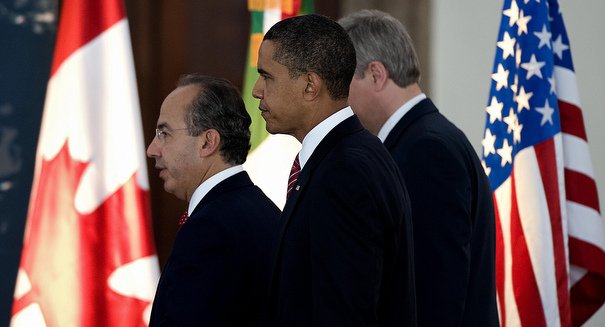
Source: Getty
Mexico’s disappointing experience with NAFTA underscores the need to reform trade agreements between the United States and developing countries.
Despite an increase in trade, foreign investment, and productivity since NAFTA took effect in 1994, Mexico has been disappointed by slow economic growth and weak job creation. In addition, recession in the United States is hitting Mexico particularly hard, given its dependence on its northern neighbor.
Mexico’s experience with NAFTA underscores the need to reform trade agreements between the United States and developing countries. There are five things to remember in future trade agreements with the United States, contends a new paper by Eduardo Zepeda of the Carnegie Endowment and Timothy A. Wise and Kevin P. Gallagher of Tufts’ Global Development and Environment Institute:
“There is increasing international recognition that trade policy in the Western Hemisphere should be overhauled,” conclude the authors, based on this comprehensive review of Mexico’s economic performance under NAFTA. “Now is the time for the U.S., Canadian, Mexican, and other developing country governments to take a fresh look at NAFTA’s experience and shape trade and development policies to better meet the needs of their people in a manner that respects the right to development, job creation, and the environment.”
Former Senior Associate, Trade, Equity and Development Program
Zepeda is inter-regional policy coordinator of the Development Policy and Analysis Division, Department of Economic and Social Affairs at the United Nations General Secretariat. He was previously a senior associate in the Trade, Equity, and Development Program at the Carnegie Endowment for International Peace.
Timothy A. Wise
Global Development and Environment Institute
Kevin P. Gallagher
Carnegie does not take institutional positions on public policy issues; the views represented herein are those of the author(s) and do not necessarily reflect the views of Carnegie, its staff, or its trustees.

Huawei pushed hard to enter the Egyptian data centers market, until the Americans made a better offer.

Angie Omar

Middle Eastern states should welcome an accelerated U.S. disengagement from their region.

Michael Young

In an interview, former ambassador Charles Freeman assesses the Trump administration’s war against Iran.
Michael Young

By failing to address Palestinian representation, the current process is bound to lead to just another temporary arrangement.

Nathan J. Brown

The armed forces champion a form of capitalism that is generating revenue, but its reliance on rent faces diminishing returns, leaving the country with massive sunk costs and deferred returns, deepening dependency on external borrowing.

Yezid Sayigh