

Commentary
Michael Pettis
{
  "authors": [
    "Michael Pettis"
  ],
  "type": "legacyinthemedia",
  "centerAffiliationAll": "dc",
  "centers": [
    "Carnegie Endowment for International Peace"
  ],
  "collections": [],
  "englishNewsletterAll": "asia",
  "nonEnglishNewsletterAll": "",
  "primaryCenter": "Carnegie Endowment for International Peace",
  "programAffiliation": "AP",
  "programs": [
    "Asia"
  ],
  "projects": [],
  "regions": [
    "East Asia",
    "China"
  ],
  "topics": [
    "Economy"
  ]
}
Source: Getty
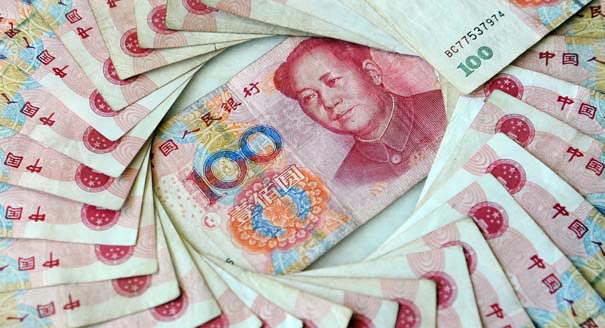
There is intense speculation that China's economic rise will radically transform the world’s capital markets and financial system, but such predictions are unlikely to come true in the foreseeable future.
Source: Financial Times

But this won’t happen. Beijing is skeptical of arguments supporting rapid financial and monetary deregulation, and policymakers continue to measure the usefulness of the financial system mainly to the extent that it serves the needs of rapid growth in manufacturing and infrastructure. This means continued heavy-handed control of the capital allocation process and the level of interest rates, the relinquishing of which are the two key measures of real financial sector liberalisation.
China’s main impact on the global financial system will continue, for the foreseeable future, to be limited to its massive accumulation of reserves. And because the US is still the only economy large and flexible enough to accommodate the high trade surpluses that the Chinese economy relies on, it will continue to accumulate dollars.
This will affect global markets significantly, to be sure. With nearly $3,000bn stuffed away in the central bank, the sovereign wealth fund, and required bank reserves denominated in dollars, Chinese investment decisions cannot fail to have an important impact on asset markets, risk premiums and currency values. For the most part however we can expect little change from existing investment strategies except to see, perhaps, a pick-up in the currently-low level of foreign acquisitions by Chinese companies.
There is, however, likely to be one major change, and that is that the pace of reserve accumulation will slow sharply over the next few years, mainly because the US trade deficit will contract, bringing with it a lower Chinese trade surplus. In addition less speculative money will pour into China as a result of slower growth and rising risks to the financial system. With less money recycled abroad by China’s central bank, part of the liquidity that underpinned the asset bubbles of the past decade will dissipate.
As for the impact of Chinese banks abroad, China’s financial system is still heavily controlled and highly regulated, leaving Chinese banks little prepared for the ferocious competition typical of international markets. Despite important efforts by the likes of CICC, Shenyin Wanguo, CCB and BoCI, there is still a long ways to go before they are truly international players.
In addition, Chinese regulators seem eager to avoid the mistakes made by Japanese banks in the 1980s when, stuffed like Chinese banks today with low-cost deposits and limited investment opportunities at home, they extended financing at low spreads to risky foreign borrowers. There will of course be some foolish international lending. Banks stuffed with cash have always had a hard time turning away lending opportunities, but Chinese regulators worry about too-rapid international growth and will probably try to resist overexcited expansion plans.
More importantly, China’s response to the global crisis involved an unprecedented expansion in credit, which is likely to have exacerbated the country’s underlying imbalances. This means that within two or three years Chinese banks are going to be faced simultaneously with the double whammy of slowing economic growth and rising non-performing loans. This will put a damper on international risk-taking.
The area that probably has generated the most excitement from financial-market players has been reform and liberalisation in the domestic financial markets, with many foreign banks hoping that a rapid opening of the domestic markets will lead to a huge new arena for global investment banks, but here too it pays to be cautious. A number of commentators have pointed excitedly to the rapid pace of change and reform in the past five years – the permitting of foreign institutions to invest in China via the QFII program, of Chinese institutions to invest abroad via the QDII program, the gradual opening up of the corporate bond markets, the moves towards derivatives, short selling, and margin trading, etc.
But here too we should be cautious. Serious reform to the domestic financial system would require a liberalisation of interest rates and a significant reorientation in the governance structure of banks. On these two counts it is hard to argue that any meaningful change has taken place in the past few years, and until there is real change, the domestic markets will not have meaningfully advanced.
The China story has generated so much excitement and dread abroad that it has become too easy to fantasise massive change in every field, but observers would do well to be skeptical. China’s financial system is not like its manufacture of tradeable goods. It is much more difficult to fit radical liberalization and opening up of the financial markets into the social and political needs of China’s policymakers.

Nonresident Senior Fellow, Carnegie China
Michael Pettis is a nonresident senior fellow at the Carnegie Endowment for International Peace. An expert on China’s economy, Pettis is professor of finance at Peking University’s Guanghua School of Management, where he specializes in Chinese financial markets.
Recent Work
Michael Pettis
Michael Pettis

The armed forces champion a form of capitalism that is generating revenue, but its reliance on rent faces diminishing returns, leaving the country with massive sunk costs and deferred returns, deepening dependency on external borrowing.

Yezid Sayigh

In an interview, Ishac Diwan looks at the merits and flaws in the draft legislation distributing losses from the financial collapse.

Michael Young
Mustaqbal Misr has expanded its portfolio with remarkable speed, but a lack of transparency remains.
Yezid Sayigh

Arab diaspora business communities in Egypt often mirror the same systemic challenges facing Egyptian businesses.

Nur Arafeh, Yezid Sayigh, Qaboul al-Absi, …

Largely characterized thus far by a single-minded focus on extractivism, Riyadh must commit to greater equitability in its approach to investment and development deals with Sudan, Ethiopia, and Eritrea.

Hesham Alghannam