• Research
  • Diwan
  • About
  • Experts
Carnegie Middle East logoCarnegie lettermark logo
LebanonIran
{
  "authors": [
    "Christopher Boucek"
  ],
  "type": "legacyinthemedia",
  "centerAffiliationAll": "dc",
  "centers": [
    "Carnegie Endowment for International Peace",
    "Malcolm H. Kerr Carnegie Middle East Center"
  ],
  "collections": [],
  "englishNewsletterAll": "menaTransitions",
  "nonEnglishNewsletterAll": "",
  "primaryCenter": "Carnegie Endowment for International Peace",
  "programAffiliation": "MEP",
  "programs": [
    "Middle East"
  ],
  "projects": [],
  "regions": [
    "Middle East",
    "Yemen",
    "Gulf"
  ],
  "topics": [
    "Security",
    "Political Reform",
    "Foreign Policy"
  ]
}
Source: Getty

In The Media

Yemen's Deteriorating Security, Economy Could Fuel Terrorism

Yemen’s stability is threatened by multiple security and economic challenges, ranging from a rapidly growing population to imminent economic collapse, and immediate and sustained international attention is needed to prevent Yemen from becoming a failed state.

Link Copied
By Christopher Boucek
Published on Jan 2, 2010

Source: The Washington Post

Yemen's Deteriorating Security, Economy Could FuelYemen's problems are many, and some are already spreading beyond its borders. Security and stability are deteriorating. The population is growing rapidly. The economy is collapsing. There are few good options today; things will look worse tomorrow. Immediate and sustained international attention is needed to at least lessen the impact of some problems.

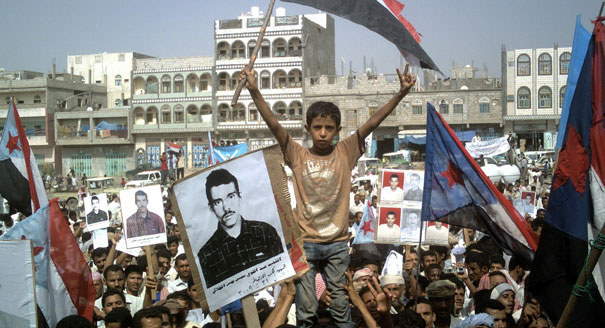
Yemen is a weak state with little history of central government control. The government's first priorities have been a civil war in the north and a growing secessionist movement in the south; lower on the list has been confronting al-Qaeda, which is now resurgent. The government does not fully control all territory, nor does it have the authority or capacity to adequately deliver social services in many rural areas. Organizations inspired or directed by al-Qaeda have sought refuge in undergoverned spaces.
 
Spending is not directed toward the root causes of instability but toward war costs, accelerating the economic collapse. Petroleum sales supply the bulk of government revenue, but oil reserves are shrinking and there has been little serious planning for a post-oil economy. A large deficit is forecast for next year, and foreign currency reserves are being spent at an alarming rate. Corruption is a major problem. Separately, mismanagement, rising consumption, increased urbanization and poor irrigation practices are contributing to dire water shortages. Sanaa may be the first capital in modern history to run out of water. The population, most of which is under 30, is expected to double in the next 20 years. Meanwhile, unemployment is on par with levels in the United States during the Depression.
 
Yemen is often considered a failing state. Its stability should be a critical concern for the United States. The international community needs an integrated and comprehensive approach that addresses both the immediate security issues and the underlying sources of instability and militancy. While military and counterterrorism operations are critical, long-term development assistance is also necessary.
 
The United States can support police reforms, help to professionalize the prison service, and assist in implementing effective counterterrorism laws. Coast guard and border officials also need quiet aid in controlling smuggling, trafficking and illicit migration. The international community needs to build local capacity in Yemen before it is too late.

About the Author

Christopher Boucek

Former Associate, Middle East Program

Boucek was an associate in the Carnegie Middle East Program where his research focused on security challenges in the Arabian Peninsula and Northern Africa.

    Recent Work

  • Q&A
    Yemen After Saleh’s Return and Awlaki’s Exit

      Christopher Boucek

  • Q&A
    Rivals—Iran vs. Saudi Arabia

      Christopher Boucek, Karim Sadjadpour

Christopher Boucek
Former Associate, Middle East Program
Christopher Boucek
SecurityPolitical ReformForeign PolicyMiddle EastYemenGulf

Carnegie does not take institutional positions on public policy issues; the views represented herein are those of the author(s) and do not necessarily reflect the views of Carnegie, its staff, or its trustees.

More Work from Malcolm H. Kerr Carnegie Middle East Center

  • Commentary
    Diwan
    A Military Balance Sheet in the U.S. and Israeli War With Iran

    In an interview, Jim Lamson discusses the ongoing regional conflict and sees an unclear picture when it comes to winners and losers. 

      Michael Young

  • Article
    Kuwait’s Bidun in the Face of Climate Change are Invisible, yet Exposed

    Mitigating the repercussions of climate change in Kuwait is crucial for lessening economic disparities and achieving social justice.

      Courtney Freer

  • Commentary
    Diwan
    The United States and Iran Have Agreed to a Two-Week Ceasefire

    Spot analysis from Carnegie scholars on events relating to the Middle East and North Africa.

      Michael Young

  • Commentary
    Diwan
    What Does the Strait of Hormuz’s Closure Mean?

    In an interview, Roger Diwan discusses where the global economy may be going in the third week of the U.S.-Israeli war with Iran.

      Nur Arafeh

  • Commentary
    Diwan
    Tehran’s Easy Targets

    In an interview, Andrew Leber discusses the impact the U.S. and Israeli war against Iran is having on Arab Gulf states.

      Michael Young

Get more news and analysis from
Malcolm H. Kerr Carnegie Middle East Center
Carnegie Middle East logo, white
  • Research
  • Diwan
  • About
  • Experts
  • Projects
  • Events
  • Contact
  • Careers
  • Privacy
  • For Media
Get more news and analysis from
Malcolm H. Kerr Carnegie Middle East Center
© 2026 Carnegie Endowment for International Peace. All rights reserved.