

Q&A
Suzanne Maloney, Aaron David Miller, Karim Sadjadpour
{
  "authors": [
    "Karim Sadjadpour"
  ],
  "type": "legacyinthemedia",
  "centerAffiliationAll": "dc",
  "centers": [
    "Carnegie Endowment for International Peace",
    "Malcolm H. Kerr Carnegie Middle East Center"
  ],
  "collections": [],
  "englishNewsletterAll": "menaTransitions",
  "nonEnglishNewsletterAll": "",
  "primaryCenter": "Carnegie Endowment for International Peace",
  "programAffiliation": "MEP",
  "programs": [
    "Middle East"
  ],
  "projects": [],
  "regions": [
    "Middle East",
    "Iran",
    "Gulf"
  ],
  "topics": [
    "Nuclear Policy"
  ]
}
Source: Getty
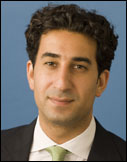
Although Iranian scientist Shahram Amiri has told conflicting stories regarding the nature of his time in the United States, his defection represents the growing dissatisfaction of the Iranian people towards the regime.
Source: CBS News
Iranian scientist Shahram Amiri, who defected to the United States to provide information on the Iranian nuclear program, has recently alleged that he was kidnapped and tortured by the CIA. However, notes Karim Sadjadpour, “this narrative is undermined by that fact that Amiri was posting YouTube videos while he was ostensibly in CIA detention.” Amiri has also released a contradictory video where he suggested that he was actually in the United States to pursue his studies. Sadjadpour believes that Amiri choose to allege kidnapping and torture against the CIA to help the Iranian government save face. Amiri had been living in the United States for a year, while his wife and child were still in Iran under extreme pressure from the regime. Ultimately, Sadjadpour concludes, the primary factor for his return was due to this pressure on his family.
It is doubtful that Amiri was a major player in the Iranian nuclear program and he undoubtedly had no decision-making role. According to Sadjadpour, “the Iranian nuclear program is very compartmentalized” and this isolates people like Amiri from divulging much information. Yet Amiri’s defection does have significance. He represents the growing disaffection that Iranians feel with the regime. “There are thousands of people like Amiri that could be lured to outside,” notes Sadjadpour.

Senior Fellow, Middle East Program
Karim Sadjadpour is a senior fellow at the Carnegie Endowment for International Peace, where he focuses on Iran and U.S. foreign policy toward the Middle East.
Recent Work


Suzanne Maloney, Aaron David Miller, Karim Sadjadpour

Aaron David Miller, Karim Sadjadpour, Robin Wright
Carnegie does not take institutional positions on public policy issues; the views represented herein are those of the author(s) and do not necessarily reflect the views of Carnegie, its staff, or its trustees.

Huawei pushed hard to enter the Egyptian data centers market, until the Americans made a better offer.

Angie Omar

Middle Eastern states should welcome an accelerated U.S. disengagement from their region.

Michael Young

In an interview, former ambassador Charles Freeman assesses the Trump administration’s war against Iran.
Michael Young

The accord represents a pivotal moment in the region to avert a security vacuum in the Gulf.


Azeema Cheema, Mohanad Hage Ali

In an interview, Jason Burke discusses his sweeping account of the “revolutionists” who so shaped the 1970s and early 1980s.
Michael Young