{
  "authors": [
    "Christopher Boucek"
  ],
  "type": "legacyinthemedia",
  "centerAffiliationAll": "dc",
  "centers": [
    "Carnegie Endowment for International Peace",
    "Carnegie Europe",
    "Malcolm H. Kerr Carnegie Middle East Center"
  ],
  "collections": [],
  "englishNewsletterAll": "menaTransitions",
  "nonEnglishNewsletterAll": "",
  "primaryCenter": "Carnegie Endowment for International Peace",
  "programAffiliation": "MEP",
  "programs": [
    "Middle East"
  ],
  "projects": [],
  "regions": [
    "Middle East",
    "Yemen",
    "Gulf"
  ],
  "topics": [
    "Security"
  ]
}
Source: Getty
In The Media
Yemen Needs More Than Our Military Support
The United States and the international community must avoid letting immediate counter-terrorism efforts swamp more important long-term development assistance and capacity-building measures in Yemen.
Yemen Needs More Than Our Military SupportAs more details emerge about the plot to send bombs concealed in cargo packages from Yemen to the US, an intense debate is under way in Washington about how to respond. Already some in the US military want to pour more counter-terrorism and military support into the country. They want to defeat the group many assume to be responsible – al-Qaeda in the Arabian Peninsula – on the field of battle. But without also addressing Yemen’s internal crises, al-Qaeda’s freedom to plot, plan and launch terrorist attacks will only grow. Indeed, a new, expensive and singular focus on hard security will make matters worse.
AQAP is an opportunistic, nimble adversary, whose capacity to attack domestic American targets is on the rise. Formed in January 2009, when al-Qaeda affiliates in Saudi Arabia and Yemen merged, it has since operated independently, with its leaders taking orders neither from Osama bin Laden nor other high-profile terrorists hiding in south Asia.
Its failed 2009 Christmas day attack on a flight destined for Detroit was hatched in Yemen, and demonstrated an early desire to attack on American soil. This plot is just the latest evidence that AQAP is now the greatest single terrorist threat to the security of the US – a greater danger even than al-Qaeda’s central leadership, currently operating in Pakistan.
Its improving ambitions and reach have also seen more successful operations in Yemen itself. This year there have been more than 40 attacks there, as AQAP has targeted energy infrastructure, foreigners and domestic security forces. It has also successfully cast US air strikes and military support – including cruise missile strikes in December 2009 – as examples of American aggression.
The group is brilliant at amplifying its message, as seen by a recent AQAP-affiliated English-language magazine calling for attacks on the US. Its powers of communication, along with growing military successes, have begun to attract increasing numbers of foreign terrorists into Yemen. AQAP and Yemen are also beginning to be a source of inspiration for extremists abroad.
AQAP thrives on Yemen’s internal disarray – the country faces both a continuing war in the north and an increasingly active secessionist movement in the south. The government’s inability to control territory provides the space al-Qaeda craves, using poverty and legitimate grievances against a repressive domestic regime to win support.
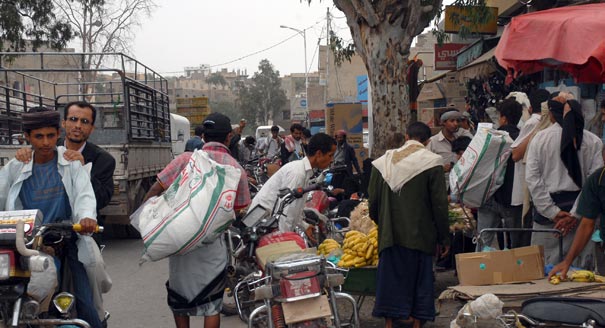
Beyond its security concerns, Yemen is on the brink of economic disaster, suffering from poor governance and quickly dwindling water supplies. Most domestic violence is linked to disputes over water access.
Despite all of this, Yemen receives nothing like the help it needs from the west. Pakistan will receive billions in US aid next year. But America plans to send only $200m in humanitarian assistance to Yemen, not even close to what is needed to contain the numerous crises that threaten its security, and our own.
The danger now is that this limited help is dwarfed by new, much larger packages of security aid. Too much attention devoted, for example, to more military assistance, or to allowing the CIA to operate its drone programme in the country, is likely to inflame the internal tensions that attracted al-Qaeda in the first place.
Instead Washington needs to help improve Yemen’s laws and legal system, advance the abilities of the police, increase economic growth, support land reform, enhance education and fight corruption. These efforts will go to the heart of al-Qaeda’s appeal and help the primary US goal of containing the risk of terrorism.
Here Saudi Arabia will be an essential partner. It already gives Yemen $2bn a year, while it was Saudi intelligence that provided the latest bomb tip-off. But the US and international community must do more to help too, by adopting a balanced approach that does not see immediate counter-terrorism efforts swamp more important long-term development assistance and capacity-building measures.
We have a short window to address the root causes of terror and instability in Yemen, not simply its consequences. If we act rashly, or we fail to act at all, that window will disappear. And then there is a real danger that Yemen could collapse, and the terrorist threat to the west sharply increase.
Boucek was an associate in the Carnegie Middle East Program where his research focused on security challenges in the Arabian Peninsula and Northern Africa.
Carnegie does not take institutional positions on public policy issues; the views represented herein are those of the author(s) and do not necessarily reflect the views of Carnegie, its staff, or its trustees.
More Work from Malcolm H. Kerr Carnegie Middle East Center