

Q&A
Stephen Tankel
{
  "authors": [
    "Stephen Tankel"
  ],
  "type": "legacyinthemedia",
  "centerAffiliationAll": "dc",
  "centers": [
    "Carnegie Endowment for International Peace"
  ],
  "collections": [],
  "englishNewsletterAll": "ctw",
  "nonEnglishNewsletterAll": "",
  "primaryCenter": "Carnegie Endowment for International Peace",
  "programAffiliation": "SAP",
  "programs": [
    "South Asia"
  ],
  "projects": [],
  "regions": [
    "South Asia",
    "India",
    "Pakistan"
  ],
  "topics": []
}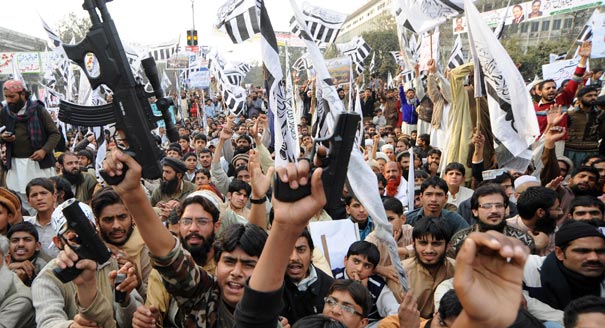
Source: Getty
Although the terrorist organization Lashkar-e-Tayiba has become more active in the global arena, it poses a particularly dangerous threat to India.
Source: Rediff News

In this interview with Rediff.com's Vicky Nanjappa, Tankel, a visiting scholar at the Carnegie Endowment for International Peace, says Pakistan has not taken any steps to dismantle the Lashkar since it still has utility vis-a-vis India.
I think several trends that were already extant at the time of 26/11 have accelerated since then.
First, the threat from Pakistan's tribal areas comes from a congress of groups acting together, such that it is often difficult to ascribe responsibility to any one outfit.
Second, we seem to be seeing increasing hybridisation in terms of targets, especially in South Asia.
For example, the targeting of foreign interests in India, which was one of the notable features of 26/11, continued with the bombing in Pune.
Third, the threat is also expanding geographically. Several years ago, Yemen and Somalia were places we worried about. Now those concerns have been borne out by attempted and successful attacks.
I think one needs to qualify this by asking: Dangerous to whom? Al Qaeda continues to be pose a greater threat to the US, but the Lashkar clearly is more dangerous to India.
I've seen Headley's testimony and I think it reinforces a lot of what we already knew or suspected. This is especially true with regard to the tensions within Lashkar and the degree to which the scale of the 26/11 attacks was fuelled by internal dynamics.
I don't know that it is one or the other. The army and the ISI (Inter Services Intelligence) have not taken steps to dismantle the Lashkar for two main reasons: First, fear of driving the group into the insurgency in Pakistan; and second, because it still has utility vis-a-vis India.
The aim is still to control the group, but I question the degree to which this control filters throughout the ranks.
There is no question that the Lashkar has grown beyond the dynamics of the India-Pakistan competition and become more active in the global jihad. Indeed, this evolution has been taking place since 9/11.
However, I'd argue that the core leadership and a significant portion of the rank-and-file remain influenced by national and regional dynamics.
So it is emerging into a more globally-oriented organisation, but evidence suggests the ambition to grow in this direction is not uniform throughout the group.
It is fair to say that factionalism in the Lashkar has increased in recent years as has freelancing. There are real disagreements about how involved to be in Afghanistan, in the insurgency in Pakistan and in the global jihad in general.
I am not sure it helps to try to compare him to Osama who at this stage is a much more inspirational figure. I doubt Kashmiri could ever play this type of role.
He is more of a military operator, and in this regard he is a very dangerous actor in his own right.
Yes, relative to last year I do think they are in a better position. That does not mean they are in a good position, but things have improved.
Pakistan's counter-insurgency capabilities have improved and it has shown greater commitment to dealing with some of the militants within its borders. For that it deserves recognition.
Unfortunately, selectivity remains the order of the day. In part this owes to a desire to avoid drawing additional outfits into the insurgency. But it also stems from the belief of some elements within the country that the use of militant proxies for geopolitical purposes remains a sound strategy.
I think that depends on where you live in the world. The Taliban is by far the most dangerous of the three in Afghanistan.
Al Qaeda is the most focused on destabilising Pakistan and executing attacks against US interests throughout the world.
Lashkar clearly poses the greatest danger to India.
To me, the more interesting and more dangerous development is the degree to which these three outfits along with a host of others are increasingly working together and blending their target selection accordingly.
Former Nonresident Scholar, South Asia Program
Tankel was a nonresident scholar at the Carnegie Endowment, where his research focuses on insurgency, terrorism, and the evolution of nonstate armed groups.
Recent Work
Stephen Tankel
Stephen Tankel
Carnegie does not take institutional positions on public policy issues; the views represented herein are those of the author(s) and do not necessarily reflect the views of Carnegie, its staff, or its trustees.
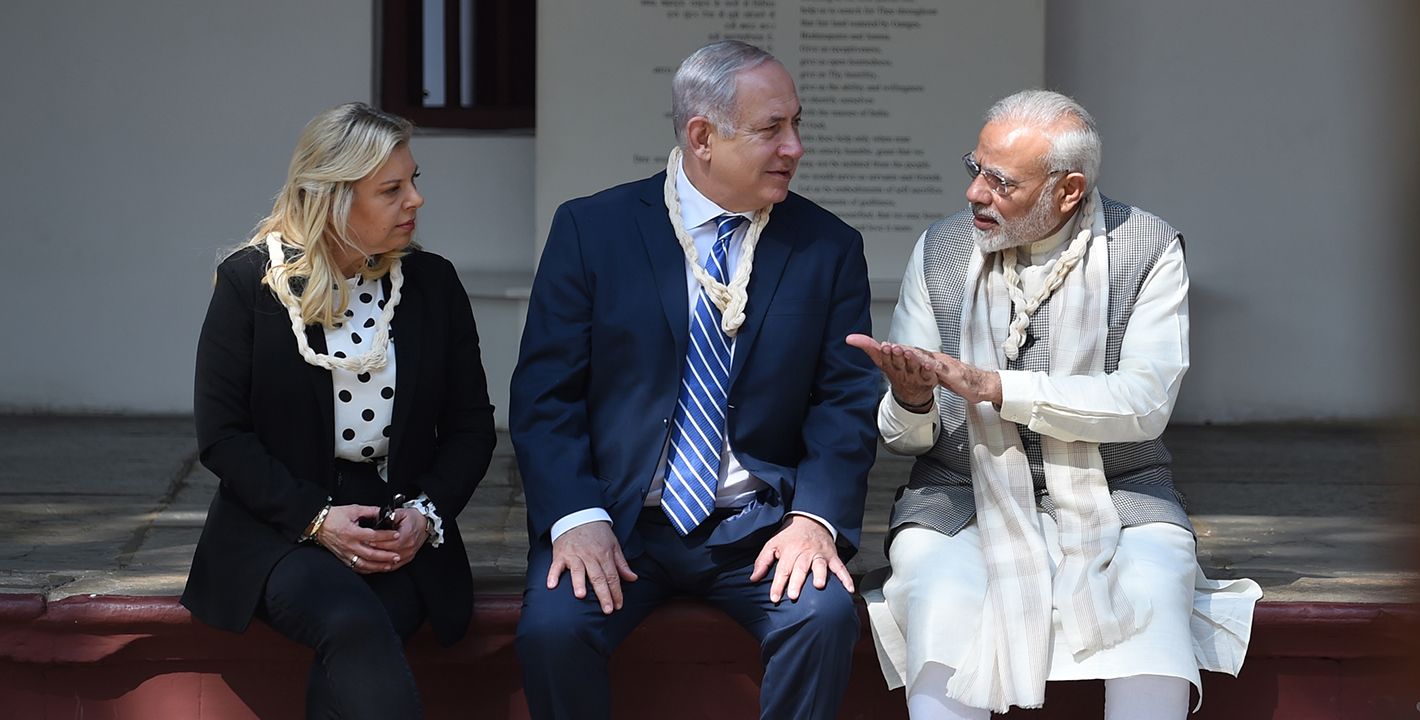
In an interview, Abhinav Pandya discusses the multiple facets of India’s ties with the Middle East.

Armenak Tokmajyan
The interaction of national armed forces and private business sectors offers a useful lens for viewing the politics of numerous countries of the so-called Global South. A rising trend of military political activism—often accompanied by military commercial activity—underlines the importance of drivers and outcomes in these relationships.

Yezid Sayigh, Hamza Meddeb

The Gulf Cooperation Council has shifted its energy export focus to Asia, particularly India and China. This is part of a broader shift as GCC members look to expand their geopolitical alliances away from the West.
Alexandre Kateb
Scholars from Carnegie’s global network comment on how the ongoing conflict between Israelis and Palestinians is affecting their areas of interest, and what the implications of this may be.



Maha Yahya, Rosa Balfour, Judy Dempsey, …
Turkey’s success in finding a role in Afghanistan could bring its leadership valuable benefits.

Marc Pierini