• Research
  • Diwan
  • About
  • Experts
Carnegie Middle East logoCarnegie lettermark logo
PalestineSyria
{
  "authors": [
    "Alejandro Foxley"
  ],
  "type": "other",
  "centerAffiliationAll": "",
  "centers": [
    "Carnegie Endowment for International Peace"
  ],
  "collections": [],
  "englishNewsletterAll": "",
  "nonEnglishNewsletterAll": "",
  "primaryCenter": "Carnegie Endowment for International Peace",
  "programAffiliation": "",
  "programs": [],
  "projects": [],
  "regions": [
    "North America",
    "South America",
    "East Asia",
    "Eastern Europe",
    "Western Europe"
  ],
  "topics": [
    "Economy"
  ]
}
Source: Getty

Other

Impact of The Global Financial Crisis: Predictions Gone Wrong

One of the most striking aspects of the global financial crisis has been how often the facts have contradicted what, according to conventional wisdom, was expected to happen.

Link Copied
By Alejandro Foxley
Published on Mar 24, 2011

When the global financial crisis struck, the purveyors of conventional wisdom had it all figured out. Latin American countries would surely mismanage the crisis, as they have in the past. Economies that established partnerships with developed countries could rely on that “insurance” against instability. The growth rate of East Asian economies would not dip below the rates reached in previous decades. And the growth rate of economies, such as Ireland’s, which had enjoyed a “good boom” prior to the crisis, would rebound quickly and relatively painlessly.

Not one of these predictions came to pass. 

Indeed, one of the striking aspects of the global financial crisis is how often the facts have contradicted what, according to conventional wisdom, was expected to happen.
  • Most Latin American countries learned lessons from past financial crises and established economic stability through sound macroeconomic policies. As a result, the downturn there lasted only fifteen months, and Latin American economies are expected to grow by 5 percent a year—faster than advanced economies.

  • Countries such as the Baltic states, which joined the EU in the 1990s, discovered that their embrace of its economic rules and reforms offered little protection from the crisis. Their economies suffered far more than those in Poland and the Czech Republic, which took a more gradual approach to partnership.

  • Middle-income economies in East Asia, despite assumptions that because they weathered the crisis so well they would continue to have high growth, have been losing competitiveness in both directions: Low-income economies in the region, with their cheaper labor, have cornered the market on low-tech products, while the developed economies, with their advanced knowledge and skills, dominate the high-tech end. Foreign direct investment, public investment, and private investment have all decreased in the middle-income economies, making growth rates of over 6 percent a year in Malaysia and Thailand far from certain. 

  • Countries considered models in their transition to advanced economies, like Ireland and Spain, were thought to be immune from the most damaging effects of a global economic crisis. But just the opposite occurred. In Ireland, many observers were misled by the country’s two booms: a “good boom” based on sound economic fundamentals, and a “bad boom” following its adaption of the euro.
Another prediction—that people will withdraw support from governing coalitions that react to the crisis by responding to markets rather than voters—may or may not prove to be wrong. Only time will tell.
Alejandro Foxley
Former Senior Associate, International Economics Program
Alejandro Foxley
EconomyNorth AmericaSouth AmericaEast AsiaEastern EuropeWestern Europe

Carnegie does not take institutional positions on public policy issues; the views represented herein are those of the author(s) and do not necessarily reflect the views of Carnegie, its staff, or its trustees.

More Work from Malcolm H. Kerr Carnegie Middle East Center

  • Commentary
    Diwan
    Unpacking Lebanon’s Gap Law

    In an interview, Ishac Diwan looks at the merits and flaws in the draft legislation distributing losses from the financial collapse.

      Michael Young
  • Commentary
    Diwan
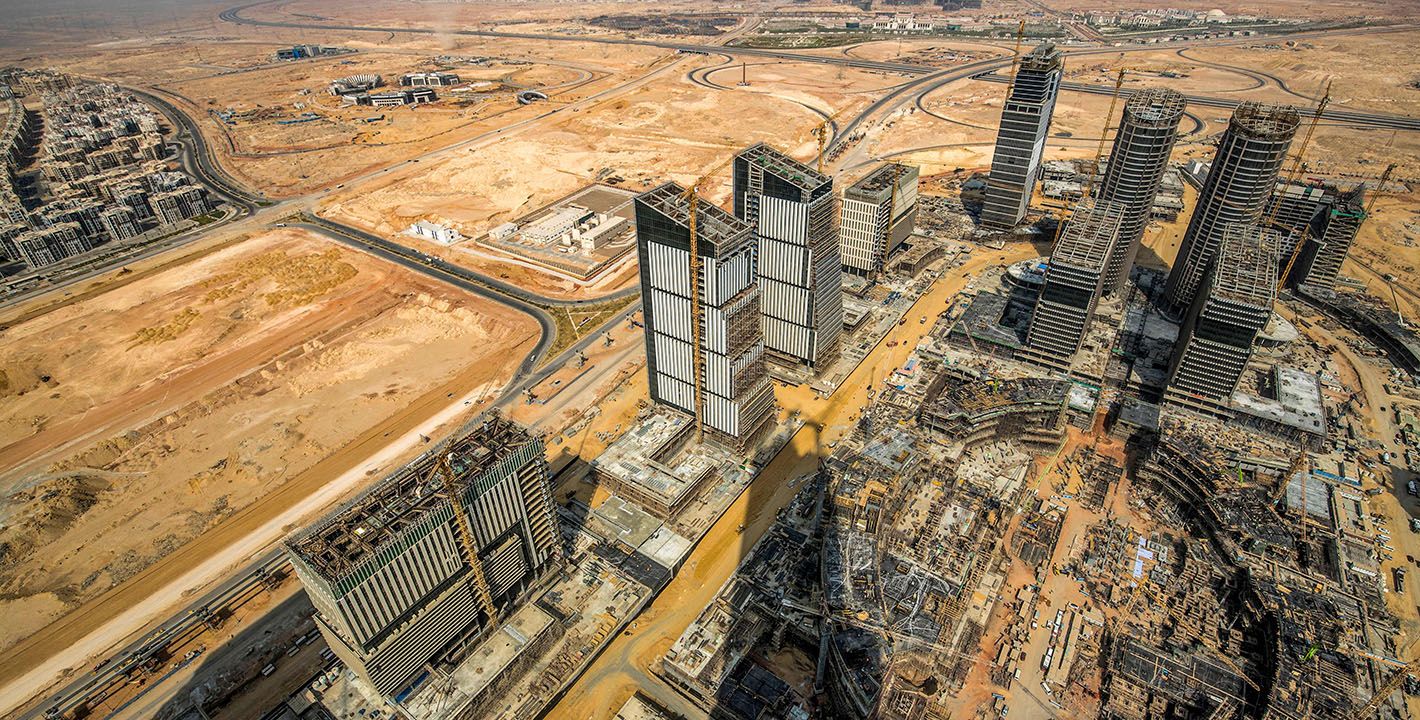
    Has Sisi Found a Competent Military Entrepreneur?

    Mustaqbal Misr has expanded its portfolio with remarkable speed, but a lack of transparency remains.

      Yezid Sayigh
  • Research
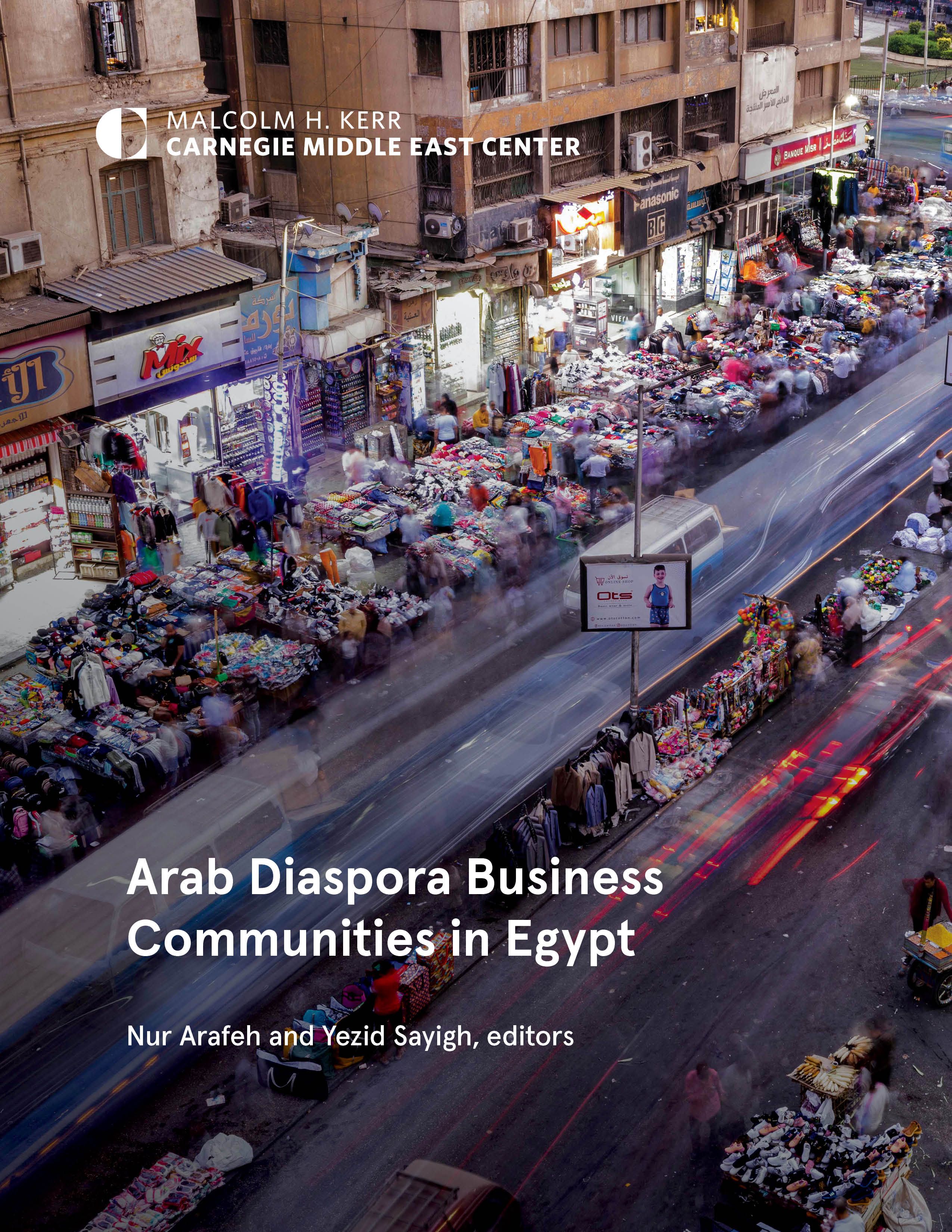
    Arab Diaspora Business Communities in Egypt

    Arab diaspora business communities in Egypt often mirror the same systemic challenges facing Egyptian businesses.

      • +4

      Nur Arafeh, Yezid Sayigh, Qaboul al-Absi, …

  • Article
    Saudi Arabia in Africa: Sound Economic and Geopolitical Strategy, or Resource Exploitation?

    Largely characterized thus far by a single-minded focus on extractivism, Riyadh must commit to greater equitability in its approach to investment and development deals with Sudan, Ethiopia, and Eritrea.

      Hesham Alghannam

  • A picture taken from a position at the Israeli border with the Gaza Strip shows the destruction due to Israeli bombardment in the besieged Palestinian territory on May 18, 2025
    Article
    Destruction, Disempowerment, and Dispossession: Disaster Capitalism and the Postwar Plans for Gaza

    Once Israel’s war in the territory is brought to an end, the foundational principles guiding reconstruction should be Palestinian self-determination, local agency, and sovereignty.

      Nur Arafeh, Mandy Turner

Get more news and analysis from
Malcolm H. Kerr Carnegie Middle East Center
Carnegie Middle East logo, white
  • Research
  • Diwan
  • About
  • Experts
  • Projects
  • Events
  • Contact
  • Careers
  • Privacy
  • For Media
Get more news and analysis from
Malcolm H. Kerr Carnegie Middle East Center
© 2026 Carnegie Endowment for International Peace. All rights reserved.