

Commentary
Uri Dadush
{
  "authors": [
    "Uri Dadush"
  ],
  "type": "legacyinthemedia",
  "centerAffiliationAll": "",
  "centers": [
    "Carnegie Endowment for International Peace",
    "Carnegie Europe"
  ],
  "collections": [],
  "englishNewsletterAll": "",
  "nonEnglishNewsletterAll": "",
  "primaryCenter": "Carnegie Endowment for International Peace",
  "programAffiliation": "",
  "programs": [],
  "projects": [],
  "regions": [
    "Western Europe",
    "France",
    "Germany",
    "Europe",
    "North America"
  ],
  "topics": [
    "Economy",
    "Trade",
    "EU"
  ]
}
Source: Getty
A failure by Italy to finance its debt could cause a massive banking crisis that could spell the end of the euro, but Italy's problems are too severe to be remedied by any simple solutions.
Source: Foreign Policy

The problem is that Italy may be too big to save. The country faced interest rates in excess of 6 percent until the European Central Bank intervened, and if Greece and Ireland are any guide, it could find itself priced out of international debt markets in just a few months. If Italy succumbs, Spain will almost certainly follow. France -- whose credit spreads against Germany have widened substantially in the last month -- could be next. And France's banking sector is especially exposed to Spain and Italy, which is one reason that President Nicolas Sarkozy called an all-hands-on-deck emergency cabinet meeting on Wednesday, Aug. 10.
Unfortunately, no tinkering with the European Financial Stability Facility (EFSF) and its bailout terms can save Italy, which has estimated financing needs over the next three years that are more than double the size of the current fund's lending capacity. The cost of bailing out Italy and Spain may be $1.4 trillion and $700 billion, respectively, which would amount to some 25 percent of the eurozone core's GDP. This sum is not only politically inconceivable, but it would also undermine the debt-carrying capacity of the core. Greece's failed bailout has not encouraged policymakers to travel down this path, either.
So, what now? In the best of all worlds, Italy would swiftly undertake the reforms that have eluded it for decades. It would achieve and maintain a balanced budget starting in 2013 under a provision newly enshrined in its Constitution. But such as constitutional amendment requires an elaborate approval process through both chambers of the Italian Parliament and would take many months. If this did come to pass, Italy would likely then reach a manageable debt-to-GDP ratio of around 85 percent within 10 years. At the same time, labor-market reforms would allow productivity growth to exceed wages by 1.5 percent a year -- about what is needed to reverse Italy's loss of competitiveness since the euro was introduced in 1999.
Markets, however, see such action as too little too late and the rosy predictions as the triumph of hope over experience. As a result, they will demand that Italy continue to pay very high interest rates. Excluding the "Titanic" solution -- under which Italy defaults and, as Finance Minister Giulio Tremonti has intimated, even the first-class passengers drown -- only three remedies exist. Each of these, however, carries some nasty side effects.
The first option is to monetize Italy's debt. This would require the European Central Bank (ECB) to buy Italian debt in unlimited quantities, funding its purchases by firing up its printing press. If the ECB pledge is believed and Italian reforms succeed, the purchases might turn out to be small and the ECB could even make a profit on them. But the ECB could also end up having to buy bonds costing hundreds of billions of euros yet of dubious value. Such a step would constitute an enormous bet, essentially imposing a large inflation tax on all Europeans for Italy's profligacy. It also would represent a clear abrogation of sovereignty by an agency that is formally forbidden from bailing out governments. What's more, after essentially being handed a blank check, Italy would have few incentives to undertake its own reforms.
The second option is a fiscal union in which eurozone governments would fund themselves through jointly issued and guaranteed "euro bonds." So, for example, governments would agree that half of their new funding needs would be supplied by these euro bonds. This would mean that if Italy couldn't repay its part of a maturing euro bond, other countries would step in; they would also have a say in Italian fiscal policy and vice versa.
This second scheme would have to be approved by national parliaments. Its merit is transparency. And unlike the first option, the incentives to reform would only be partially diluted. Moreover, as old debt matured, eventually (in our example) half of all eurozone government debt would be jointly owed, a proportion that could be allowed to rise in the future to reach 100 percent, completing a fiscal union in which all eurozone government debt would be jointly owed. But this option entails a higher financing cost for Germany and other core countries, and it also places a big contingent liability on them. The Germans, Dutch, and Finns, especially, are in no mood to provide cover for countries that they see as profligate and undisciplined. The scheme could come under legal challenge in Germany's supreme court. So, though this is probably the most effective solution, barring some sea change in European politics, its chances are slim.
The final option is to call in the cavalry -- namely, the entire G-20 and the IMF. The cost of Italy's bailout would be shared between all these groups, which have a shared interest in staving off the enormous global repercussions of an Italian default.
Whether this option is politically feasible depends on the share of the bailout that the G-20 and IMF would be asked to carry. The cost of this option is that Europeans would lose control over policies of their own economic union. After all, the solution would impose tough conditions not just on Italy, but on all eurozone countries. The G-20 could very well impose conditions that require Europe to making progress on a fiscal union and labor mobility, seeing these steps as essential to sustaining the continent's monetary union. While Spain and Italy might draw a big sigh of relief at the sight of the G-20 cavalry, Germany and France would cringe at the humiliation.
But the scary part is that Italy's problems are too severe to yield to just one of these remedies. If the remedies are combined, however, then -- along with domestic reforms -- they might just be enough to provide Italy and the eurozone a way out of this crisis. In fact, this combination therapy is already being deployed to a degree greater than most observers appreciate -- through the ECB's emergency facilities in support of banks and its purchase of government bonds, the EFSF's issuance of jointly guaranteed bonds, and the recourse to the IMF in the rescues of Greece, Ireland, and Portugal. But as the crisis spreads to some of Europe's largest economies, the dosage might soon have to be greatly increased.

Former Senior Associate, International Economics Program
Dadush was a senior associate at the Carnegie Endowment for International Peace. He focuses on trends in the global economy and is currently tracking developments in the eurozone crisis.
Recent Work
Uri Dadush
Uri Dadush
Carnegie does not take institutional positions on public policy issues; the views represented herein are those of the author(s) and do not necessarily reflect the views of Carnegie, its staff, or its trustees.
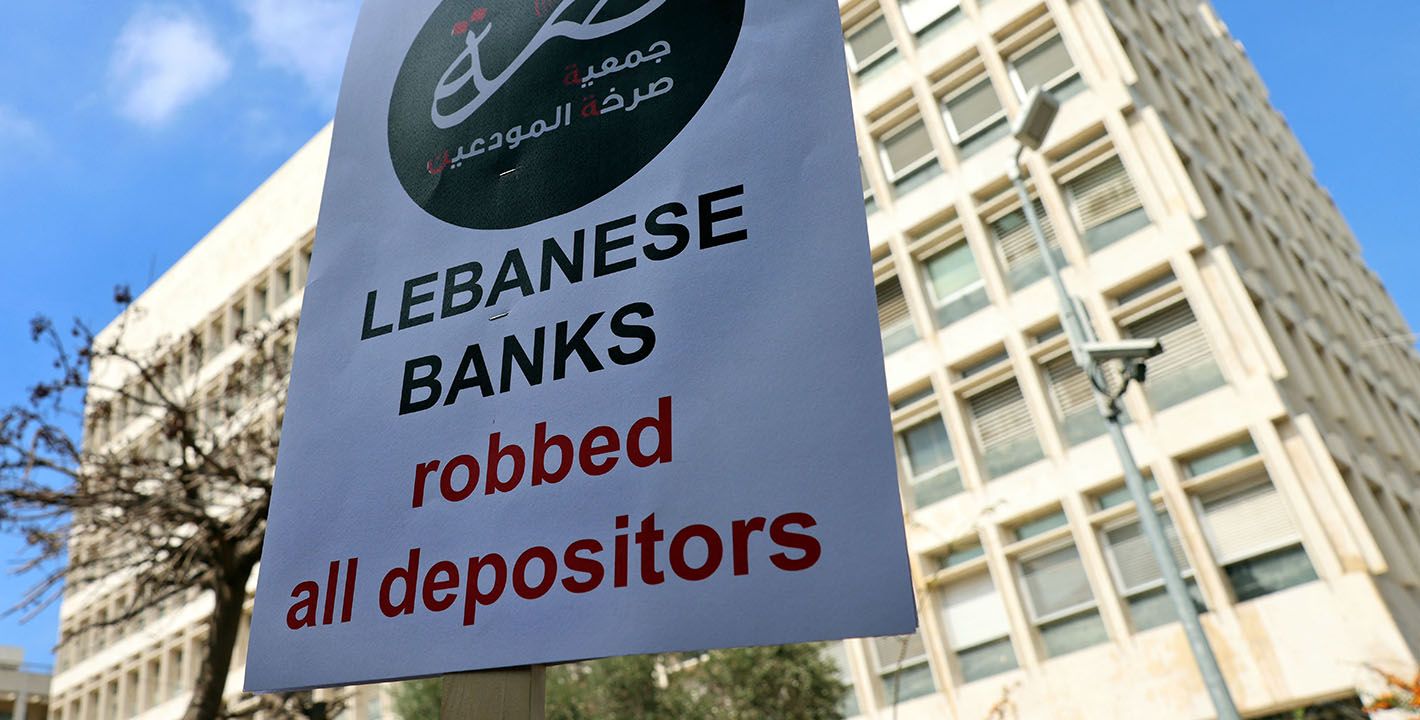
In an interview, Ishac Diwan looks at the merits and flaws in the draft legislation distributing losses from the financial collapse.

Michael Young
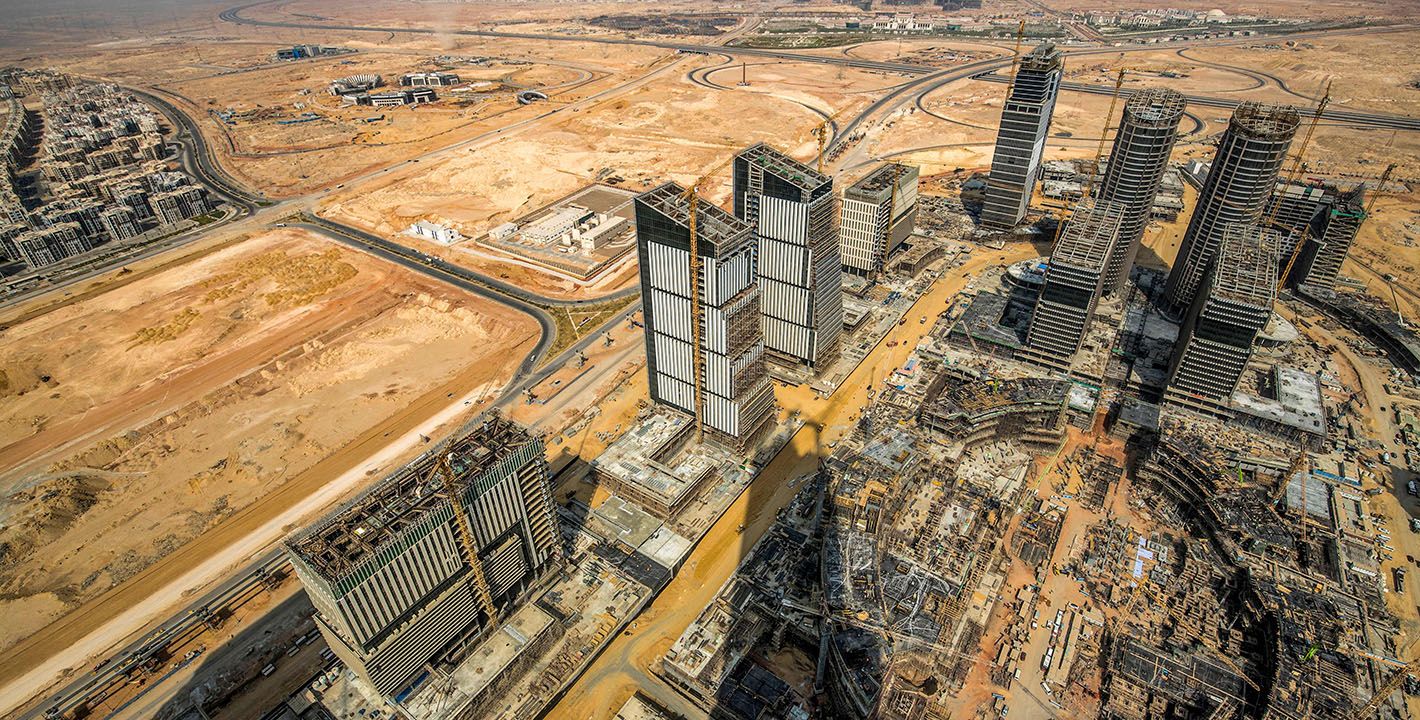
Mustaqbal Misr has expanded its portfolio with remarkable speed, but a lack of transparency remains.

Yezid Sayigh

Arab diaspora business communities in Egypt often mirror the same systemic challenges facing Egyptian businesses.

Nur Arafeh, Yezid Sayigh, Qaboul al-Absi, …

Largely characterized thus far by a single-minded focus on extractivism, Riyadh must commit to greater equitability in its approach to investment and development deals with Sudan, Ethiopia, and Eritrea.

Hesham Alghannam
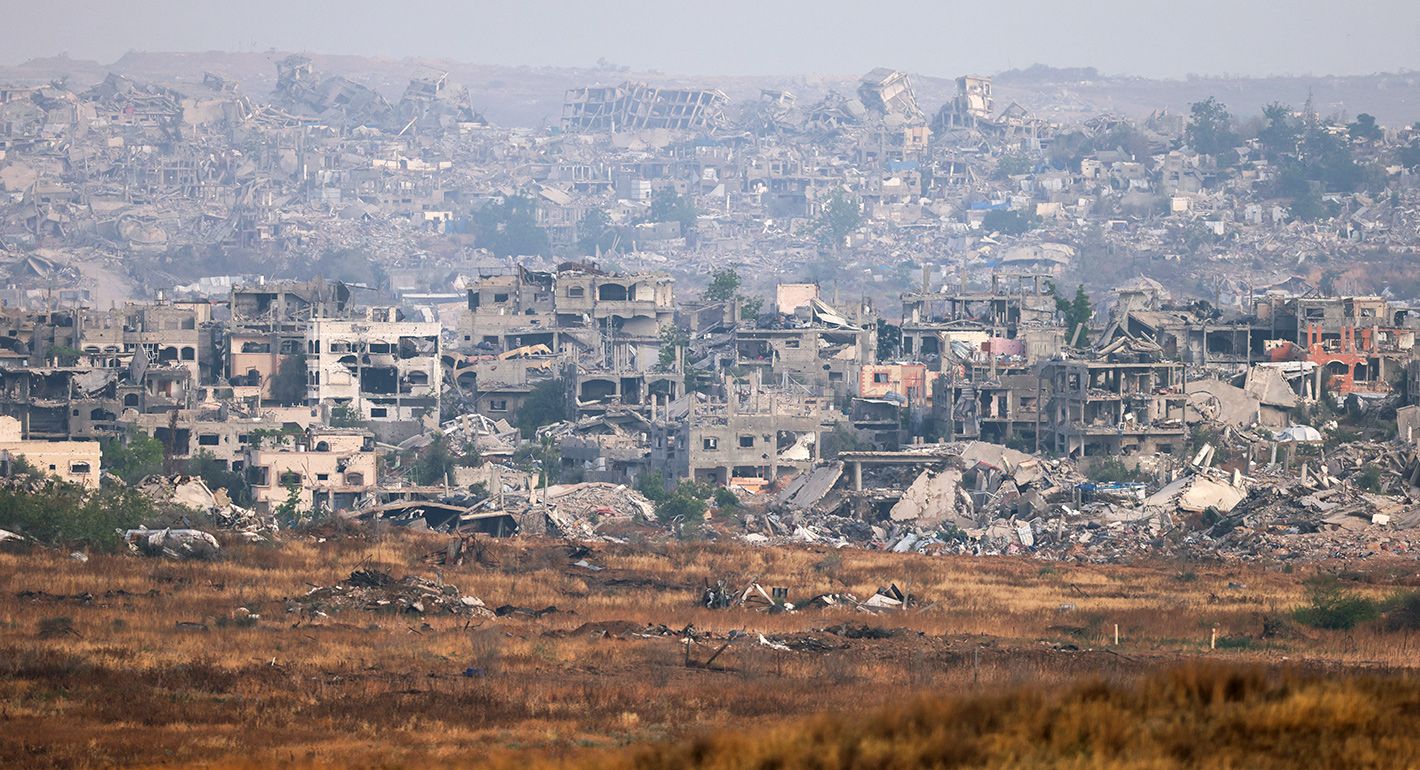
Once Israel’s war in the territory is brought to an end, the foundational principles guiding reconstruction should be Palestinian self-determination, local agency, and sovereignty.
Nur Arafeh, Mandy Turner