

Commentary
Uri Dadush
{
  "authors": [
    "Uri Dadush"
  ],
  "type": "legacyinthemedia",
  "centerAffiliationAll": "",
  "centers": [
    "Carnegie Endowment for International Peace"
  ],
  "collections": [],
  "englishNewsletterAll": "",
  "nonEnglishNewsletterAll": "",
  "primaryCenter": "Carnegie Endowment for International Peace",
  "programAffiliation": "",
  "programs": [],
  "projects": [],
  "regions": [
    "North America",
    "United States",
    "East Asia",
    "Japan",
    "Western Europe",
    "United Kingdom",
    "France",
    "Germany"
  ],
  "topics": [
    "Economy"
  ]
}
Source: Getty
With emerging markets surging ahead and the United States and other wealthy countries engulfed in a crisis that shows no sign of ending, it is worth asking if rich countries are in a growth trap—and should perhaps seek advice from their developing neighbors.
Source: National Interest

But with emerging markets powering ahead and the United States and other wealthy countries engulfed in a crisis that shows no sign of ending, it is worth asking whether it is, instead, rich countries that are trapped—and perhaps well advised to seek lessons from emerging markets.
The point is not that prosperous countries should blindly copy poorer ones. Adjusted for purchasing power, per capita incomes in rich countries are still typically two to five times higher than those of emerging markets, and U.S. incomes, again adjusted for purchasing power, are eight times those of China, based on official statistics.
But one can’t easily overlook the fact that, in the last five years, emerging markets have grown 3 to 4 percentage points a year faster than advanced countries and—despite being hit hard by the crisis—their GDP already exceeds the pre-crisis trend, whereas advanced countries are floundering 10 percent below that benchmark. This is remarkable, bearing in mind that in the past, emerging markets suffered most from crises, even when they originated in the rich countries.
Concerns about a "rich-country trap," however, go beyond the recent crisis. Italy and Japan, for example, had seen little growth in the ten years preceding the crisis. Some wonder whether the same disease may be afflicting the United States, previously concealed by an unsustainable housing and financial boom.
There are three striking differences between wealthy and emerging countries that help explain the puzzling change in fortunes.
First, fundamental growth drivers remain more powerful in emerging countries: the labor force grows about 1 percent faster than in rich countries, savings and investment are about 5 percent larger as a share of GDP, and the emerging markets are rapidly applying transformational technologies that advanced countries have to invent from scratch. For example, access to electricity and sanitation is expanding rapidly in India, but still to reach hundreds of millions of people.
These differences are not new, of course, but emerging markets have learned to use them to greater advantage. In recent years, they have become magnets for investment as they have not only cut deficits but also embraced trade and reduced state intervention—so-called "structural" reforms.
Second, emerging markets have much less developed banking sectors and rely more on equity capital, which, together with the fact that they are much less integrated in global financial markets, shelters them to some degree from credit cycles.
Third, emerging markets are in much better fiscal shape. Their ratio of public debt to GDP is about half that of rich countries, as is the size of their government sector relative to the economy. It is remarkable that buying default insurance on Chile's public debt, for example, now costs less than on Japan, and on Brazil less than on France.
Are advanced countries destined to have weak growth trends? Clearly not—some wealthy countries, such as Australia, Canada, Singapore, Sweden and Israel, have continued to see their incomes rise at a rapid clip over many years.
There is actually no shortage of ideas to strengthen growth fundamentals and potentially avoid the rich-country trap. These include boosting the labor force through immigration, revitalizing competition through deregulation and more open trade, eliminating tax disincentives to savings and investment, and stimulating innovation through better education and support of research.
Wealthy countries can also insist on tighter prudential regulation and charge for bailout insurance. Thus could they become less reliant on highly leveraged and accident-prone banks and move instead to rely more on equity capital and bond markets. And they should continually ask: do the government sector and the tax burden need to be so large to provide the safety nets and public goods we all cherish?
Addressing these issues requires structural reforms that emerging markets, desperate to escape from poverty, have widely embraced. Most rich-country politicians will not bet their careers on such reforms, however, because that would mean confronting powerful "entitled" and entrenched interests in a complex fight whose results typically materialize beyond the life of their government.
Keynesian stimulus, by contrast, has many attractions—especially if elections are approaching. It quickly boosts everyone’s incomes. In the darkest days of the financial crisis, stimulus was both clearly necessary and affordable, but it can only provide a temporary fix and does so at considerable long-term expense.
In Italy and Greece, where markets concerned with slow growth and soaring government debt are already forcing large budget cutbacks, structural reforms are also being avoided like the plague. This is even more anomalous, because reforms such as increased competition in product and labor markets can stimulate long-term growth and reduce unemployment and overcapacity, thus requiring less austerity.
Politicians from Washington to Tokyo are looking for a way out of the rich-country trap. The overriding lesson they can draw from booming emerging markets is that a genuine growth strategy calls for far more than a short-term fiscal fix.
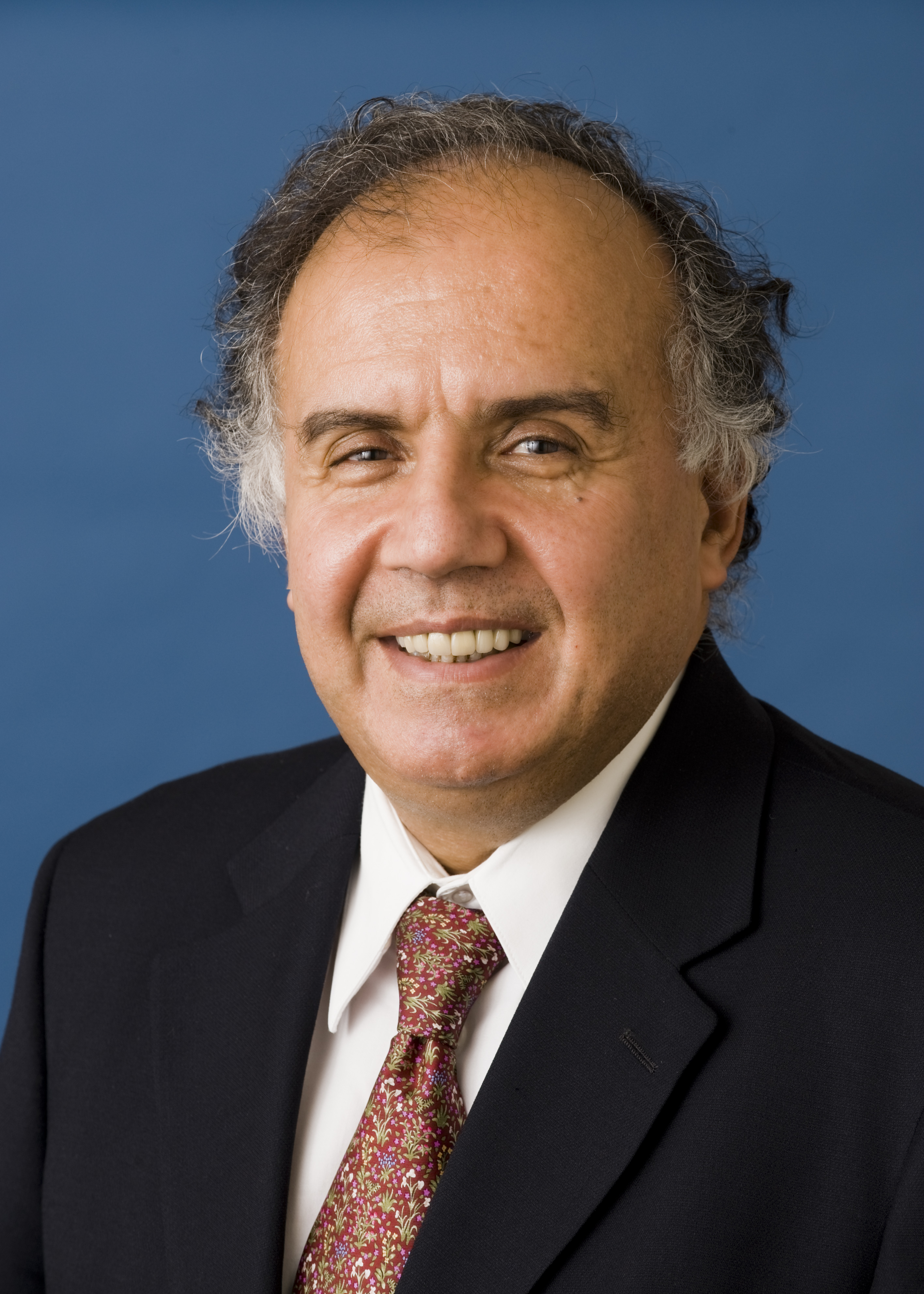
Former Senior Associate, International Economics Program
Dadush was a senior associate at the Carnegie Endowment for International Peace. He focuses on trends in the global economy and is currently tracking developments in the eurozone crisis.
Recent Work
Uri Dadush
Uri Dadush
Carnegie does not take institutional positions on public policy issues; the views represented herein are those of the author(s) and do not necessarily reflect the views of Carnegie, its staff, or its trustees.

In an interview, Ian Lustick and Eli Clifton discuss their new book on why a prominent ally has so much influence in America.

Michael Young

As the U.S. stumbles in its war with Iran, we are likely to see an acceleration of its disengagement from the region.
Michael Young

Middle Eastern states should welcome an accelerated U.S. disengagement from their region.
Michael Young

In an interview, former ambassador Charles Freeman assesses the Trump administration’s war against Iran.
Michael Young

By failing to address Palestinian representation, the current process is bound to lead to just another temporary arrangement.

Nathan J. Brown