

Commentary
Dmitri Trenin
{
  "authors": [
    "Dmitri Trenin"
  ],
  "type": "legacyinthemedia",
  "centerAffiliationAll": "",
  "centers": [
    "Carnegie Endowment for International Peace",
    "Carnegie Russia Eurasia Center"
  ],
  "collections": [],
  "englishNewsletterAll": "",
  "nonEnglishNewsletterAll": "",
  "primaryCenter": "Carnegie Russia Eurasia Center",
  "programAffiliation": "",
  "programs": [],
  "projects": [
    "Eurasia in Transition"
  ],
  "regions": [],
  "topics": []
}
Source: Getty
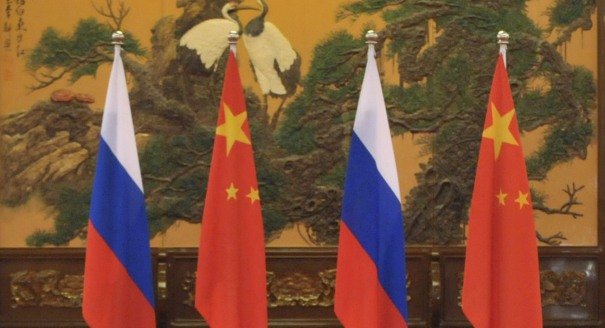
China and Russia are often considered to be partners, but it would be a mistake to assume that there are no problems between the two countries.
Source: China Radio International's Teahouse

China and Russia are often considered to be partners and their bilateral relations are unlikely to deteriorate in the near future. However, Trenin noted, it would be a mistake to assume that there are no problems in relations between China and Russia. Therefore the leaderships of the both countries should make efforts to improve their relations in all spheres.
In terms of global governance, China and Russia have some shared interests, Trenin said. The political philosophy of the leaderships of the two countries is also similar. However Russia and China also have very different views on some issues. These differences can be attributed to the structure of the Chinese and Russian economies and the position the two countries have in global governance, Trenin said.
Trenin added that China should broaden its area of cooperation with the West beyond purely economic issues to security issues. The West is interested in cooperation with China, since the Chinese economy is on the rise, and Western leaders realize they should take China, as well as other arising global powers such as India and Brazil, into account, Trenin concluded.
Former Director, Carnegie Moscow Center
Trenin was director of the Carnegie Moscow Center from 2008 to early 2022.
Recent Work
Dmitri Trenin
Dmitri Trenin
Carnegie does not take institutional positions on public policy issues; the views represented herein are those of the author(s) and do not necessarily reflect the views of Carnegie, its staff, or its trustees.