

In The Media
David Rothkopf
{
  "authors": [
    "David Rothkopf"
  ],
  "type": "legacyinthemedia",
  "centerAffiliationAll": "",
  "centers": [
    "Carnegie Endowment for International Peace"
  ],
  "collections": [],
  "englishNewsletterAll": "",
  "nonEnglishNewsletterAll": "",
  "primaryCenter": "Carnegie Endowment for International Peace",
  "programAffiliation": "",
  "programs": [],
  "projects": [],
  "regions": [
    "North America",
    "United States"
  ],
  "topics": [
    "Security",
    "Military"
  ]
}
Source: Getty
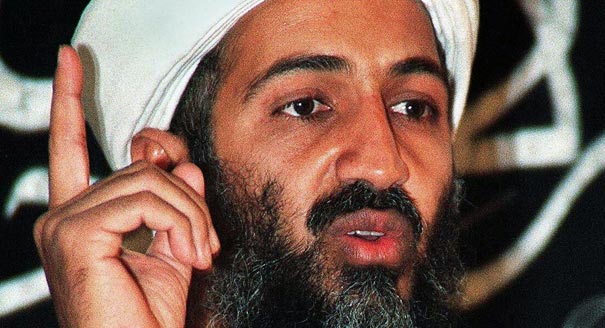
Osama bin Laden was mentioned 21 times during the nighttime speeches at the Democratic National Convention.
Source: Foreign Policy

Republicans of course, reiterated their feigned outrage that the president would tolerate this kind of "end-zone dance" as John McCain described it earlier this year. Given George W. Bush's "Mission Accomplished" moment and the ugly undertones of the post-touchdown showboating imagery, however, it is easy to dismiss it for what it is: cheap, sour-grapes politics.
There were, however, aspects of the bin Laden refrain that were genuinely troubling. First was the fact that giving it such centrality dramatically overstated its importance. This compounded the central error of America's response to the 9/11 attacks: reorganizing the country's entire national security priorities around what was a real, but limited threat from a small group of extremists whose capabilities we systematically and sometimes very nearly hysterically overstated. Even in the context of combating terror, last week's long-overdue decision to categorize Pakistan's dangerous Haqqani network as a terrorist organization underscores the fact that killing any individual terrorist or even crushing any individual terrorist group does not make the threat go away. New threats appear. Groups reorganize. Violent extremism lives on and continues to warrant a proportional, targeted response.
Even worse was the failure to recognize what was probably the best and most important consequence of getting bin Laden: It allows us to close the chapter on a dark period in U.S. history and move on. Bigger, more complex national security challenges remain for the United States. But you didn't hear about them at either convention.
Oh, sure, there was Mitt Romney once again overstating the threat coming from Russia. But that could hardly be characterized as looking forward. It's not quite as foolish as Sen. John Kerry's line about Mitt getting his views of Russia from the movie Rocky IV made it seem. Vladimir Putin is a bad guy and Russia is an increasingly thorny problem for the United States. But to call it our No. 1 geopolitical threat is still, like the bin Laden refrain, an effort to stir up passions linked to old feelings more than it is a clear-eyed appraisal of the future risks we face.Those risks have to do with a rapidly changing geopolitical environment, the rise of new powers in China and elsewhere in the emerging world, the proliferation of new technologies both of mass destruction and of mass disruption (cyber), and so on. But more importantly, these threats are compounded by America's collective failure to address problems at home that compromise our strength, sap our resources, and make us more vulnerable with each passing day.
Romney did at least acknowledge these problems when he said we had to get our fiscal house in order. But for him to then suggest that somehow we could do that while actually increasing defense spending reveals what should be a disqualifying failure to understand the true risks to the United States going forward. We can't continue to spend as we have. We must cut the spending that drains our fiscal health -- including defense. If we don't, Romney of all people should understand the markets will stop lending us money to paper over problems and the relatively modest cuts associated with sequestration -- the awkward and harsh budget deal set to hit in January -- will seem like the nibbling of mice next to the draconian measures that will be required when our lines of credit dry up.
To cut defense spending requires a creative reappraisal of what the real threats we face might be and what the best means open to us are to contain and reverse those threats. It requires us to move beyond the old formulations that have effectively guided U.S. policy for the past 70 years, such as the idea that we must hugely outspend other powers (especially since most of those other powers are our allies), that we must always evenly distribute funds between service branches, that we can continue with multiple redundancies between those branches (every branch has its own "air force," and how many intelligence organizations does one country need?), and that we must move beyond old, costly models of projecting force when cheaper, safer, more efficient ones exist.
It requires, in short, the most profound rethinking of our national security strategy since the end of the World War II -- one that undoes some of the grievous errors associated with the prior vaunted and failed attempt at such an effort: the bipartisan response to the 9/11 attacks. (It's worth noting that another big event that should have produced such a reassessment, the end of the Cold War, generated much talk but considerably less material change than warranted.)
In private conversations, Obama's team promises that the second term will bring greater opportunity to be more creative and address issues that they didn't have time to focus on during the past three and a half years. I have no reason not to believe them. But it is a pity that this political season is not a time when we consider what each party would bring to such a reassessment or when the public acknowledges whether it sees such a reassessment as being important. Cheap jingoism goes well with the convention pageantry. But that doesn't mean it's not risky, especially at a time when profound, unprecedented changes are urgently required.

Former Visiting Scholar
David Rothkopf was a visiting scholar at the Carnegie Endowment as well as the former CEO and editor in chief of the FP Group.
Recent Work
David Rothkopf
David Rothkopf
Carnegie does not take institutional positions on public policy issues; the views represented herein are those of the author(s) and do not necessarily reflect the views of Carnegie, its staff, or its trustees.

In an interview, Ian Lustick and Eli Clifton discuss their new book on why a prominent ally has so much influence in America.

Michael Young

As the U.S. stumbles in its war with Iran, we are likely to see an acceleration of its disengagement from the region.
Michael Young

Huawei pushed hard to enter the Egyptian data centers market, until the Americans made a better offer.

Angie Omar

Middle Eastern states should welcome an accelerated U.S. disengagement from their region.
Michael Young

In an interview, former ambassador Charles Freeman assesses the Trump administration’s war against Iran.
Michael Young