

In The Media
David Rothkopf
{
  "authors": [
    "David Rothkopf"
  ],
  "type": "legacyinthemedia",
  "centerAffiliationAll": "",
  "centers": [
    "Carnegie Endowment for International Peace"
  ],
  "collections": [],
  "englishNewsletterAll": "",
  "nonEnglishNewsletterAll": "",
  "primaryCenter": "Carnegie Endowment for International Peace",
  "programAffiliation": "",
  "programs": [],
  "projects": [],
  "regions": [
    "North America",
    "United States"
  ],
  "topics": [
    "Political Reform",
    "Climate Change"
  ]
}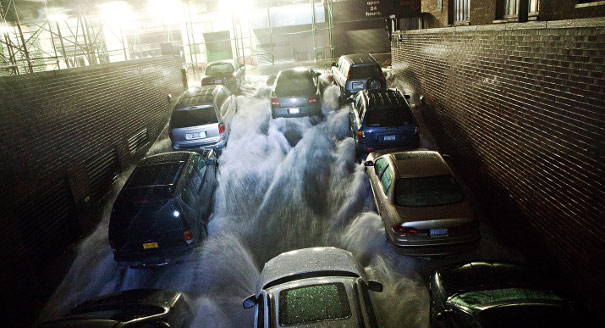
Source: Getty
Hurricane Sandy will do more to draw attention to issues of climate change than all the candidates running for every office in the United States during this election cycle have done.
Source: Foreign Policy

Ladies and gentlemen, meet Sandy.
Sandy, like many in an America with changing demographics, has overseas roots, hailing from the tropics. She rose to our attention in the south but ultimately, like so many others, she hit the big time in the northeast, and her political impact will extend well into the heartland of America, where this election will be decided. Like Joe Biden and Chris Christie, Sandy is an uncontrollable, wind-powered force of nature. Like many politicians, the first impression she may give the average voter is that she is all wet. But there is more to Sandy than meets her eye.
Sandy is a game-changer. For those of you who live far from the eastern shores of the United States, it is also worth noting that she is also a hurricane, a big one, currently cutting an 800-mile swath across one of the most heavily populated areas of the richest and most powerful nation on Earth. And in so doing, she is speaking volumes about subjects many U.S. politicians have avoided and, at the same time, she is having a major impact on America’s process of electing a president.
To begin with, Sandy will do more to draw attention to issues of climate change than all the candidates running for every office in the United States during this election cycle have done. While it’s impossible to attribute her size or impact to man-made origins, it is also impossible not to wonder whether the recent frequency of large storms is related to the growing oceans of data about the reality of global warming. Sandy looks like what climate scientists have been warning about for years.
Remember Hurricane Katrina? She may or may not have been triggered by man-made climate change. But she certainly forced climate back into the national discussion for an extended period. Sandy will do likewise. Certainly, given the sad virtual silence about the issue from our presidential contenders—which amounts to nothing less than a planet-wide risk of the first order—Sandy’s intervention in this regard is welcome, if hugely and tragically costly.
Next, Sandy will also remind Americans and the world of the foolishness of some recent U.S. fetishes. I live in Washington, D.C., ostensibly the nerve center of the U.S. national security apparatus and target No. 1 for anyone interested in attacking America. The city is surrounded by military facilities and is home to a Department of Homeland Security that spends billions of dollars seeking to protect America against disruption. Yet this storm, like virtually all others of any size, will almost certainly knock out power to many of our nation’s leaders and the infrastructure on which our government depends for days. The city has already been brought to a standstill. Could burying power lines and strengthening critical infrastructure prevent all that? Of course. But is it as sexy as buying more drones, water boards, and stealth helicopters? Nope.
So says Sandy, “Go ahead and protect yourself against low-risk threats. I want to remind you how vulnerable you are to the more predictable, commonplace variety.”
Sandy also will batter the other elements of the region’s infrastructure, in which America has failed to invest for the past half century or so. She will destroy weakened roadways and bridges and breakwaters. She will lash ancient port facilities. She will paralyze an air-traffic control system and railway systems that lag behind the world in their use of modern technologies. She will say, “Why aren’t you spending your precious resources to protect your people and your economy? Why are you frittering away money building roads and airfields on the other side of the world when you should be taking care of business at home?”
She will also, of course, be the first figure on the national stage to do something about the scourge of obscenely over-financed campaigns. Instead of merely complaining about them, she will pull the plug on them by turning off power to millions. While sitting in darkness may be a hardship, enjoying a break from campaign ads (and Twitter and Internet snark and faux-analysis and political hyperventilation) will be seen by many as a welcome break.
Admittedly, this service comes at the high cost of making columns like this one unavailable to readers. But that seems small price to pay.
Finally, of course, Sandy really will have a political impact. We are not sure what it will be. There seems to be a kind of strangely otherworldly dimension to a giant storm that batters primarily blue states and involves the rare combination of circumstances that can send the impact of a hurricane into battleground territory like Pennsylvania and Ohio. Not only will ads be off the air, but early voting is being cancelled and some of the lingering impacts of power losses and infrastructure damage will certainly take a toll on voter turnout. Indeed, as it happens, Sandy may be that rarest of political actors—one who reveals big truths and quite possibly has a lasting impact on world affairs. Because if, as seems likely, the U.S. presidential election is so close that any one big thing might shift the delicate balance, Sandy just might be the one to do it.
Former Visiting Scholar
David Rothkopf was a visiting scholar at the Carnegie Endowment as well as the former CEO and editor in chief of the FP Group.
Recent Work
David Rothkopf
David Rothkopf
Carnegie does not take institutional positions on public policy issues; the views represented herein are those of the author(s) and do not necessarily reflect the views of Carnegie, its staff, or its trustees.

In an interview, Rozina Ali discusses her new book on the rise and manifestations of Islamophobia in the United States.

Michael Young

In an interview, Ian Lustick and Eli Clifton discuss their new book on why a prominent ally has so much influence in America.
Michael Young

As the U.S. stumbles in its war with Iran, we are likely to see an acceleration of its disengagement from the region.
Michael Young

Middle Eastern states should welcome an accelerated U.S. disengagement from their region.
Michael Young

In an interview, former ambassador Charles Freeman assesses the Trump administration’s war against Iran.
Michael Young