The UPA government has touted its cabinet reshuffle as a much-needed infusion of youth and vibrancy. While it is easy to get caught up in government talking points, the facts speak otherwise: as India’s population is getting younger, its political elites are bucking the trend. India is increasingly exhibiting all the hallmarks of a gerontocracy — a polity in which leaders are significantly older than the people themselves. This has potentially troubling implications for its democracy.
First, consider a few facts about India’s ruling class. Prior to the latest reshuffle, the median age of cabinet members stood at 65 years. Post-reshuffle, the median age of the new cabinet stands at, well, 65 years. True, some younger MPs were brought in as ministers of state while others like Sachin Pilot and Jyotiraditya Scindia were given weightier portfolios. Yet these young MPs still lack cabinet rank. The overall age demographic of the cabinet, the apex executive body in the country, was left unchanged.
As the Economist reported several months ago, India is an outlier in this regard; it has one of the highest discrepancies between the median age of its cabinet and that of its population. This is perhaps not surprising, given how rapidly many Western countries are ageing. Yet, even when compared to Brazil and China, India’s age ratio of ruler-to-ruled stands out. What is more, the age disparity in India’s leadership is only increasing over time. According to data collected by PRS Legislative Research, in India’s first general election in 1952, 20 per cent of members of Parliament (MPs) were over the age of 55. In 2009, that percentage more than doubled to 43 per cent.
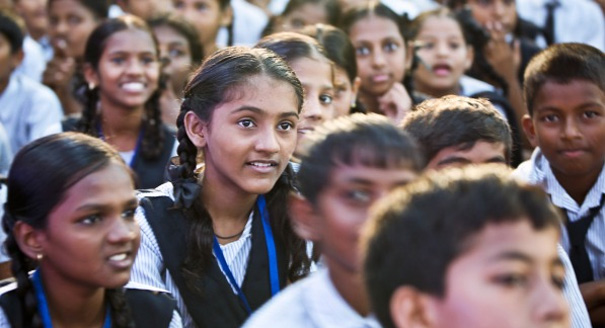
In the face of ageing politicians, India’s population is getting younger. Over the next several decades, India stands to benefit from what economists refer to as the “demographic dividend”. Between 2010 and 2040, one-quarter of the increase in the world’s population aged 15-64 will take place in India — that is roughly 300 million new working-age adults. This demographic shift will shape Indian society in ways foreseen and not.
What does this mismatch mean? The growing disparity between India’s elderly rulers and its youthful population raises the spectre that India’s youth will become increasingly marginalised when it comes to politics, jeopardising the representational quality of India’s democratic system. There are at least three dimensions to this challenge.
First, there is suggestive evidence that India’s youth are feeling excluded from the political process. A 2008 survey of Indians between 14 and 34 carried by out by the Centre for the Study of Developing Societies showed that while 85 per cent of young respondents agreed that citizens have a duty to vote during elections, two-thirds supported the notion that in India power rests with too few people. Hence, it is not surprising that three in four young Indians surveyed endorse the idea of reserving seats in Parliament specifically for youth.
Second, this sense of exclusion is fed by the marked lack of democracy within India’s major political parties. Although many parties have intricate, decentralised procedures for candidate selection on paper, in practice they often authorise the party leader to select their slate of candidates. This is true for both established parties, which have organisations that have atrophied over time, and for newer parties, which have not dedicated themselves to the hard work of creating enduring party structures. The lack of intra-party democracy means that the options for advancement within the party hierarchy are limited. Congress General Secretary Rahul Gandhi rightly deserves credit for his efforts to revive the party’s youth wing, but as Mehboob Jeelani has written in Caravan, these long-term efforts have often fallen prey to short-term political expediency — as was seen in the 2010 assembly elections in Bihar and Uttar Pradesh in 2012.
Third, to the extent that there are youthful representatives in Indian political society, it is not necessarily the case that they are representatives of the youth. For instance, even though India’s younger MPs are not grey-haired themselves, many owe their position, in part, to their grey-haired ancestors. According to data collected by Patrick French, every MP under the age of thirty is “hereditary”— or has a significant ancestral connection in politics. More than two-thirds of the 66 MPs under the age of 40 have hereditary connections. It is increasingly clear that the youngsters who have claimed positions of relative power are hardly representative of the masses of their generation. What do India’s young MPs stand for? The simple answer is: we don’t really know. As Pratap Bhanu Mehta has noted, most of India’s young politicians have localised power bases. With perhaps a few exceptions, very few of India’s young MPs have much profile outside of their constituencies or have exercised leadership on crucial issues of national importance.
There is nothing preordained about the current demographic mismatch in India between the rulers and the ruled. After all, just a few decades ago, many observers lamented the rather homogenous ethnic makeup of India’s political class. Then came India’s “silent revolution”. But let’s not fool ourselves into thinking the most recent Cabinet reshuffle was about bringing in the youth. When asked to explain the government’s claim that the new cabinet was younger than its predecessor, a spokesperson responded, “Young is not necessarily seen in terms of age.” The government may have a hard time selling that line to those operating under a more traditional definition.
Milan Vaishnav is a senior fellow and director of the South Asia Program and the host of the Grand Tamasha podcast at the Carnegie Endowment for International Peace. His primary research focus is the political economy of India, and he examines issues such as corruption and governance, state capacity, federalism, and electoral behavior. He also conducts research on the Indian diaspora.
Carnegie does not take institutional positions on public policy issues; the views represented herein are those of the author(s) and do not necessarily reflect the views of Carnegie, its staff, or its trustees.
More Work from Malcolm H. Kerr Carnegie Middle East Center
A humanitarian crisis in Lebanon deepens, and Syrian refugees face a perilous choice: remain in a war-torn environment or return to Syria where they risk encountering significant dangers and discrimination. There are significant challenges and risks to their search for safety in Syria.
In Syria’s border regions, changes in demographics, economics, and security mean that an inter-Syrian peace process will require consensus among main regional powers that Syria must remain united, that no one side can be victorious, and that perennial instability threatens the region.
The interaction of national armed forces and private business sectors offers a useful lens for viewing the politics of numerous countries of the so-called Global South. A rising trend of military political activism—often accompanied by military commercial activity—underlines the importance of drivers and outcomes in these relationships.