

Paper
David Burwell
{
  "authors": [
    "David Burwell"
  ],
  "type": "legacyinthemedia",
  "centerAffiliationAll": "dc",
  "centers": [
    "Carnegie Endowment for International Peace"
  ],
  "collections": [],
  "englishNewsletterAll": "ctw",
  "nonEnglishNewsletterAll": "",
  "primaryCenter": "Carnegie Endowment for International Peace",
  "programAffiliation": "SCP",
  "programs": [
    "Sustainability, Climate, and Geopolitics"
  ],
  "projects": [
    "Carnegie Oil Initiative"
  ],
  "regions": [
    "North America",
    "United States"
  ],
  "topics": [
    "Climate Change"
  ]
}
Source: Getty
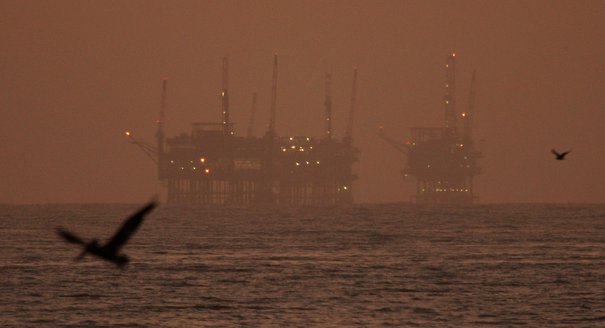
Oil and gas supplies are booming around the world as new drilling technologies make it possible to recover untapped resources.
Source: Voice of America
Speaking on Voice of America, Carnegie's David Burwell explained that U.S. energy production has changed dramatically in the past four years. During President Obama’s first election in 2008, peak oil concerns and resource depletion fears were commonplace in the national energy debate. In contrast, the recent 2012 presidential election rhetoric was dominated by energy independence and the potential to reduce the trade deficit through the newfound abundance of domestic U.S. oil and gas. New technologies, such as hydraulic fracturing, more commonly referred to as fracking, have made it possible to tap unused energy sources, Burwell said. By 2020, the United States will be the biggest producer of oil in the world, he added, and by 2030 it will be a net exporter.
This not only changes domestic politics and energy consumption, but it also shifts global geopolitics, Burwell explained. The United States will no longer be dependent on oil from the Middle East and instead rely exclusively on the Western Hemisphere. Middle Eastern oil markets will shift eastward to accommodate the growing economies of Asian nations, like China.
This new abundance is also causing the domestic price of fossil fuels to fall, which incentivizes consumers to continue their reliance on oil and gas, Burwell cautioned. He argued that unconventional oils and gas must be managed in order to promote energy diversification and save investments in renewable energy technology. To complement this regulation, he said, a carbon tax is needed to avoid the catastrophic consequences of climate change. Although international negotiations have been fruitless, the United States could become a leader in climate change policy by creating a pricing structure for other nations to follow, Burwell concluded.
Former Nonresident Senior Fellow, Energy and Climate Program
Burwell focused on the intersection between energy, transportation, and climate issues, as well as policies and practice reforms to reduce global dependence on fossil fuels.
Recent Work
David Burwell
David Burwell
Carnegie does not take institutional positions on public policy issues; the views represented herein are those of the author(s) and do not necessarily reflect the views of Carnegie, its staff, or its trustees.

Huawei pushed hard to enter the Egyptian data centers market, until the Americans made a better offer.

Angie Omar

Middle Eastern states should welcome an accelerated U.S. disengagement from their region.

Michael Young

In an interview, former ambassador Charles Freeman assesses the Trump administration’s war against Iran.
Michael Young

By failing to address Palestinian representation, the current process is bound to lead to just another temporary arrangement.

Nathan J. Brown

Morocco and Algeria, each in its own way, are having to navigate the global economic fallout of the U.S.-Israeli military campaign against Iran.

Yasmine Zarhloule