

Paper
David Burwell
{
  "authors": [
    "David Burwell"
  ],
  "type": "legacyinthemedia",
  "centerAffiliationAll": "dc",
  "centers": [
    "Carnegie Endowment for International Peace",
    "Carnegie China"
  ],
  "collections": [],
  "englishNewsletterAll": "ctw",
  "nonEnglishNewsletterAll": "",
  "primaryCenter": "Carnegie Endowment for International Peace",
  "programAffiliation": "SCP",
  "programs": [
    "Sustainability, Climate, and Geopolitics"
  ],
  "projects": [],
  "regions": [
    "East Asia",
    "China",
    "North America"
  ],
  "topics": [
    "Climate Change",
    "Economy"
  ]
}
Source: Getty
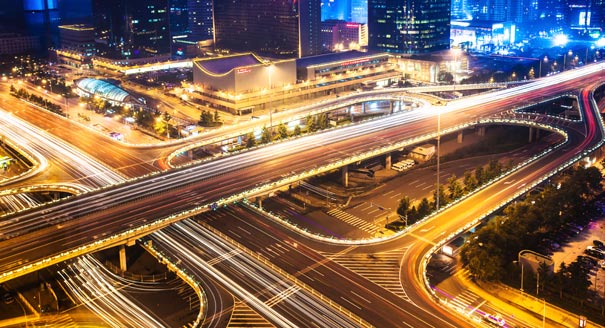
Redesigning Beijing’s transportation system could allow its inhabitants reduce car traffic and improve their own quality of life.
Source: Rockefeller Foundation
Lyon France calls itself “the city of short distances,” pursuing a vision of social and territorial integration, demographic balance, economic agglomeration, and multiple city centers. The city favors parks that support social activities, mixed uses so distances between origins and destinations are walkable and bikeable, and activities that reflect a respect for the environment and encourage a sense of community.
Beijing is the counter-Lyon—a “City of Long Distances.” A city with a population of over 24 million—about two-thirds the size of California—the streets are wide, straight and long. Blocks along the Main thoroughfare, (Chang An Street), are longer than European football fields. Chang An Street is seven lanes wide in each direction and is a virtual parking lot during daylight hours. The transit system is jammed tight with people who also travel long distances because they don’t have residency permits. Pedestrians seek shelter in neighboring streets and buildings: no green space visible.The policy of managing traffic by restricting car use based on end number on the license plate simply encourages families to buy more cars. Result: trips are long and slow. Meetings are generally limited to three a day since it is impossible to reliably schedule more due to traffic. The friction of time and distance is slowly asphyxiating Beijing’s economy and its quality of life.
With 20 million more citizens becoming city dwellers each year—310 million more by 2030—China, and Beijing in particular, are in trouble.
The fundamental problem is one of governance and resources. In the absence of a municipal finance system backed by property taxes or other revenue steam to pay debt service—an idea being piloted in Shanghai—China’s cities are slipping behind in their efforts to become world-class destinations.
But Beijing has two hidden assets readily available to unlock economic value and advance its quality of life—its people and its under-used public spaces. In Europe and, to a lesser extent, America, city planners have embraced a simple truth: if you plan for cars and traffic you get cars and traffic. If you plan for people and places you get people and places. Beijing has huge amounts of underused, ill-designed and isolated public space. It also has a huge citizenry fed up with pollution and willing to help improve their own quality of life.
Start with transportation. Redesign roads and streets to serve adjacent land uses and cross traffic. Populate empty spaces with pocket parks, open-air shops and restaurants. Provide sidewalks and footpaths that allow citizens to wander from place to place. Break up long blocks so people have more places to walk and destinations to explore. Encourage foot traffic.
A British politician during World War II addressed Parliament with the following admonition: “Gentlemen, we are out of money. Our only option left is to think.” Beijing, and all of China’s cities, have a huge source of hidden capital—the creativity of its citizens. There is no time to lose. Becoming a “city of short distances” will take massive citizen mobilization but relatively little money compared to constantly building ring-roads to nowhere. Lyon has done it, and in a profoundly socialist manner. China’s cities must act now or sink into ever deeper dysfunction. Beijing is a good place to start—there is nothing to lose but its traffic jams.
This article was originally published by the Rockefeller Foundation.
Former Nonresident Senior Fellow, Energy and Climate Program
Burwell focused on the intersection between energy, transportation, and climate issues, as well as policies and practice reforms to reduce global dependence on fossil fuels.
Recent Work
David Burwell

David Burwell, Deborah Gordon
Carnegie does not take institutional positions on public policy issues; the views represented herein are those of the author(s) and do not necessarily reflect the views of Carnegie, its staff, or its trustees.

The armed forces champion a form of capitalism that is generating revenue, but its reliance on rent faces diminishing returns, leaving the country with massive sunk costs and deferred returns, deepening dependency on external borrowing.

Yezid Sayigh
Across the Middle East and North Africa, climate stress interacts with economic fragility, governance failures, social marginalization, and conflict.
Camille Ammoun
Understanding how farmers in the Oued Sahel-Soummam Valley grapple with climate change is essential for addressing the paradoxes through which adaptation, operating at both individual and institutional levels, deepens the region’s vulnerability and erodes the social fabric and agrarian identity that once defined life.

Ilyssa Yahmi
The community already suffers social discrimination, so addressing inequalities requires sustained interventions.
Musaed Aklan , Mohammad Al-Saidi
Lebanon’s largest water reservoir is a house of many mansions when it comes to converging failures.
Camille Ammoun