

Paper
Matthew Rojansky
{
  "authors": [
    "Matthew Rojansky"
  ],
  "type": "legacyinthemedia",
  "centerAffiliationAll": "dc",
  "centers": [
    "Carnegie Endowment for International Peace"
  ],
  "collections": [],
  "englishNewsletterAll": "ctw",
  "nonEnglishNewsletterAll": "",
  "primaryCenter": "Carnegie Endowment for International Peace",
  "programAffiliation": "russia",
  "programs": [
    "Russia and Eurasia"
  ],
  "projects": [],
  "regions": [
    "Eastern Europe",
    "Ukraine",
    "Western Europe"
  ],
  "topics": [
    "Political Reform",
    "Democracy"
  ]
}
Source: Getty
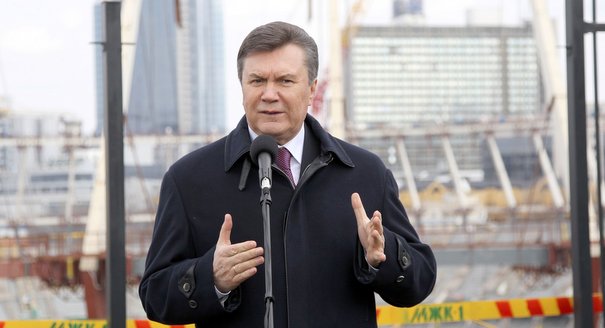
Ukraine, the largest country that is wholly within Europe yet outside the EU, should receive a path to closer EU integration, but only if it meets a set of key conditions intended to demonstrate its commitment to basic European values.
Source: CNN
Europe’s too little, too late responses to the Eurozone crisis and the Arab awakening have amply demonstrated the difficulty of forging and enforcing a common position among 27 EU member states. Yet in at least one important area, Brussels has adopted a clear position supported by national governments: Ukraine, the largest country that is wholly within Europe yet outside the EU, should receive a path to closer EU integration – but only if it meets a set of key conditions intended to demonstrate its commitment to basic European values.
EU officials say that by November, they will be prepared to sign an Association Agreement with Ukraine, which promises liberalized market access for both sides plus visa-free travel for Ukrainians, if Kiev meets three requirements. First, Ukraine must advance its domestic reform agenda, bringing Ukrainian practices closer into line with European norms. Second, it must address the shortcomings of the recent parliamentary elections and guarantee free and fair elections in the future. Finally and most urgently, Ukraine must cease using the criminal justice system to target opposition politicians, a problem epitomized by the case of Yulia Tymoshenko, who was convicted of abuse of office in 2011, and is now serving a seven year prison term.
Up to now, the issue of politically motivated prosecutions seemed likely to pose an immovable obstacle to signing the Association Agreement. Once Ukraine’s President Viktor Yanukovich set the precedent that members of the previous government would be investigated and charged with crimes, he had good reason to fear for his own wellbeing in the event the opposition ever succeeds coming back to power. Yet last Sunday, Yanukovich took a step to ease pressure on the opposition, by pardoning two of Tymoshenko’s close allies, former interior minister Yuriy Lutsenko, and former environment minister Heorhiy Filipchuk.EU officials have been clear that while they applaud the Lutsenko and Filipchuk pardons, they are only first steps towards fulfilling Brussels’ demand for an end to selective justice. The question on many minds now is whether Yulia Tymoshenko might also be released.
While the cases are superficially similar, for Yanukovich, Tymoshenko poses an entirely different magnitude of problem, albeit one largely of his own making. Tymoshenko’s supporters and allies dominate the main opposition political bloc, so she is the natural candidate to oppose Yanukovich in the next presidential election, scheduled for 2015. Despite cynicism among voters over Tymoshenko’s last stint in government, as prime minister from 2007 to 2010, her prison time has made her the kind of martyr figure who can command unique credibility, attention and support, especially from Western governments and the Ukrainian diaspora.
Nonetheless, Yanukovich should release Tymoshenko, and he should do so well in advance of the EU Eastern Partnership summit scheduled for November in Vilnius. Freeing Tymoshenko would not only underscore Kiev’s political commitment to fulfilling the conditions set by Brussels, but would also endow with much greater credibility a wide range of reforms already undertaken by the Yanukovich government, including a new criminal procedure code, prison reforms, and new protections for NGOs.
Even if the Association Agreement is signed, Ukraine’s leaders can have no illusions about the challenge they face. Scrutiny and criticism of Ukraine’s record on human rights and democracy issues will surely continue. Tymoshenko herself, whether in prison or outside, will continue as the opposition’s symbolic and spiritual leader, and her ordeal will serve as a lightning rod for international intervention in Ukraine’s domestic politics. Above all, Ukrainian officials will find that despite the enormous cost and difficulty involved in completing the Association Agreement, a signing ceremony in Vilnius is only the beginning.
Both sides should remember that the purpose of European integration is not to make a binary choice – that Ukraine is either in or out – but to enable the type of broad and deep engagement that will improve the lives of ordinary Ukrainians and Europeans over the long term. This will take sustained political will and committed resources from governments on both sides.
If Ukraine falls short in November over selective justice or for any other reason, recent history suggests a bleak outlook, and there is no cause to think that harsher punishment or enhanced isolation would succeed where diplomacy and engagement have not.
Yet if the Association Agreement goes forward, the resulting deeper engagement should be used to incentivize further progress down the path of reform. Only Ukrainians can decide what their future prosperity will entail, but strengthened trade and travel links with Europe will cast a bright spotlight on the historic opportunities that lie ahead.

Former Deputy Director, Russia and Eurasia Program
Rojansky, formerly executive director of the Partnership for a Secure America, is an expert on U.S. and Russian national security and nuclear-weapon policies.
Recent Work
Matthew Rojansky
Matthew Rojansky
Carnegie does not take institutional positions on public policy issues; the views represented herein are those of the author(s) and do not necessarily reflect the views of Carnegie, its staff, or its trustees.
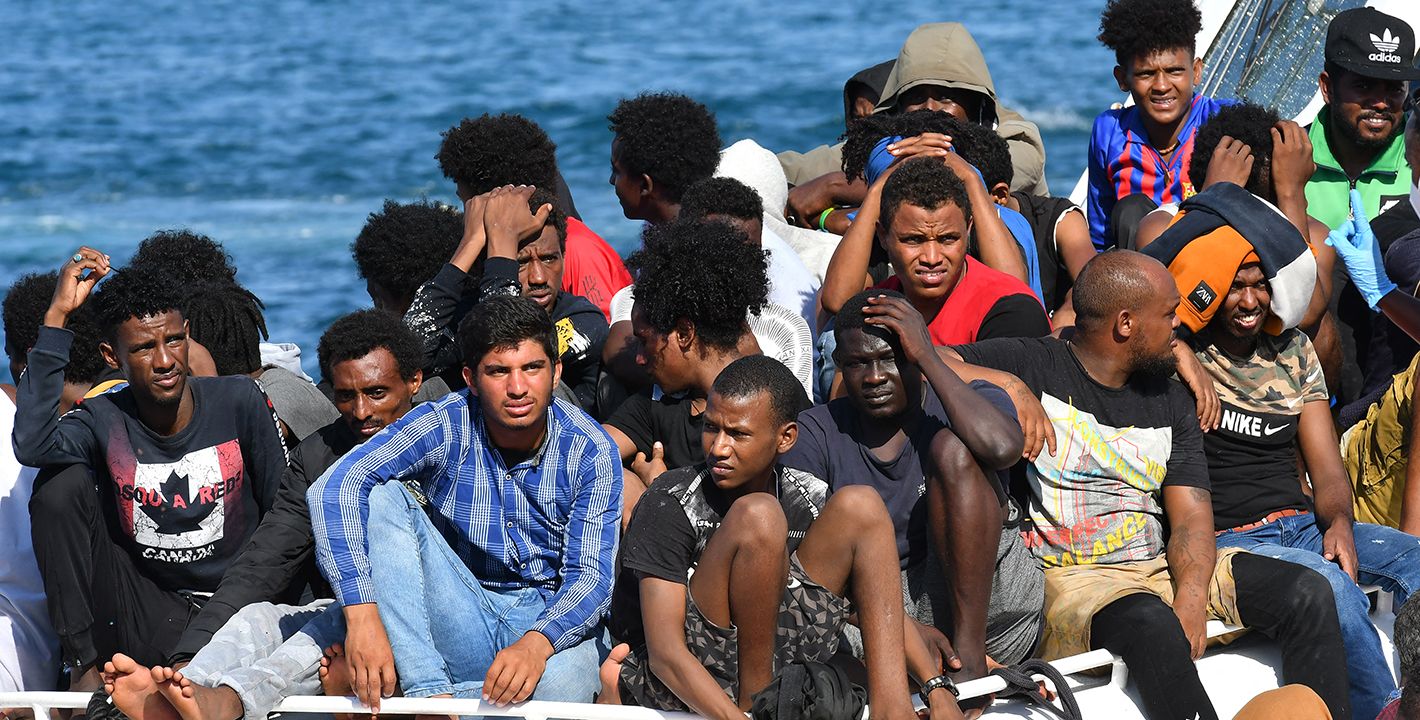
In an interview, Yasmine Zarhloule discusses irregular migration to Europe and the shortcomings of a securitization policy.
Rayyan Al-Shawaf
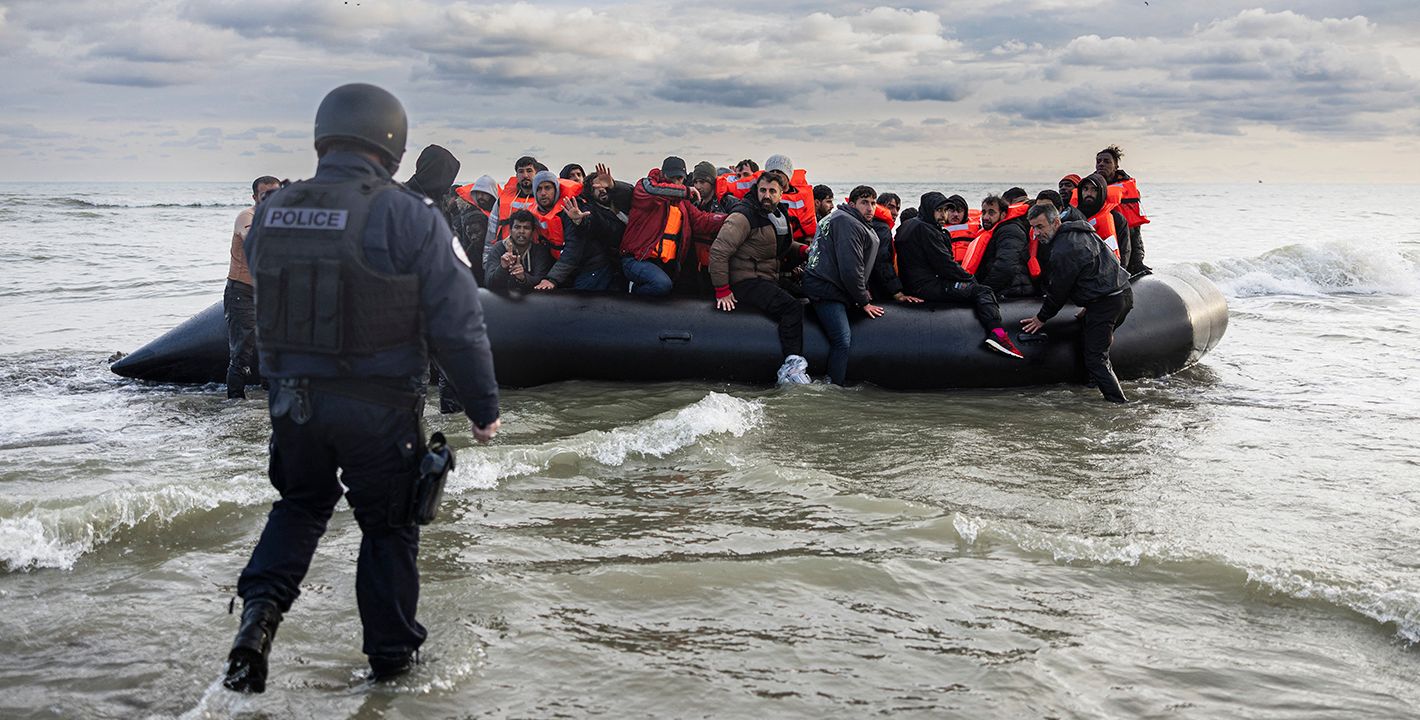
The EU has responded to unwanted arrivals with ever-stricter security measures, an approach that has both led to increased human rights violations and failed to stem the migratory tide.

Yasmine Zarhloule
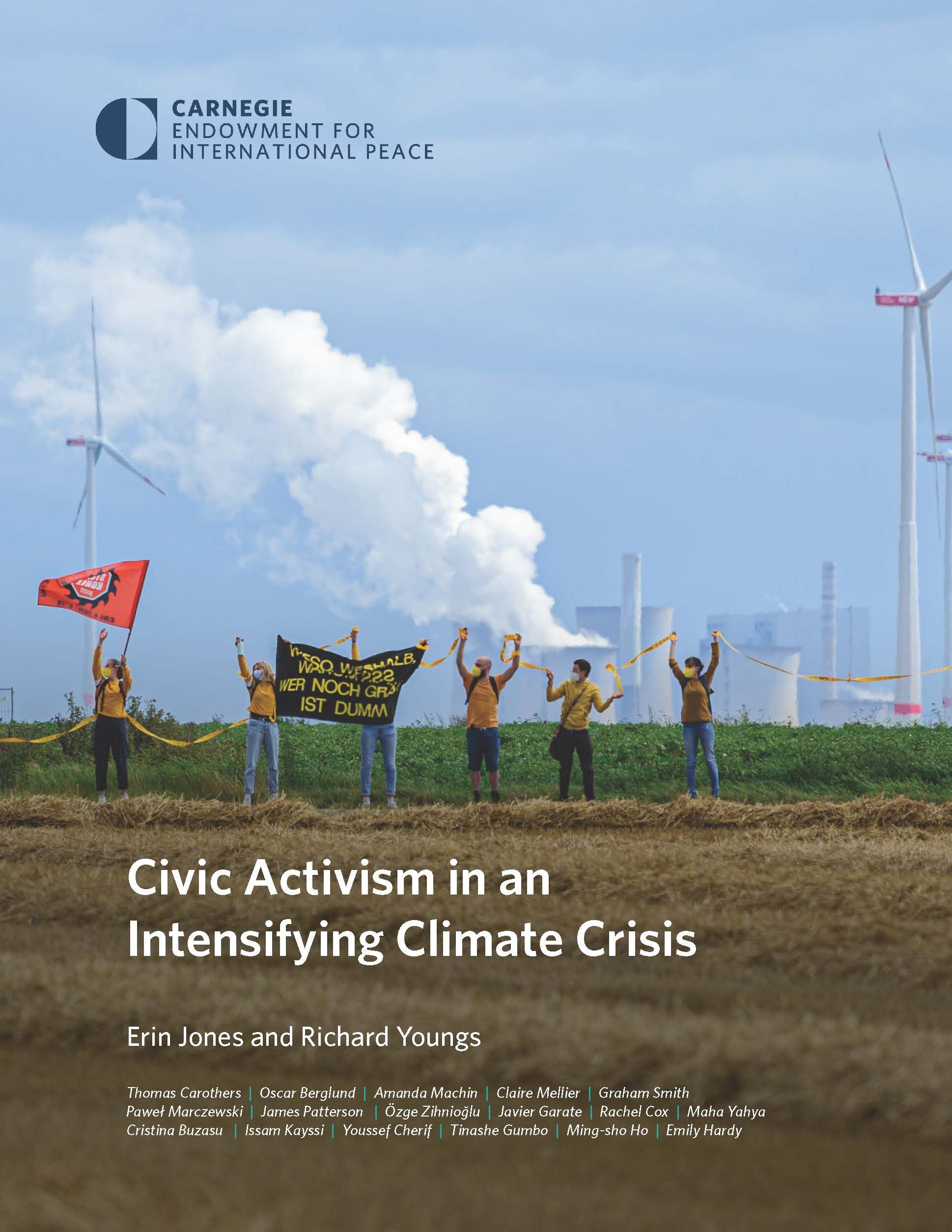
To address the deepening climate crisis, climate activism is employing a wider variety of tactics and aiming at a broader set of goals. In response, the movement faces stronger repression and civic backlash against climate action.


Erin Jones, Richard Youngs
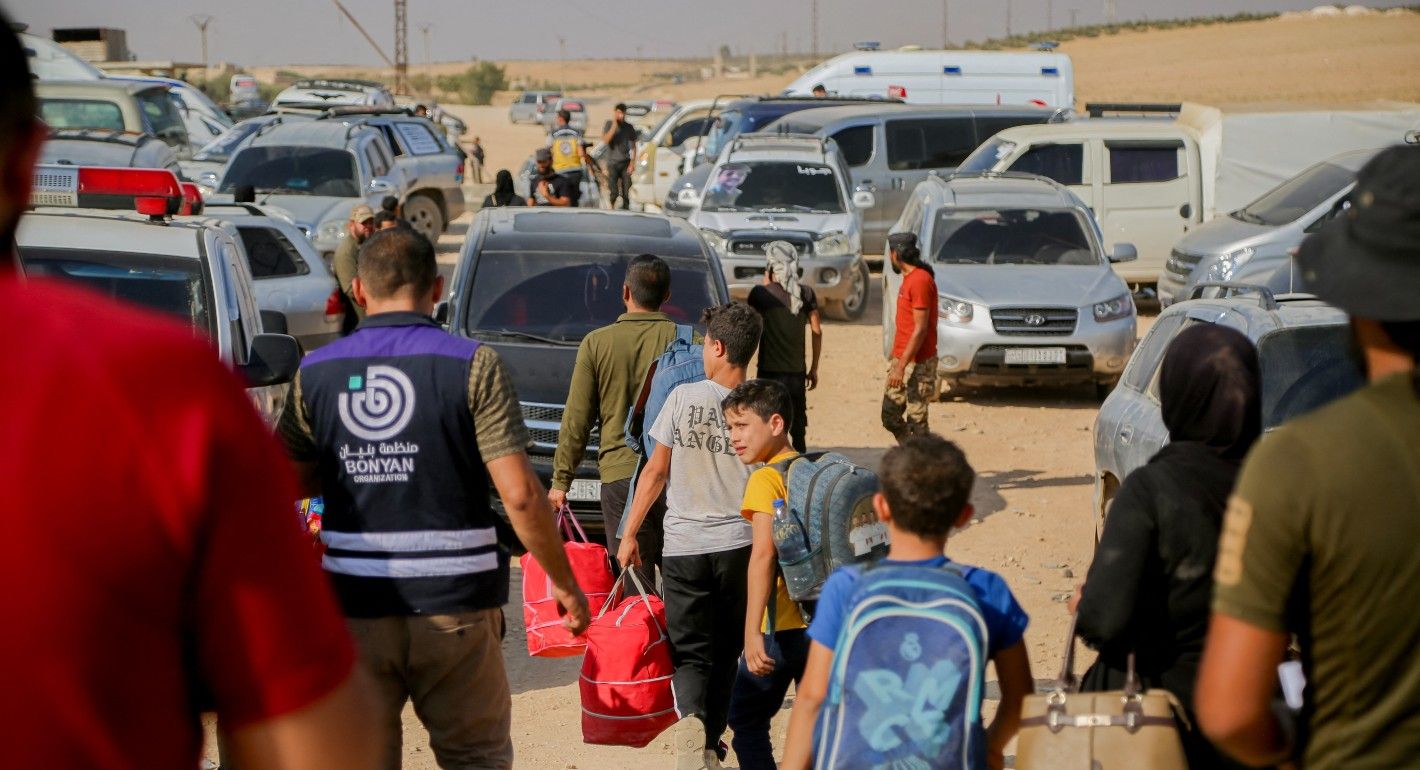
A humanitarian crisis in Lebanon deepens, and Syrian refugees face a perilous choice: remain in a war-torn environment or return to Syria where they risk encountering significant dangers and discrimination. There are significant challenges and risks to their search for safety in Syria.
Haid Haid
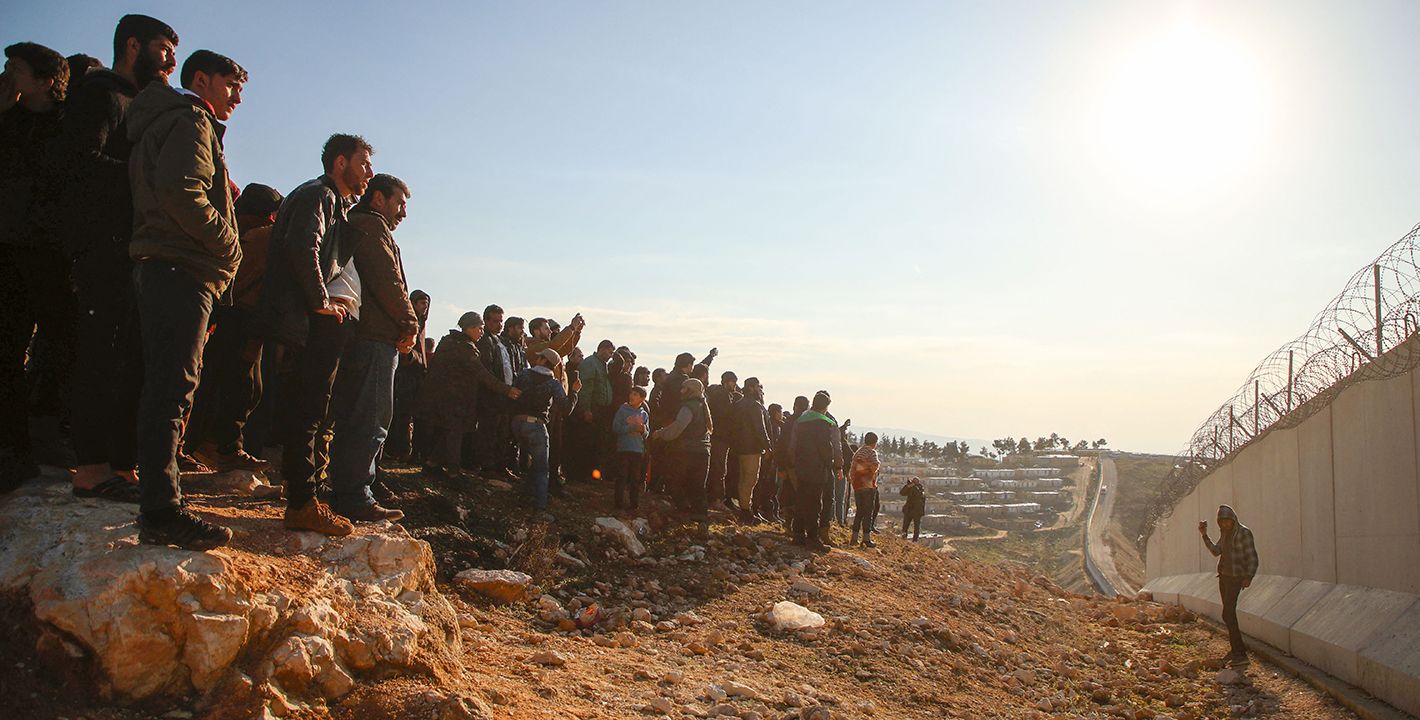
In Syria’s border regions, changes in demographics, economics, and security mean that an inter-Syrian peace process will require consensus among main regional powers that Syria must remain united, that no one side can be victorious, and that perennial instability threatens the region.


Kheder Khaddour, Armenak Tokmajyan