

Commentary
- +8
Sophia Besch, Eric Ciaramella, Steve Feldstein, …
{
  "authors": [
    "Milan Vaishnav"
  ],
  "type": "legacyinthemedia",
  "centerAffiliationAll": "dc",
  "centers": [
    "Carnegie Endowment for International Peace"
  ],
  "collections": [],
  "englishNewsletterAll": "ctw",
  "nonEnglishNewsletterAll": "",
  "primaryCenter": "Carnegie Endowment for International Peace",
  "programAffiliation": "SAP",
  "programs": [
    "South Asia"
  ],
  "projects": [
    "India Decides 2014"
  ],
  "regions": [
    "South Asia",
    "India"
  ],
  "topics": [
    "Political Reform"
  ]
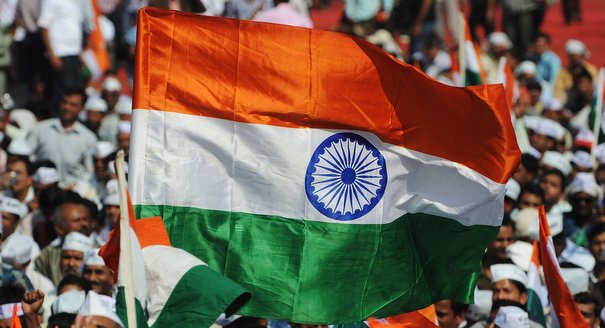
}
Source: Getty
The Indian Supreme Court’s opinion that convicted criminals cannot serve in parliament is a win for reformers, but not a total victory in the war on criminality in politics.
Source: Indian Express
The Supreme Court ruled last Wednesday that sitting members of Parliament (MPs) and members of legislative assemblies (MLAs) will have to forfeit their seats if convicted of breaking the law.
Justifiably, many anti-corruption activists reacted with glee as this judgment marks yet another victory in their efforts to cleanse electoral politics of the twin threats of muscle and money. Indeed, the court's decision comes on the heels of the Central Information Commission's ruling that political parties are subject to the Right to Information Act, opening the door to greater scrutiny of the parties' murky finances.
While some politicians welcomed the court's landmark decision, many parties responded with caution, if not downright skepticism. The ruling is a win for democratic reformers, but it is not quite time to pop the champagne corks. Pronouncements that the court's ruling "bans" criminals from holding office or that this decision will "cleanse" politics of tainted representatives are overstated.But first, the good news. Under Section 8(4) of the Representation of the People Act, 1951, sitting MPs and MLAs can serve in office even if they are convicted of a crime, unless and until their appeals are exhausted. A PIL suit filed by Lily Thomas and Lok Prahari claimed this latter clause advantages elected politicians over aspirant candidates, for whom a conviction merits disqualification, appeal or no appeal.
In siding with the plaintiffs, the court stated that this special exception afforded to elected representatives is ultra vires, or beyond Parliament's constitutional powers. So as to not penalize current incumbents, who won office under the prior regime, the ruling will only apply prospectively.
It should be obvious why this is a victory for Indian democracy. The idea that some of the country's foremost lawmakers are simultaneously convicted law-breakers makes a mockery of the institution of Parliament, not to mention India's tagline as "the world's largest democracy."
Statistics about the criminal antics of India's elected representatives scarcely need repeating. Out of 543 Lok Sabha MPs, 162 face pending criminal cases, with at least 75 facing serious criminal charges (as defined by the Association for Democratic Reforms, or ADR). The situation in state assemblies is equally dire.
Yet, very few of these criminally suspect legislators are convicted, or for that matter, are likely to be convicted, given the inadequacies of India's justice system. Irrespective of the defendant's guilt or innocence, in India, the wheels of justice move slowly — in the countless years it takes for a case to be brought to its logical conclusion, prosecutors are transferred, witnesses mysteriously "disappear" or get cold feet, and justices succumb to old age. Let us not forget that many individuals involved in criminal activity seek elected office precisely because politics offers a promising avenue for circumventing justice. While India's elected representatives do not have formal immunity from prosecution, office-holders can rely on the trappings of office to delay or derail justice. Chief among these is the ability of elected politicians to transfer pesky officials for reasons unrelated to their performance.
Thus, even after Wednesday's ruling, elected MLAs and MPs who face criminal suspicion but have not yet been convicted have an easy way out. Thanks to the outcome of another PIL instigated by ADR, at the time of their nomination, every assembly or parliamentary candidate must submit an affidavit declaring any pending criminal cases. Yet, immediately after filing these affidavits, candidates openly repudiate these documents — invariably attributing their rap sheets to "false" or "politically motivated" cases. Thus, when Arvind Kejriwal lambastes Parliament for providing a refuge for "rapists, murderers and looters", politicians predictably feign outrage. Cases, they insist, are hardly equivalent to convictions. This excuse quite literally serves as every indicted politician's "get-out-of-jail-free card."
It is no secret what is needed to plug this loophole. At a minimum, governments must roll back the "transfer raj", a badly abused practice nearly everyone agrees is administratively and socially inefficient. This would eliminate the criminal-turned-politician's ace-in-the-hole. But more ambitious action is needed: the time has come for Parliament to take up the long-awaited electoral reforms promulgated by the Election Commission. The first point on the EC's list is that any candidate against whom charges have been framed by a court, at least six months prior to the election, and for an offence punishable by at least five years in jail, should be disqualified. Yet politicians, and frankly many reformers, find this proposal draconian. To circle this square, such a move could be coupled with the establishment of a special electoral tribunal charged with adjudicating serious criminal cases against political aspirants. This would be tantamount to a fast-track court — a policy of last resort — but there is hardly a better case for speedy justice than when it comes to those actually making the laws.
Barring such decisive action, perhaps we ought to be comforted by the current trickle of small victories, as painstaking and incremental as they might be. When it comes to the criminalization of politics, we would be operating in the dark, were it not for the relentlessness of NGOs like ADR, the foresight of the courts or the integrity of the EC. But as we celebrate the court's decision to put convicts in their rightful place — in jail rather than Sansad Bhavan — let's remember one thing: democratic reformers have won the battle, not (yet) the war.

Director and Senior Fellow, South Asia Program
Milan Vaishnav is a senior fellow and director of the South Asia Program and the host of the Grand Tamasha podcast at the Carnegie Endowment for International Peace. His primary research focus is the political economy of India, and he examines issues such as corruption and governance, state capacity, federalism, and electoral behavior. He also conducts research on the Indian diaspora.
Recent Work



Sophia Besch, Eric Ciaramella, Steve Feldstein, …


Louise Tillin, Milan Vaishnav, Andy Robaina
Carnegie does not take institutional positions on public policy issues; the views represented herein are those of the author(s) and do not necessarily reflect the views of Carnegie, its staff, or its trustees.
A humanitarian crisis in Lebanon deepens, and Syrian refugees face a perilous choice: remain in a war-torn environment or return to Syria where they risk encountering significant dangers and discrimination. There are significant challenges and risks to their search for safety in Syria.
Haid Haid
In an interview, Abhinav Pandya discusses the multiple facets of India’s ties with the Middle East.

Armenak Tokmajyan
In Syria’s border regions, changes in demographics, economics, and security mean that an inter-Syrian peace process will require consensus among main regional powers that Syria must remain united, that no one side can be victorious, and that perennial instability threatens the region.
Kheder Khaddour, Armenak Tokmajyan
The interaction of national armed forces and private business sectors offers a useful lens for viewing the politics of numerous countries of the so-called Global South. A rising trend of military political activism—often accompanied by military commercial activity—underlines the importance of drivers and outcomes in these relationships.

Yezid Sayigh, Hamza Meddeb
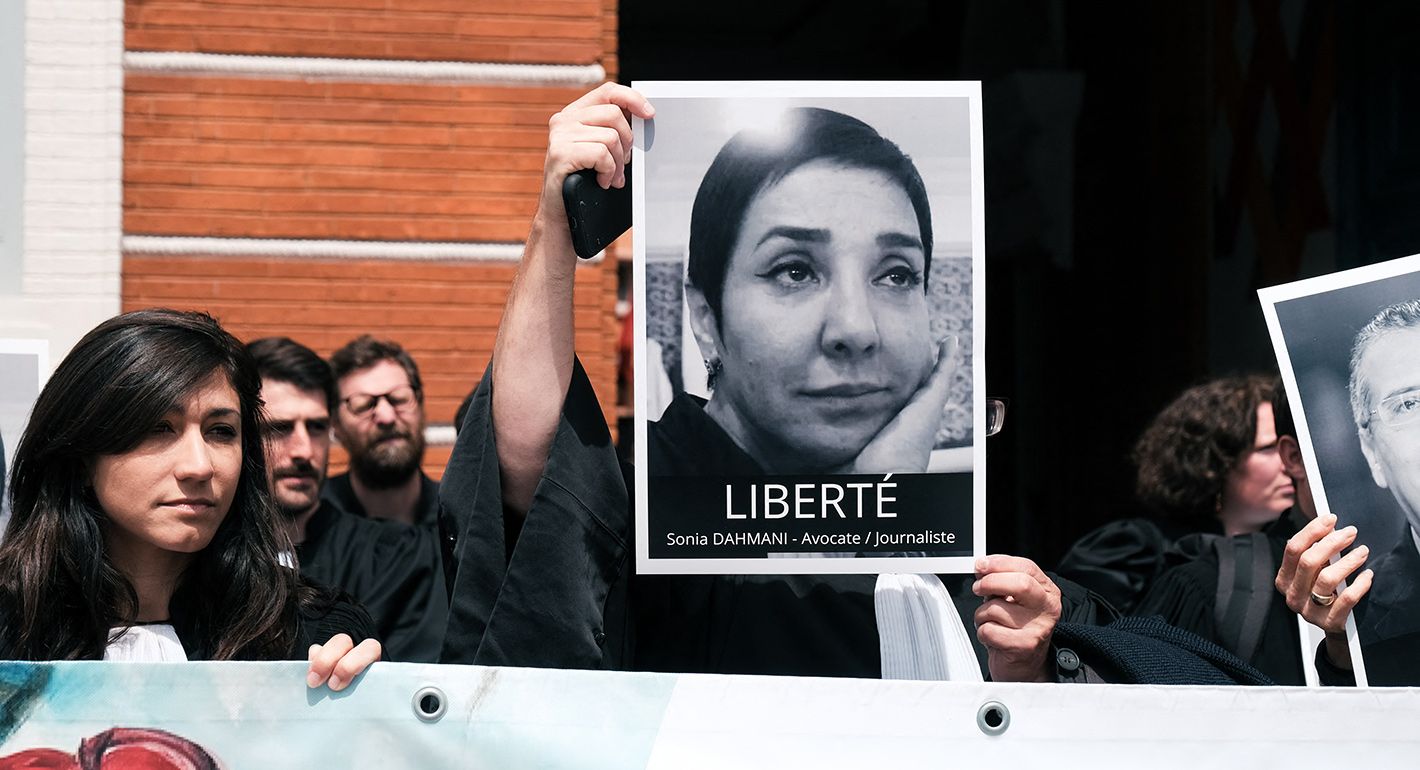
For many in the society, the post-Ben Ali years were mainly about successive economic crises and political instability.
Jasmine Khelil