

Commentary
Dmitri Trenin
{
  "authors": [
    "Dmitri Trenin"
  ],
  "type": "commentary",
  "centerAffiliationAll": "",
  "centers": [
    "Carnegie Endowment for International Peace",
    "Carnegie Russia Eurasia Center"
  ],
  "collections": [],
  "englishNewsletterAll": "",
  "nonEnglishNewsletterAll": "",
  "primaryCenter": "Carnegie Russia Eurasia Center",
  "programAffiliation": "",
  "programs": [],
  "projects": [],
  "regions": [],
  "topics": []
}
Source: Getty
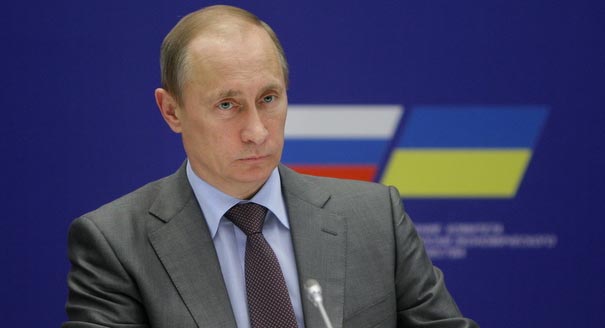
By shifting gears abruptly from professions of eternal brotherhood with the Ukrainian people to what amounts to a trade war, Vladimir Putin effectively works at cross-purposes with himself.
Even though the choice between Europe and Eurasia is Ukraine’s to make, others are trying to help her. The Russian Customs decision last Tuesday to subject all Ukrainian imports to meticulous border checks may incur losses worth billions of dollars. The Russian president’s recent attempt, during a visit to Kiev, to sway his Ukrainian colleague toward a choice in favor of the Eurasian Union has evidently proven futile. Now Moscow is trying to achieve the same goal by pressuring its would-be partner. The result is likely to be similar.
Ukraine, still heavily dependent on the Russian market, will definitely suffer. In playing hardball against its neighbor, Russia will also sustain some damage. The net result, however, will be a rekindling Ukrainian nationalism and a semblance of national unity in Kiev. This will not last, of course, as Ukrainian elites will continue with their favorite games. European politicians and the media—those not on vacation in this silly season—will criticize Moscow’s manhandling of Kiev, but will hardly go beyond that. Yet, since any serious integration is a voluntary process, Russia can but lose the game.
Typically, the Kremlin’s policy toward Russia’s post-Soviet neighbors is a two-step succession of carrots and sticks, devoid of a long-term strategy. This is a primitive and outdated approach. It brings Russia neither respect nor reward in the neighborhood. Rather, it feeds local nationalisms by periodically strengthening their anti-Russian element. By shifting gears abruptly from professions of eternal brotherhood with the Ukrainian people to what amounts to a trade war, Mr. Putin effectively works at cross-purposes with himself. Ukraine will not join Europe—at least, not for a long time, but it will certainly not rejoin Russia.
Former Director, Carnegie Moscow Center
Trenin was director of the Carnegie Moscow Center from 2008 to early 2022.
Recent Work
Dmitri Trenin
Dmitri Trenin
Carnegie does not take institutional positions on public policy issues; the views represented herein are those of the author(s) and do not necessarily reflect the views of Carnegie, its staff, or its trustees.