

In The Media
Lilia Shevtsova
{
  "authors": [
    "Lilia Shevtsova"
  ],
  "type": "commentary",
  "centerAffiliationAll": "",
  "centers": [
    "Carnegie Endowment for International Peace",
    "Carnegie Russia Eurasia Center"
  ],
  "collections": [],
  "englishNewsletterAll": "",
  "nonEnglishNewsletterAll": "",
  "primaryCenter": "Carnegie Russia Eurasia Center",
  "programAffiliation": "",
  "programs": [],
  "projects": [],
  "regions": [],
  "topics": []
}
Source: Getty
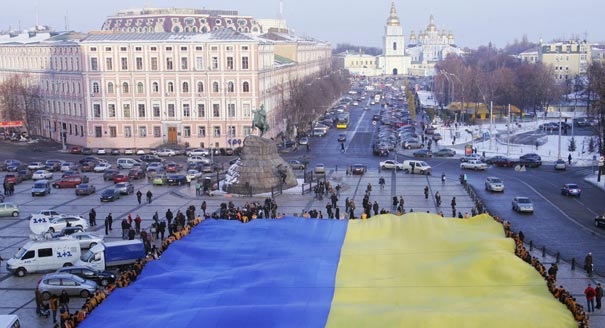
Viktor Yanukovych will try to balance between Moscow and the European Union. Continued hesitation would mean unavoidable crisis in Ukraine’s obsolete economy. Such crisis would be Ukraine’s moment of truth: either go begging to Moscow or start carrying out the painful reforms.
You could call this post travel notes of a sort. I follow events in Ukraine closely above all because it is where I come from originally. I was in Kiev recently and took part in a seminar that the Den newspaper and my friend Larisa Ivshina, its chief editor, organize every year for Ukrainian journalists from all around the country. We talked about Russia and Ukraine, the wider world, our past, and our future. Later, I spent a long time speaking with Yevgeny Marchuk, former Ukrainian prime minister and a man of impressive intelligence.
Here are a few of my thoughts on where Ukraine is today. The country remains in a state of uncertainty over its civilizational choice. Russia is increasingly moving from a state of uncertainty to looking back into the past. Ukraine, on the other hand, has the potential to move toward the future. A turn toward Europe is essential for this future. So what is stopping Ukraine from making this choice a reality? Here are some of the obstacles on Ukraine’s path to Europe:
The Orange Revolution did not create a rule-of-law state in Ukraine. Current President Yanukovych looks at times like Putin’s pupil and emulator and comes close to copying Kremlin methods in his efforts to keep himself in power. But for all this, Ukraine is not Russia. Let’s look at the things that can facilitate Ukraine’s turn toward the rule of law—the embodiment of what Europe is about. These include continued political pluralism, strong regions, including pro-Western regions, the memory of the Orange Revolution, that is to say, the knowledge that society can force the authorities to listen, and the Ukrainian oligarchy and establishment’s desire to play an independent role, which would mean keeping Ukraine independent from Russia, something that is possible only by tying Ukraine to Europe. This foreign policy aspect—independence from Moscow—is of huge importance for Ukraine and has a determining impact on its domestic life. It is this same factor that can limit personalized power in Ukraine. The situation in neighboring Belarus shows, of course, that one can have an authoritarian regime and still be in the Kremlin’s embrace, but if this were the case the Ukrainian authorities would be constantly having to go to Moscow to do some kowtowing, and this is precisely what the Ukrainian elite wants to avoid.
Yanukovych is going to attempt to continue Leonid Kuchma’s policy now, that is to say, he will try to balance between Moscow and the European Union (EU) at the same time. He will not be able to hold this balance for long. If Kiev succeeds in signing an association agreement with the EU, it will commit Ukraine to embracing the rules of the game that apply in rule-of-law states and abandoning thoughts of joining the Eurasian Union that Putin is building. Time for hesitation is running out fast for Ukraine. Continued hesitation would mean unavoidable crisis in the country’s obsolete economy. Such crisis would be Ukraine’s moment of truth: either go begging to Moscow or start carrying out the painful reforms that would mark the start of building a new Ukraine. Ukraine now has a new generation that could well choose the second path.
Former Senior Associate, Russian Domestic Politics and Political Institutions Program, Moscow Center
Shevtsova chaired the Russian Domestic Politics and Political Institutions Program at the Carnegie Moscow Center, dividing her time between Carnegie’s offices in Washington, DC, and Moscow. She had been with Carnegie since 1995.
Recent Work
Lilia Shevtsova
Lilia Shevtsova
Carnegie does not take institutional positions on public policy issues; the views represented herein are those of the author(s) and do not necessarily reflect the views of Carnegie, its staff, or its trustees.