

In The Media
Lilia Shevtsova
{
  "authors": [
    "Lilia Shevtsova"
  ],
  "type": "legacyinthemedia",
  "centerAffiliationAll": "",
  "centers": [
    "Carnegie Endowment for International Peace",
    "Carnegie Europe",
    "Carnegie Russia Eurasia Center"
  ],
  "collections": [],
  "englishNewsletterAll": "",
  "nonEnglishNewsletterAll": "",
  "primaryCenter": "Carnegie Russia Eurasia Center",
  "programAffiliation": "",
  "programs": [],
  "projects": [],
  "regions": [
    "Europe"
  ],
  "topics": [
    "EU"
  ]
}
Source: Getty
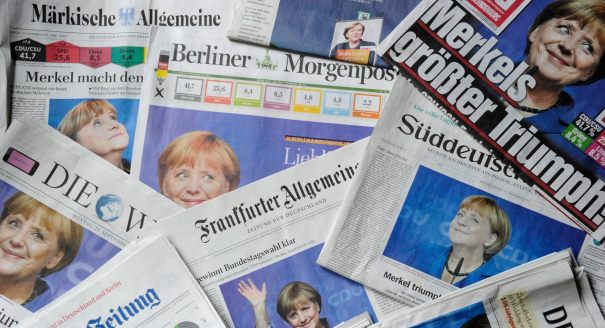
Merkel’s rule, apparently, means a break in Germany’s life due to the lack of new political elites and leaders.
Source: Day
Angela Merkel will continue her era in Germany. As if anyone had doubts about that? Of course, it is impossible not to admire her. A daughter of a humble Protestant pastor from East Germany has not only managed to reformat the German conservatism. For eight years already she has been ruling the European superpower, the second largest nation in the world. But we also have to admit that Angela Merkel looks impressive against the background of political pygmies who now rule the West. The most influential of the Western leaders – Barack Obama has chosen a form of “leadership from the backseat,” as his form of ruling was called in America. The other Western leaders seem to be embarrassingly out of place in their positions…
And against this background the figure of Merkel, who has become a status quo leader in Germany and the guarantor of stability, definitely stands out. She gives an impression of a captain who stubbornly keeps the ship “Germany” in the same place. Indeed, Merkel looks like the opposite of Margaret Thatcher, who had reformed the UK in her time. It is even said that Merkel cannot stand such comparison…However, sometimes a nation needs to focus on continuity and the status quo. But after all Europe, including Germany, entered the stage when they need to find answers to new challenges, when they need to think about the strategic choice. Instead, the German chancellor discusses with the Germans how to better insulate windows. German observers say that Merkel wins due to the fact that she forms apathy and disillusionment with the political institutions and parties in the society. And really, why would the Germans need institutions, when they have Mutti, who will solve everything for them, will calm them down, and give a candy to those, who need it.
Meanwhile, history teaches that when society falls into a depression and sleep, this is a forerunner of stagnation and crisis. Society needs the movement and air! There are even more serious consequences of such sleep – sometimes it brings to life the populist leaders with destructive energy.
In short, the rule of Merkel, apparently, means a break in Germany’s life. Perhaps, Germany wants to keep this break for as long as possible because they are comfortable in it. It’s amazing: Germany has become a great state and now tries to hide in the closet and pretend to be a small and devoid of all ambitions. I think that it is not only the preserving fear of the Germans for the waking complexes of the past. This means lack of new political elites and leaders who are ready for the new responsibility…
But sooner or later, Germany will have to start moving… Will Frau Merkel be able to start it? There has been no case in history when leaders, who symbolized the status quo, suddenly became transformers. Let’s see whether Merkel will change this logic.
And now what concerns Merkel’s policy with regard to Russia and Ukraine. When it comes to Russia, Merkel has become the successor of “Schroederization,” that is the course on a close partnership with the Kremlin, which is the most important factor in legitimization of the Russian regime and its economic replenishment. One could even argue that there would have been no “gasoline state” in Russia created by Putin, that props up the corrupt rentier class and the ruling team, if it was not for the “Schroederization-Merkelization.”
What concerns Ukraine, I do not see any signs that Berlin is particularly eager to help Ukraine to break out of the sphere of the Kremlin’s influence. Let’s see how Berlin will act now, when the moment of truth has come for Ukraine – a choice of whether it would associate itself with Europe or with Putin’s Russia. I think that a moment might come, when it will become clear that neither the euro crisis, nor the crisis of the EU, but the fate of Ukraine is the most important criterion for Merkel’s leadership and the weight of Germany in international affairs.
Former Senior Associate, Russian Domestic Politics and Political Institutions Program, Moscow Center
Shevtsova chaired the Russian Domestic Politics and Political Institutions Program at the Carnegie Moscow Center, dividing her time between Carnegie’s offices in Washington, DC, and Moscow. She had been with Carnegie since 1995.
Recent Work
Lilia Shevtsova
Lilia Shevtsova
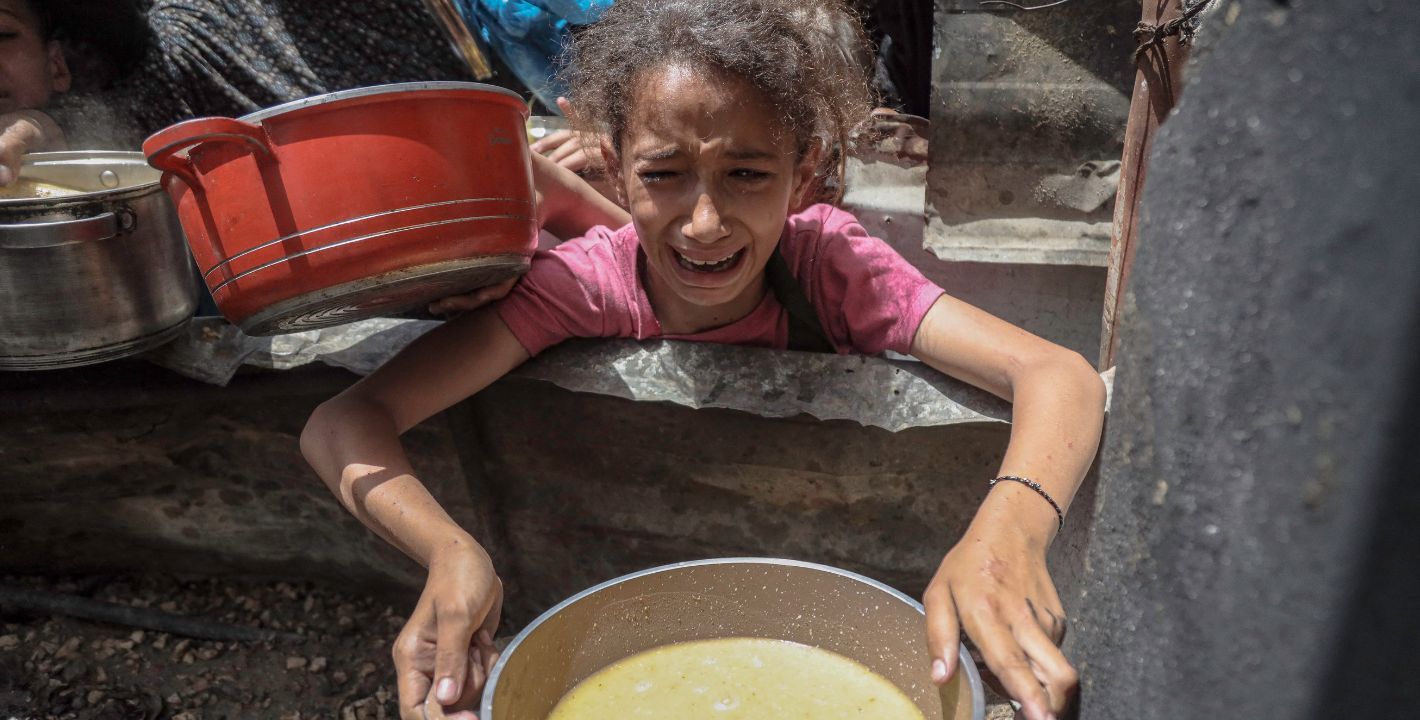
But growing hostility to Israeli actions is too late to save the West from the lasting damage of Gaza.
Michael Young
For the EU, the new leaders in Damascus’ stated aims provide a basis for cooperation.
Marc Pierini

Antony Blinken took his guitar to Kyiv to lift the spirits of Ukrainians, but Arabs are apparently denied his tunes.
Michael Young
What happens in the Middle East will not be contained there, so the European Union should prepare for this by reaffirming its values.
H. A. Hellyer
In an interview, Geneive Abdo discusses how the Gaza war has been tearing Western societies apart.
Michael Young