

Paper
George Perkovich
{
  "authors": [
    "George Perkovich"
  ],
  "type": "legacyinthemedia",
  "centerAffiliationAll": "dc",
  "centers": [
    "Carnegie Endowment for International Peace",
    "Malcolm H. Kerr Carnegie Middle East Center"
  ],
  "collections": [
    "Iranian Proliferation",
    "U.S. Nuclear Policy"
  ],
  "englishNewsletterAll": "ctw",
  "nonEnglishNewsletterAll": "",
  "primaryCenter": "Carnegie Endowment for International Peace",
  "programAffiliation": "NPP",
  "programs": [
    "Nuclear Policy"
  ],
  "projects": [],
  "regions": [
    "North America",
    "United States",
    "Middle East",
    "Iran",
    "Western Europe"
  ],
  "topics": [
    "Nuclear Policy",
    "Arms Control"
  ]
}
Source: Getty
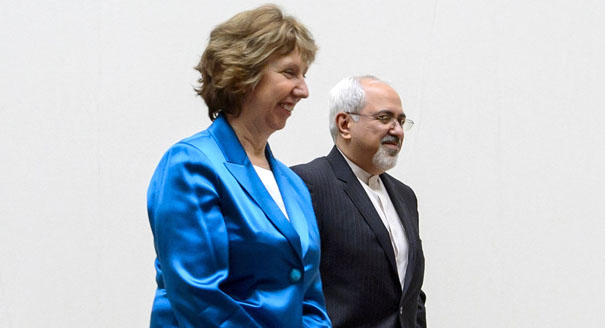
Experts are touting this as the first moment in a decade when both sides are hopeful about a negotiated solution.
Source: WNYC Takeaway
As talks over Iran’s nuclear program enter their second day today in Geneva, Carnegie’s George Perkovich spoke to WNYC's the Takeaway host John Hockenberry.
The five permanent members of the United Nations Security Council (the United States, France, Britain, China and Russia), in addition to Germany—the so-called P-5 + 1 group—have sent representatives to meet with Iranian foreign ministry officials to discuss a way to resolve the standoff over the country’s nuclear program. Some experts are touting this as the first moment in a decade when both sides are hopeful about a negotiated solution. Perkovich said the talks were the most promising thing that had happened in the last twelve years since this issue has really been a crisis. “They seem serious in actually wanting to resolve it,” said Perkovich, adding, “their main motivation is that they want sanctions relief.”
This interview was originally broadcast on WNYC’s the Takeaway.

Japan Chair for a World Without Nuclear Weapons, Senior Fellow
George Perkovich is the Japan Chair for a World Without Nuclear Weapons and a senior fellow in the Carnegie Endowment for International Peace’s Nuclear Policy Program. He works primarily on nuclear deterrence, nonproliferation, and disarmament issues.
Recent Work
George Perkovich
George Perkovich
Carnegie does not take institutional positions on public policy issues; the views represented herein are those of the author(s) and do not necessarily reflect the views of Carnegie, its staff, or its trustees.

In an interview, Ian Lustick and Eli Clifton discuss their new book on why a prominent ally has so much influence in America.

Michael Young

As the U.S. stumbles in its war with Iran, we are likely to see an acceleration of its disengagement from the region.
Michael Young

Huawei pushed hard to enter the Egyptian data centers market, until the Americans made a better offer.

Angie Omar

Middle Eastern states should welcome an accelerated U.S. disengagement from their region.
Michael Young

In an interview, former ambassador Charles Freeman assesses the Trump administration’s war against Iran.
Michael Young