

Research
- +4
Milan Vaishnav, Rahul Verma, Rukmini S., …
{
  "authors": [
    "Christophe Jaffrelot"
  ],
  "type": "legacyinthemedia",
  "centerAffiliationAll": "dc",
  "centers": [
    "Carnegie Endowment for International Peace"
  ],
  "collections": [],
  "englishNewsletterAll": "ctw",
  "nonEnglishNewsletterAll": "",
  "primaryCenter": "Carnegie Endowment for International Peace",
  "programAffiliation": "SAP",
  "programs": [
    "South Asia"
  ],
  "projects": [],
  "regions": [
    "South Asia",
    "India"
  ],
  "topics": [
    "Political Reform"
  ]
}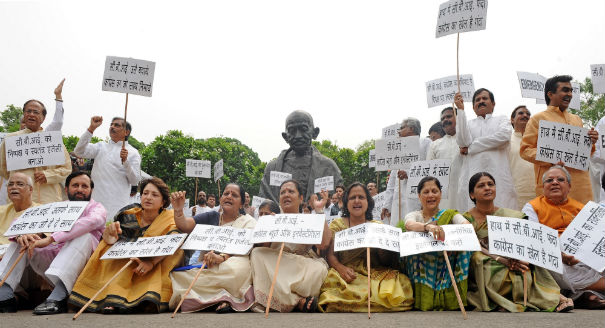
Source: Getty
As early as the 1920s, Sardar Vallabhbhai Patel showed ambivalent attitudes vis-à-vis the Muslim minority in Gujarat and India at large
Source: Indian Express
As early as the 1920s, Sardar Vallabhbhai Patel showed ambivalent attitudes vis-à-vis the Muslim minority in Gujarat and India at large. On the one hand, he had been supportive of the Khilafat Movement, considering that it had "as a matter of fact, been a heartbreaking episode for the Indian Muslims, and how can Hindus stand by unaffected when they see their fellow countrymen thus in distress?" This sense of solidarity was fostered by his belief — that he emphasised in the 1940s in the name of national unity — that Muslims "originally belonged to India and were converted from Hindus". On the other hand, Patel complained to Mahatma Gandhi one day that "the manners and customs of Muslims are different. They take meat while we are vegetarians. How are we to live with them in the same place?" Gandhi replied "No sir. Hindus as a body are nowhere vegetarians except in Gujarat." Patel's attitude vis-à-vis the Muslim minority changed after Partition. In a letter he wrote to Rajendra Prasad on September 5, 1947, he explains that, as home minister, he had "already given licences to two or three Hindu dealers for the sale of arms", suggesting that he was promoting anti-Muslim militias.
Soon after Independence, in November 1947, Patel came to Junagadh — a state whose Nawab wanted to accede to Pakistan — in order to direct the occupation of the state by the Indian army. He seized this opportunity to visit the remnants of the temple of Somnath. According to his close associate, V.P. Menon, he "was visibly moved to find the temple which had once been the glory of India looking so dilapidated. It was proposed then and there to reconstruct it so as to return it to its original splendour..." He declared that "The restoration of the idols would be a point of honour and sentiment with the Hindu public". While Gandhi and Nehru disapproved of a decision that was, in their view, affecting the religious neutrality of the state, Patel received the support of the Sangh Parivar.He was to show some sympathy to the RSS a few weeks later. In December 1947, he made a speech in Jaipur that reflected his will "to turn the enthusiasm and discipline of Rashtriya Swayamsevak Sangh into right channels". On January 6, 1948, in a speech in Lucknow, he invited the Hindu Mahasabha to amalgamate with the Congress. He held out the same invitation to members of the RSS, criticising Nehru obliquely: "In the Congress, those who are in power feel that by virtue of authority they will be able to crush the RSS. You cannot crush an organisation by using the danda [stick]. The danda is meant for thieves and dacoits. They are patriots who love their country. Only their trend of thought is diverted. They are to be won over by Congressmen with love."
Gandhi was assassinated by Nathuram Godse, a former RSS member, three weeks later and the organisation was banned. As home minister, Patel was in charge of the repression that he justified in eloquent terms to S.P. Mookerjee, his colleague from the Hindu Mahasabha in the Nehru government: "The activities of the RSS constituted a clear threat to the existence of the government and the state. Our reports show that those activities, despite the ban, have not died down. Indeed, as time has marched on, the RSS circles are becoming defiant and are indulging in their subversive activities in an increasing measure."
Still, Patel was prepared to engage the RSS. In December 1948, he "advised members of the RSS to join the Indian National Congress if they had the good of the country uppermost in their hearts". Then he negotiated with RSS leaders the making of a constitution in order to lift the ban. In February 1949, he declared in the course of an interview: "To the RSS I have made an open offer. I told them: change your plans, give up secrecy, draft your constitution, come in the open field, respect the Constitution of India, show your loyalty to the Constitution and the flag and make us believe that we can trust your own words. To say one thing and to do another is a game which will not suit."
Still, he wanted to make the best of the RSS. One month later, revealing his ambivalence, he said in an interview: "You will recall that there was a time when people called me a supporter of the RSS. To some extent that was true because these young men were brave, resourceful and courageous, but they were a little mad. I wanted to utilise their bravery, power and courage and cure them of their madness by making them realise their true responsibilities and their duty. It is that madness that I want to eradicate."
Patel legalised the RSS after it adopted a constitution complying with his demands. He then considered that "the only way for them is to reform the Congress from within, if they think the Congress is going on the wrong path." Soon after, on October 10, 1949, while Nehru was abroad, Patel had a resolution passed by the Congress Working Committee authorising RSS members to be part of the party. Nehru later had this resolution nullified.
While Patel appreciated some of the qualities of the RSS, he was not in favour of letting the organisation penetrate the state apparatus. In January 1948 — shortly before the assassination of Gandhi — he declared, during a press conference, that he "would approve the reported action of the Bombay government banning the employment of Rashtriya Swayamsevak men in government service... because it was not proper for government servants to identify themselves with a communal organisation" [sic].
These words stand in stark contrast with one decision that the BJP government made in Gujarat under Keshubhai Patel. In January 2000, Keshubhai Patel removed the RSS from the list of organisations whose members were not allowed to join the bureaucracy. The RSS general secretary, H.V. Seshadri, immediately demanded that the Centre adopt the same policy. Prime Minister Atal Bihari Vajpayee publicly defended the Gujarat government order by arguing that the RSS was "a cultural and social organisation" and replied to President K.R. Narayanan that, while he had no intention to lift the ban on Central government employees joining the RSS, there were constitutional difficulties in asking the Gujarat government to reconsider its decision.
Among the BJP's partners, the DMK was among the most embarrassed. Its chief, M. Karunanidhi, wrote to Vajpayee that if civil servants were allowed to take part in cultural or social associations affiliated to political parties, they would destroy the administrative machinery. The BJP's spokesperson, J.P. Mathur, replied that this issue would "not be allowed to create a rift in the National Democratic Alliance". On March 6, 2000, Rajendra Singh made a statement appreciating the Gujarat government's decision but emphasised that "the RSS had not sought the withdrawal of the circular prohibiting government employees from participating in its activities, because RSS work has never been dependent on any government's attitude, positive or negative, towards it". The following day, the BJP high command asked Keshubhai Patel to rescind the order, and he immediately complied.
Sardar Patel had been vindicated because of one of the NDA partners, in spite of the spontaneous attitude of the RSS and BJP leaders who claim his legacy today.
This article was originally published in the Indian Express.

Former Nonresident Scholar, South Asia Program
Jaffrelot’s core research focuses on theories of nationalism and democracy, mobilization of the lower castes and Dalits (ex-untouchables) in India, the Hindu nationalist movement, and ethnic conflicts in Pakistan.
Recent Work

Milan Vaishnav, Rahul Verma, Rukmini S., …
Christophe Jaffrelot
Carnegie does not take institutional positions on public policy issues; the views represented herein are those of the author(s) and do not necessarily reflect the views of Carnegie, its staff, or its trustees.
A humanitarian crisis in Lebanon deepens, and Syrian refugees face a perilous choice: remain in a war-torn environment or return to Syria where they risk encountering significant dangers and discrimination. There are significant challenges and risks to their search for safety in Syria.
Haid Haid
In an interview, Abhinav Pandya discusses the multiple facets of India’s ties with the Middle East.

Armenak Tokmajyan
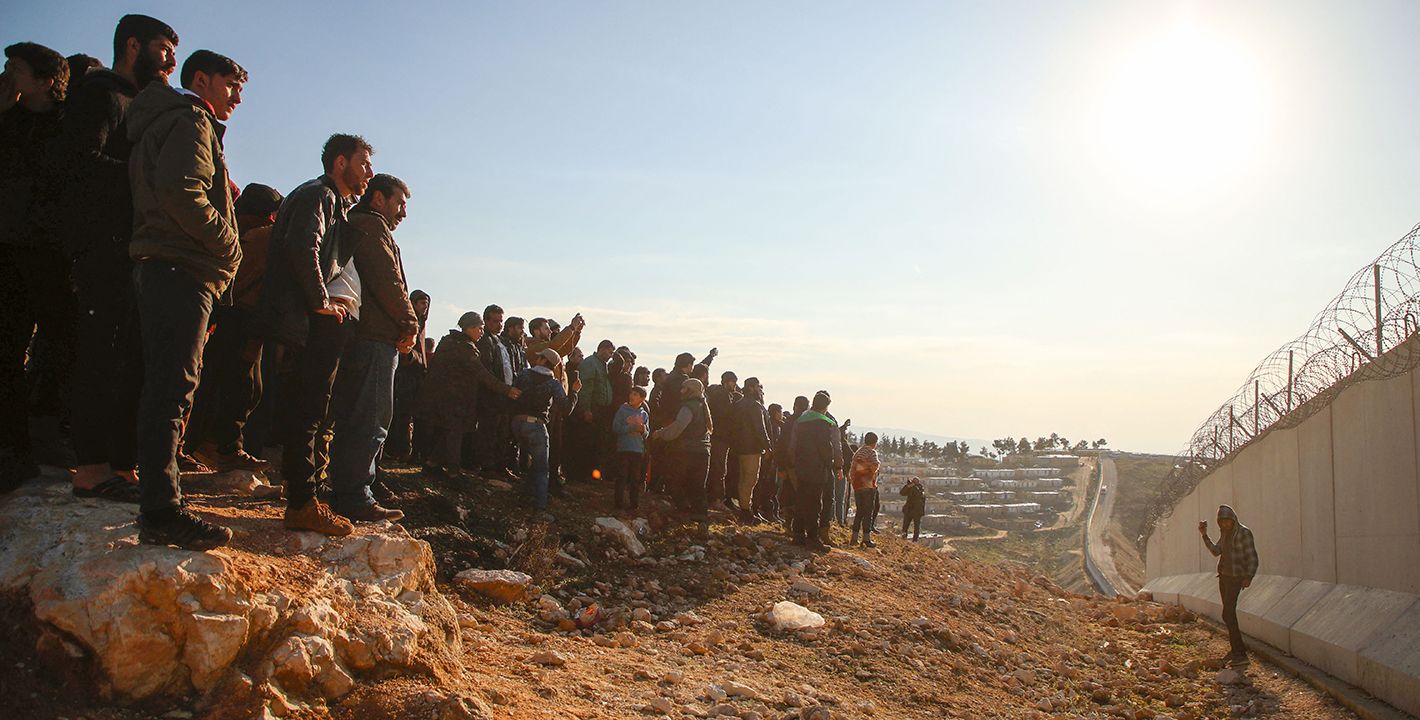
In Syria’s border regions, changes in demographics, economics, and security mean that an inter-Syrian peace process will require consensus among main regional powers that Syria must remain united, that no one side can be victorious, and that perennial instability threatens the region.

Kheder Khaddour, Armenak Tokmajyan
The interaction of national armed forces and private business sectors offers a useful lens for viewing the politics of numerous countries of the so-called Global South. A rising trend of military political activism—often accompanied by military commercial activity—underlines the importance of drivers and outcomes in these relationships.

Yezid Sayigh, Hamza Meddeb
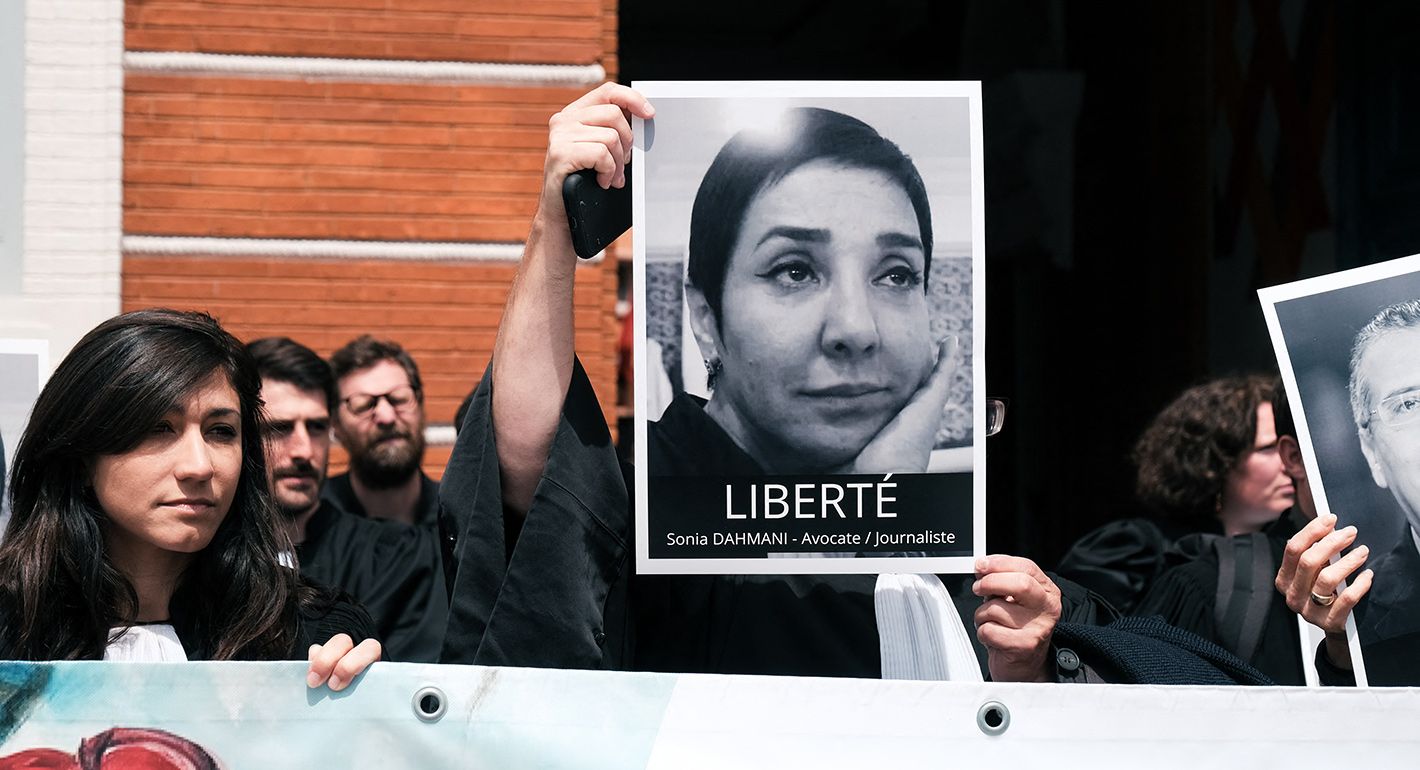
For many in the society, the post-Ben Ali years were mainly about successive economic crises and political instability.
Jasmine Khelil