Source: Mint
India is a young nation long ruled by old laws—its police, for example, are governed by such colonial-era statutes as the Police Act of 1861, which predates independence by nearly a century. And its expanding economy requires forward-looking regulatory mechanisms to foster markets while curbing crony capitalism. India is also a nation that must come to grips with an ever-widening gulf between the laws on its books and the dysfunctional, partial and often corrupt manner in which they are applied.
On paper, India’s commitment to the rule of law distinguishes it from many of its peers and neighbours. According to 2012 World Justice Project data, India fares well on openness of government and democratic controls. In the category limited government powers, which evaluates the checks on government, India ranks 37th of the 97 countries surveyed around the world, is first among five in its region, and comes in second out of 23 lower-middle-income countries.
Yet the rule of law that exists on paper does not always exist in practice. When it comes to procedural effectiveness, India fares poorly. In the categories of absence of corruption and order and security, India ranks 83rd and 96th globally. Every element of India’s rule of law supply chain—including the legislators who draft the laws and the police, prosecutors and courts who enforce them—is problematic. Indeed, the supply chain, never strong to begin with, has become deeply broken—threatening not only the rule of law but a belief in the value of law itself.
The country’s legal undergirding is badly outmoded and constrained by a tendency to pass new laws rather than modify or eliminate old ones, like the colonial era Police Act. Weak laws yoked to an even weaker enforcement system virtually guarantee that the powerful will transgress with abandon. India’s investigative agencies have become politicized and starved of resources, infrastructure and leadership. While the judiciary has many bright spots—including the Supreme Court—the courts on the whole face challenges ranging from vacancies and backlogs to flawed efforts at self-regulation.
Just how bad the situation has become is underscored by the fact that nearly a third of the state and national legislators, the very people charged with writing the laws, faced criminal charges at the time of their election. Yet efforts to bar these lawmakers are often stymied by fears of how politicians would use new rules as cudgels against their rivals.
The damage from the dysfunction extends far beyond the legal system. Although external factors have certainly contributed to India’s recent economic slowdown, the principal culprits have been weak institutions, corruption and legal and regulatory uncertainty. A large part of India’s population, not least its nearly 600 million women, are worried about their basic safety. A spate of major corruption scandals has shaken the faith of the country’s citizens in government itself.
The next government must acknowledge India’s weak performance in enforcing the rule of law and take immediate action to close the widening gulf between principle and practice. What follows is a brief look at the legal system’s problems and suggestions for corrective action.
Outdated laws
The first element in the dysfunctional supply chain is India’s archaic laws. Unfortunately, India does not employ sunset clauses that require the expiration of certain laws after a fixed period of time. Instead, its lawmakers—urged on by a zealous civil society—typically rush to enact new laws without repealing existing ones.
Because many laws at the central level were poorly drafted—and are now riddled with ambiguities, amendments, clarifications and exemptions—they have inevitably led to conflicting interpretations, spawning endless litigation. As for state laws, which number in the many thousands and directly affect the day-to-day lives of citizens and workings of business, India still lacks a reliable inventory.
The multiplicity and complexity of laws make compliance, deterrence, and effective enforcement difficult if not impossible. The result is circumvention by citizens and businesses, making them vulnerable to harassment from state functionaries.
Solutions: The revising, repealing, and updating of old laws are sorely needed—and greater precision in the drafting of replacement language is essential.
One example of legislative consolidation and simplification is the model established by the Financial Sector Legislative Reforms Commission. The Commission was given two years to evaluate and modernize the sector’s regulatory framework, identify overlaps and inconsistencies, and develop a lasting unified code. Divided into multi-disciplinary groups, it developed objectives for each area of the financial market, identified the sources of market failures, critically assessed the role of government, and evaluated the costs and benefits of redrafting legislation. This approach can be replicated across multiple sectors.
Lawmakers or lawbreakers
The fact that many of India’s leading lawmakers are also its foremost lawbreakers has an insidious effect on the rule of law. To address the problem, the Supreme Court recently issued three landmark judgments.
The first found that any sitting member of a state legislative assembly or of Parliament would be immediately disqualified from office upon being convicted of a crime. A Bill introduced in Parliament to supersede the court’s judgment came under fire. The government then flirted with introducing an executive ordinance but dropped that plan as well.
The second judgment found that any individual who was in jail or in police custody would no longer be allowed to run for office, even without a formal charge. Parliament swiftly passed a Bill, later signed by the President, which negated the court’s ruling. The court’s ruling was indeed problematic, given the temptation of politicians to misuse the police to punish rivals.
Solutions: Beyond the matter of how to treat politicians who are convicted or jailed is a larger scandal, lawmakers rarely face conviction because of shortcomings in the justice system. The Supreme Court ruled in March that lower courts must conclude trials of lawmakers charged with serious crimes within a year of charges being filed. The fulfilment of this directive is essential; cases against indicted members of Parliament currently in office have been pending for seven years, on average. To comply with this ruling, the government should consider establishing special electoral tribunals charged with adjudicating serious criminal cases against politicians. This would be tantamount to a fast-track court—a policy of last resort—but there is hardly a better case for speedy justice than when it comes to those making the laws. The Election Commission of India has recommended additional changes to curb the nexus of crime and politics, which the new government should champion, relating to the potential de-registration of political parties that circumvent campaign finance regulations or file false disclosures.
Police and prosecutors
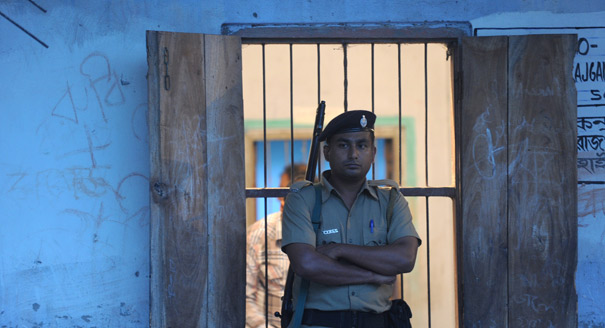
The primary objective of the police in India is maintaining law and order rather than preventing crime, a holdover from the days before independence when crowd control was key. Colonial-era laws, deep politicization, and an overcentralized hierarchy have also burdened the police.
Over the years, several attempts at reform have failed. Caught in a vicious cycle of demoralization, low popular support and pinched resources, the police remain understaffed and undertrained. They also lack many of the technological capabilities necessary to perform quality investigations. All of these factors, in turn, contribute to the low conviction rate that discredits both the police and the courts.
Prosecutors too suffer from a variety of maladies. In almost every case where the defendant has deep pockets, there is a major mismatch in legal counsel. Government lawyers are poorly briefed, while corporate and political defendants have a battery of highly paid lawyers who often have more time and competence.
Solutions: Reform commissions set up by successive governments have articulated steps that both the central government and the states could take. The reforms must include greater autonomy and more accountability, personnel, and material resources. One police reform experiment in Rajasthan found that simple fixes such as freezing the transfers of officers and professional training had positive effects both on public satisfaction of police forces and the quality of actual police work.
Courts
The single biggest affliction of the justice system is the snail’s pace at which it proceeds. Each year, the courts take on more cases than they are able to process. As of June 2012, they faced a backlog of roughly 32 million cases, with perhaps three million more than a decade old.
There is also the issue of judicial capacity, which raises questions about staffing levels—in the US, there are 108 judges per million citizens, compared with a mere 12 judges per million in India—as well as quality.
In many ways, the judicial process itself has become the punishment. The extraordinary alacrity with which the courts grant adjournments has ensured that the powerful will always outlast the weak, making a mockery of justice.
Solutions: The new government must streamline the process. For starters, it should simplify case management, in part by outsourcing. At the trial phase, courts should enforce a strict timetable with the imposition of costs to ensure compliance. To staff the courts with judges who are both competent and have integrity, one solution worth pursuing, recommended by the Law Commission and endorsed by several advisory bodies, is to create an all-India judicial service.
Conclusion
For far too long, reform of India’s legal institutions has been seen as a “second order” issue that could be addressed once critical economic reform measures were dealt with. This sequencing was shortsighted, given that the rule of law is the sine qua non not just for sustaining economic activity but also for upholding democracy itself.
Many of the reforms recommended here do not entail huge budgetary outlays. Higher court fees, especially in the case of appeals, can help to address resource shortfalls.
It is time for India to reinvest in its rule of law machinery. The situation is so dire that even modest changes will have a dramatic impact.
Devesh Kapur is an associate professor and director of the Center for the Advanced Study of India at the University of Pennsylvania.
Milan Vaishnav is an associate in the Carnegie Endowment for International Peace’s South Asia Programme.
This essay draws, in part, on Devesh Kapur, The Law Laid Down, Outlook India, 7 January 2013.
This is adapted from a chapter in the upcoming book Getting India Back on Track edited by Bibek Debroy, Ashley J. Tellis and Reece Trevor. It will be published in June by the Carnegie Endowment for International Peace and Random House India.
This article was originally published by Mint.