

Commentary
Balázs Jarábik
{
  "authors": [
    "Balázs Jarábik"
  ],
  "type": "commentary",
  "centerAffiliationAll": "",
  "centers": [
    "Carnegie Endowment for International Peace",
    "Carnegie Russia Eurasia Center"
  ],
  "collections": [],
  "englishNewsletterAll": "",
  "nonEnglishNewsletterAll": "",
  "primaryCenter": "Carnegie Endowment for International Peace",
  "programAffiliation": "",
  "programs": [],
  "projects": [],
  "regions": [
    "Eastern Europe",
    "Ukraine"
  ],
  "topics": [
    "Political Reform"
  ]
}
Source: Getty
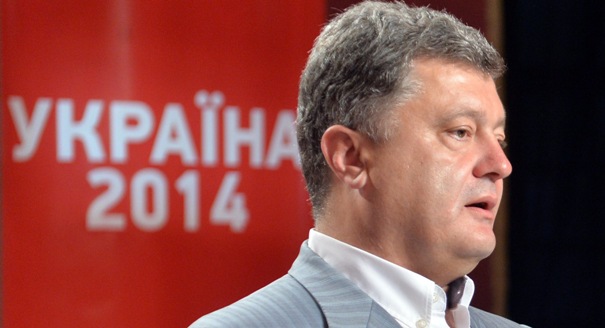
The “chocolate king” turned president is in no sweet position. More sweat is expected from Ukrainians as Poroshenko and the other key players must make hard choices.
Resilience and resistance, not yet reforms, are the key words in Ukraine after the presidential elections on May 25. Resilience, as Petro Poroshenko was elected as president in the first round with a high voter turnout of over 60 percent. Resistance, as every actor wants to fight further for profoundly different objectives.
Poroshenko is the first president of Ukraine to win in all regions where the election took place, which gives him a particularly strong mandate. Will he serve the country, or will he use the country to serve his own interests? Will he use his authority gained during the Maidan and in the election to strengthen democracy or choose to become an authoritarian ruler? His use of Russian, Ukrainian, and English during the campaign and his pledge to make his first visits to Donbas and Poland make for a promising start. His track record following the Orange revolution warrants caution.
Vitaliy Klitschko's decision to withdraw from the presidential race and endorse Poroshenko's candidacy paid off. Poroshenko’s victory was also a setback to Yuliya Timoshenko, whose political party Batkivschina has been effectively in control of the caretaker government. Not only has Timoshenko lost at the polls, but Batkivschina appears to be splintering. Acting Prime Minister Arseniy Yatsenyuk’s image as a hard worker has strengthened his position, and Poroshenko has already announced he sees no reason to replace him. But Poroshenko will probably move to reshuffle the cabinet—a necessary step to legitimize the central government—which will mean the removal of several of Timoshenko’s allies, even if a complete overhaul of the government at this point is unlikely.
The election was a blow to the rightist Svoboda and Pravy Sector, but has given a boost to populist politicians like Oleh Ljashko who appear to have attracted the votes of those who were looking for an acceptable alternative to the discredited right wing. Viktor Yanukovych’s once all-powerful Party of Regions has imploded and is unlikely to come back.
Poroshenko has sided with the Maidan in favoring an early parliamentary election intended to bring to the fore a new generation of politicians. The parliamentary elections are tentatively expected to take place in November, but the losers in the presidential contest—the Party of Regions, Batkivshchyna, and Svoboda are unlikely to support that timeline. The new vote will require new constitutional amendments to reform the existing electoral system but Timoshenko, Poroshenko, and the Maidan activists appear to have different ideas about it. All of this raises questions about Poroshenko’s—and Ukraine’s—ability to bring all political factions to a broad consensus.
Common sense dictates that Russia will recognize Poroshenko at least provisionally, assuming it needs a negotiating partner in Kiev. The progress of a renewed dialogue will depend on at least three factors: Kiev’s decentralization efforts, its position on Crimea, and at least a partial repayment of Ukraine's gas debt to Gazprom. While Poroshenko announced his principled stance on Crimea, he will be under strong pressure for fast economic reforms and may have to choose a pragmatic approach toward the Kremlin, whose cooperation will be essential for Ukraine’s economy to survive.
Although Russia`s own surge of nationalism strengthens Ukrainian patriotism, it has provided a potentially convenient distraction for the political elite to avoid difficult decisions on reforms—just as has been the case for the past 23 years. Russian actions also help divide Ukraine: the more black and white the picture, the less room is left for a diverse Ukraine.
There is no time for celebration. With the number of casualties growing, the East may slip into an outright gang war. Ukraine’s border with Russia seems wide open, and security structures are a mess. The government’s attempts to mobilize the army have shown that it is in terrible shape. Conscripts seem to think that it is not their fight. There is growing frustration with and mistrust of government in the security sector after the former’s indecisive actions in Crimea and Eastern Ukraine. The fact that former Maidan commanders have occupied key national security posts only adds to the mistrust among security personnel. The resulting vacuum is being filled by private militias, a newly established National Guard, and a growing number of mercenaries from Russia (and, it is widely believed, Chechnya). Rebuilding the security sector is yet another challenge Poroshenko can’t afford to postpone as he re-shuffles the government.
The “chocolate king” turned president is in no sweet position. More sweat is expected from Ukrainians as Poroshenko and the other key players must make hard choices. The stakes are very high, indeed.

Political analyst, former Slovak diplomat, and consultant specializing in Eastern Europe
Recent Work
Balázs Jarábik
Balázs Jarábik
Carnegie does not take institutional positions on public policy issues; the views represented herein are those of the author(s) and do not necessarily reflect the views of Carnegie, its staff, or its trustees.
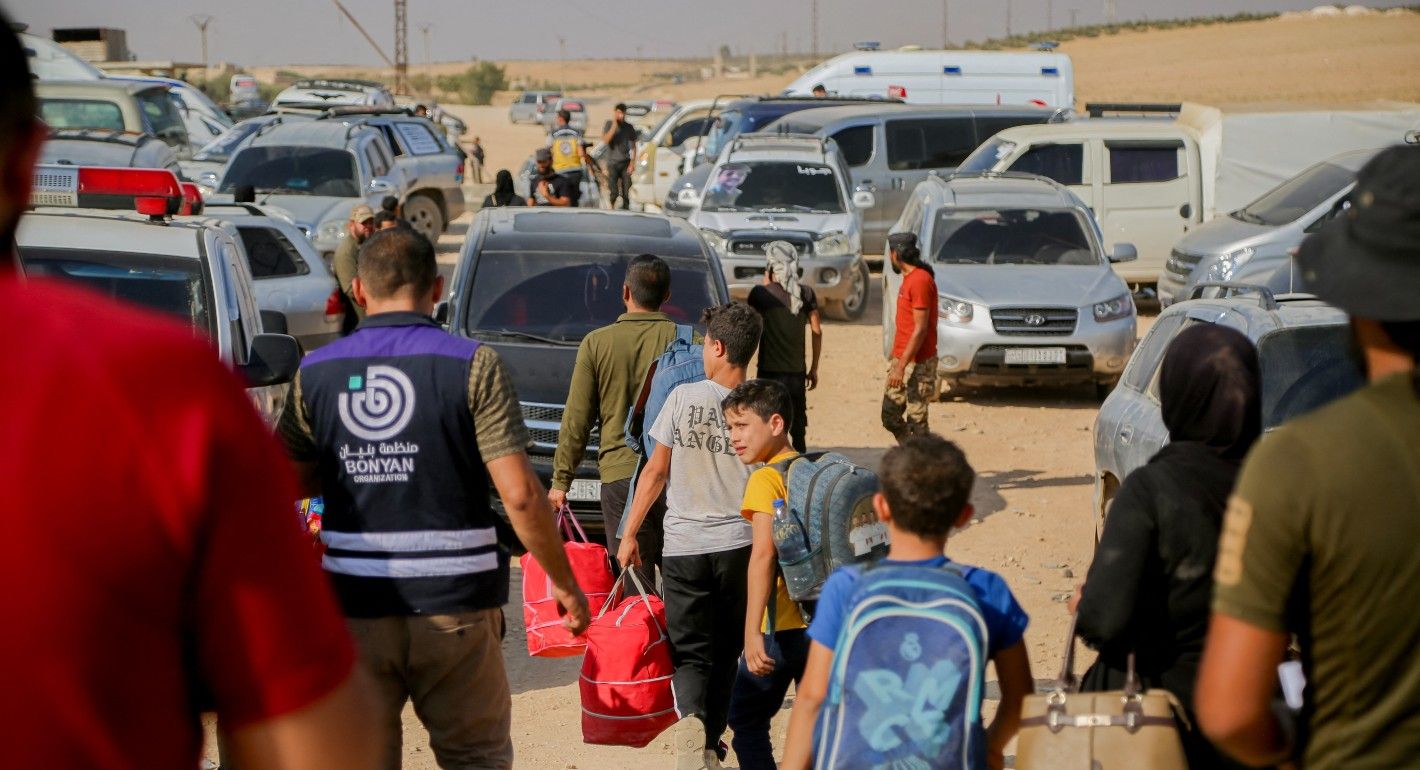
A humanitarian crisis in Lebanon deepens, and Syrian refugees face a perilous choice: remain in a war-torn environment or return to Syria where they risk encountering significant dangers and discrimination. There are significant challenges and risks to their search for safety in Syria.
Haid Haid
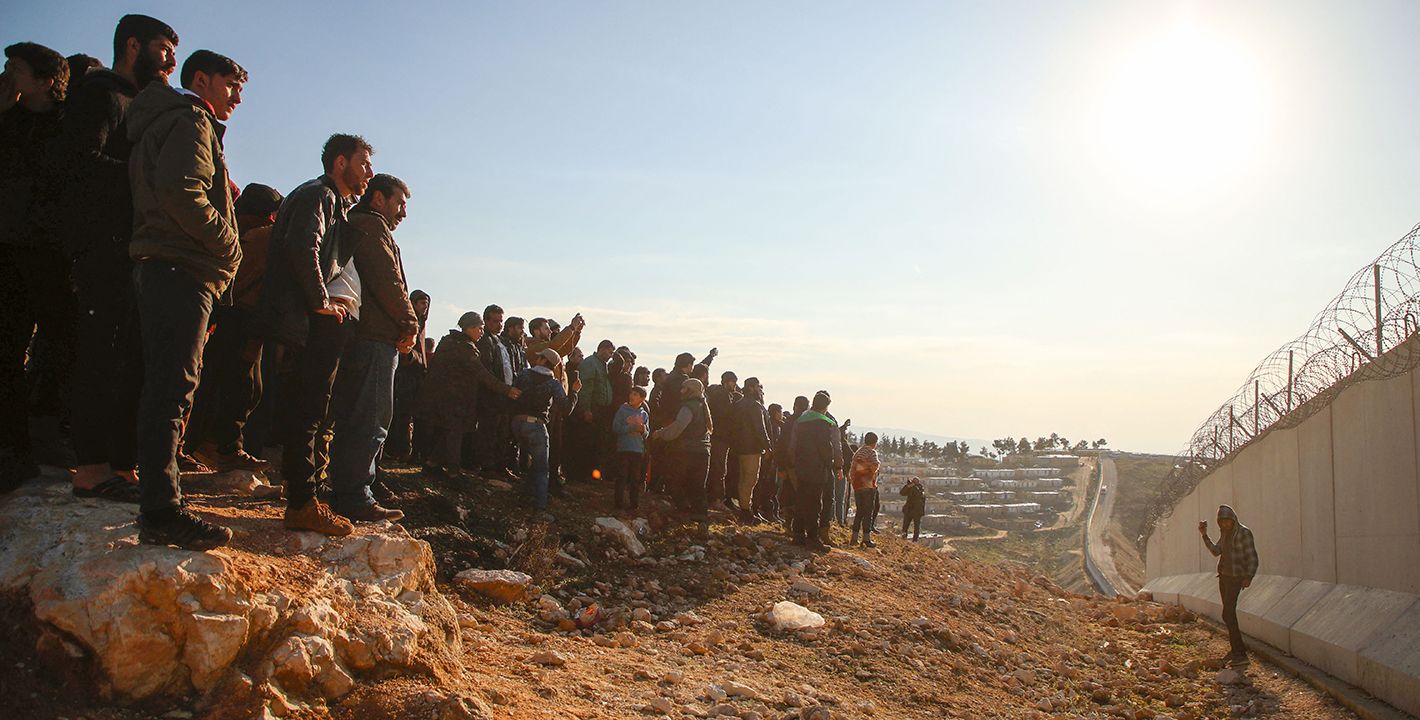
In Syria’s border regions, changes in demographics, economics, and security mean that an inter-Syrian peace process will require consensus among main regional powers that Syria must remain united, that no one side can be victorious, and that perennial instability threatens the region.

Kheder Khaddour, Armenak Tokmajyan
For many in the society, the post-Ben Ali years were mainly about successive economic crises and political instability.
Jasmine Khelil
Antony Blinken took his guitar to Kyiv to lift the spirits of Ukrainians, but Arabs are apparently denied his tunes.

Michael Young
As students around the United States and Europe protest, the relationship of Western elites with Israel is being redefined.
Michael Young