• Research
  • Diwan
  • About
  • Experts
Carnegie Middle East logoCarnegie lettermark logo
LebanonIran
{
  "authors": [
    "Bruno Coppieters"
  ],
  "type": "commentary",
  "centerAffiliationAll": "",
  "centers": [
    "Carnegie Endowment for International Peace",
    "Carnegie Russia Eurasia Center"
  ],
  "collections": [],
  "englishNewsletterAll": "",
  "nonEnglishNewsletterAll": "",
  "primaryCenter": "Carnegie Endowment for International Peace",
  "programAffiliation": "",
  "programs": [],
  "projects": [],
  "regions": [
    "Eastern Europe",
    "Ukraine"
  ],
  "topics": [
    "Political Reform"
  ]
}

Source: Getty

Commentary

Ukraine: Power to the Regions

Federalism for Ukraine constitutes a formidable challenge. But the risks involved remain acceptable—when faced with the threat of all-out civil war, a federation can still be judged a necessary compromise.

Link Copied
By Bruno Coppieters
Published on May 30, 2014

Demands for state reforms and claims that the Ukrainian constitution has been violated are at the heart of the Ukrainian crisis. The OSCE has put forward a national dialogue on Ukraine's future constitution as one of the main ways of resolving the conflict on sovereignty. There seems to be international agreement that powers must be given to the regions. The present OSCE road map may be followed by new and more concrete proposals for conflict settlement, but the main choice of options is clear: either there could be state reforms through the decentralization of powers within a unitary framework, following the model of neighboring Poland, or these reforms could give way to a more radical division of powers, following the model of a federation.

There are good reasons to go for the latter option. Federations offer regions genuine autonomy and strong constitutional guarantees that there will be no unilateral changes in how powers are divided between the different levels of governance. For the proponents of a decentralized but unitary Ukraine, however, such federal guarantees would be of no avail in a confrontation with separatist forces. As they see it, federal institutions would, on the contrary, give the necessary leverage and legitimacy to those who strive for the dissolution of the country, and the multiplication of veto powers in the hands of the regions would paralyze state reforms. Political fragmentation, they argue, would make it almost impossible to tackle corruption and establish the rule of law.

It would be difficult to deny that such threats lack substance, even if none of the arguments against federalism is fully convincing. Constitutional guarantees can be strengthened by international guarantees. External actors and international organizations may give clearly defined commitments, unlike the assurances to be found in the Budapest Memorandum of 1994. An international treaty is also an option. As a consequence of such a combination, the multiplication of levels of bargaining and external mediation may effectively curb unilateral steps and conflict escalation. Federal institutions do not necessarily strengthen radical forces. Much depends on their design—for example, whether or not they offer electoral incentives for moderate policies and the search for compromise. More layers of government mean more levels on which the threat of corruption needs to be addressed—but such a multiplication does not make that impossible.

Federalism for Ukraine undoubtedly constitutes a formidable challenge. But the risks involved remain acceptable—when faced with the threat of all-out civil war or the creation of new, unrecognized statelets, a federation can still be judged a necessary compromise.

Bruno Coppieters is Professor of Political Science at the Vrije Universiteit Brussel (Free University of Brussels). His published works deal mainly with federalism, the ethics of war and secession, and conflicts on sovereignty in the Caucasus and the Balkans.

About the Author

Bruno Coppieters

Bruno Coppieters
Political ReformEastern EuropeUkraine

Carnegie does not take institutional positions on public policy issues; the views represented herein are those of the author(s) and do not necessarily reflect the views of Carnegie, its staff, or its trustees.

More Work from Malcolm H. Kerr Carnegie Middle East Center

  • Commentary
    Sada
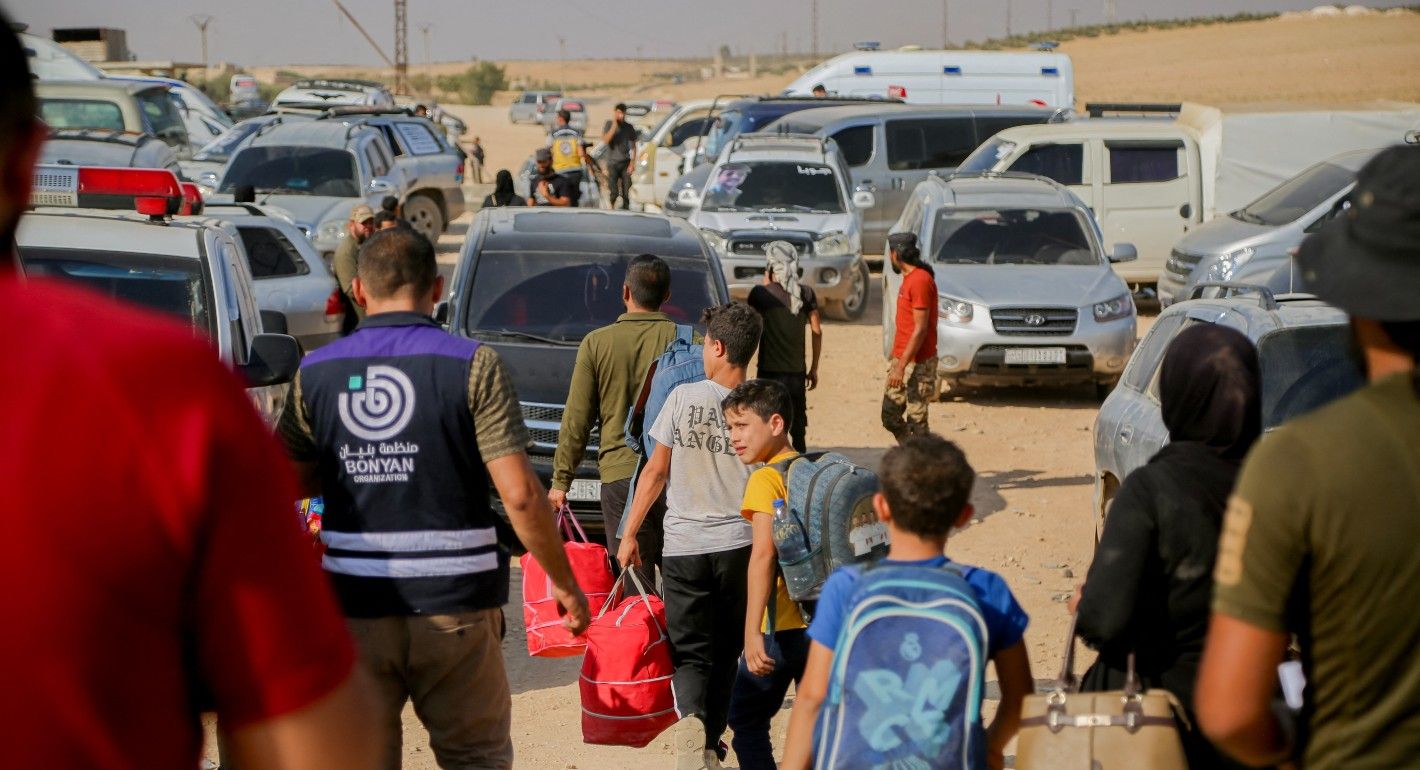
    Navigating Danger: Syrian Refugees in Lebanon Risk Returning

    A humanitarian crisis in Lebanon deepens, and Syrian refugees face a perilous choice: remain in a war-torn environment or return to Syria where they risk encountering significant dangers and discrimination. There are significant challenges and risks to their search for safety in Syria.

      Haid Haid
  • Paper
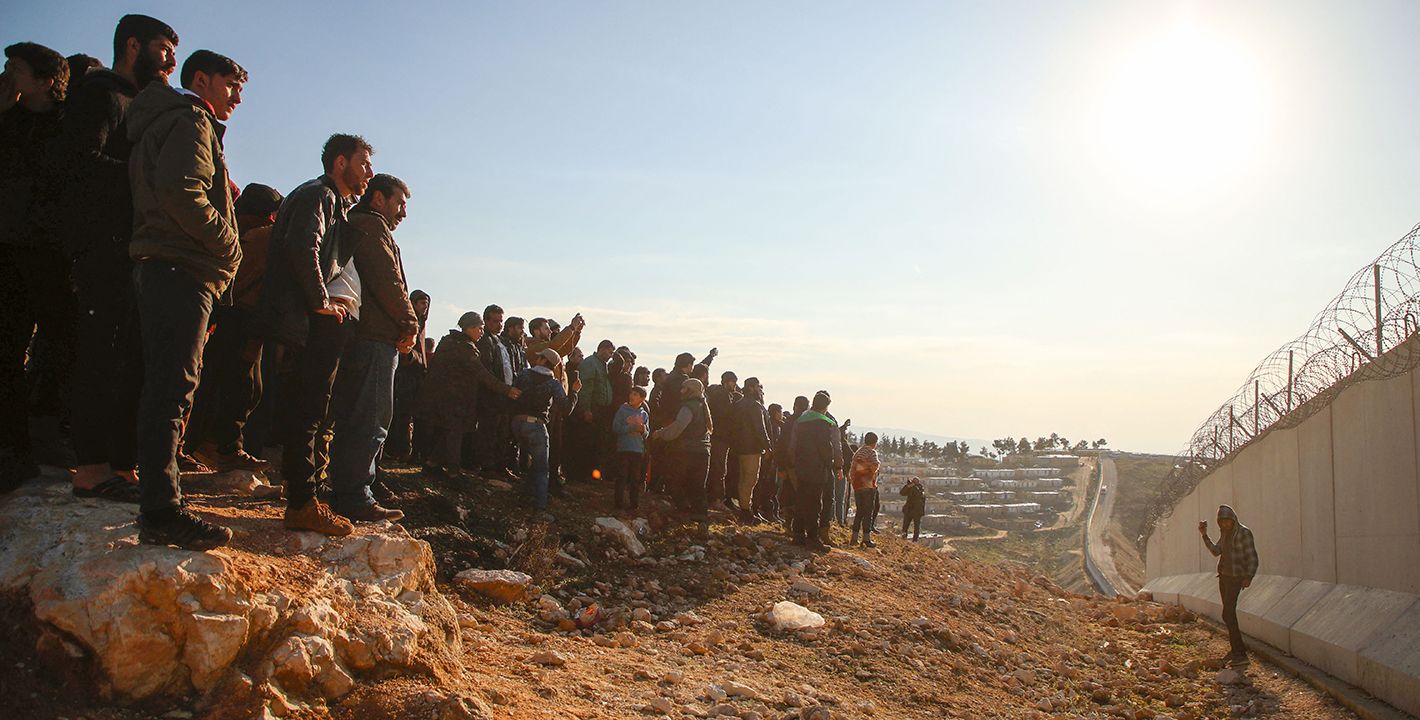
    Borders Without a Nation: Syria, Outside Powers, and Open-Ended Instability

    In Syria’s border regions, changes in demographics, economics, and security mean that an inter-Syrian peace process will require consensus among main regional powers that Syria must remain united, that no one side can be victorious, and that perennial instability threatens the region.

      Kheder Khaddour, Armenak Tokmajyan

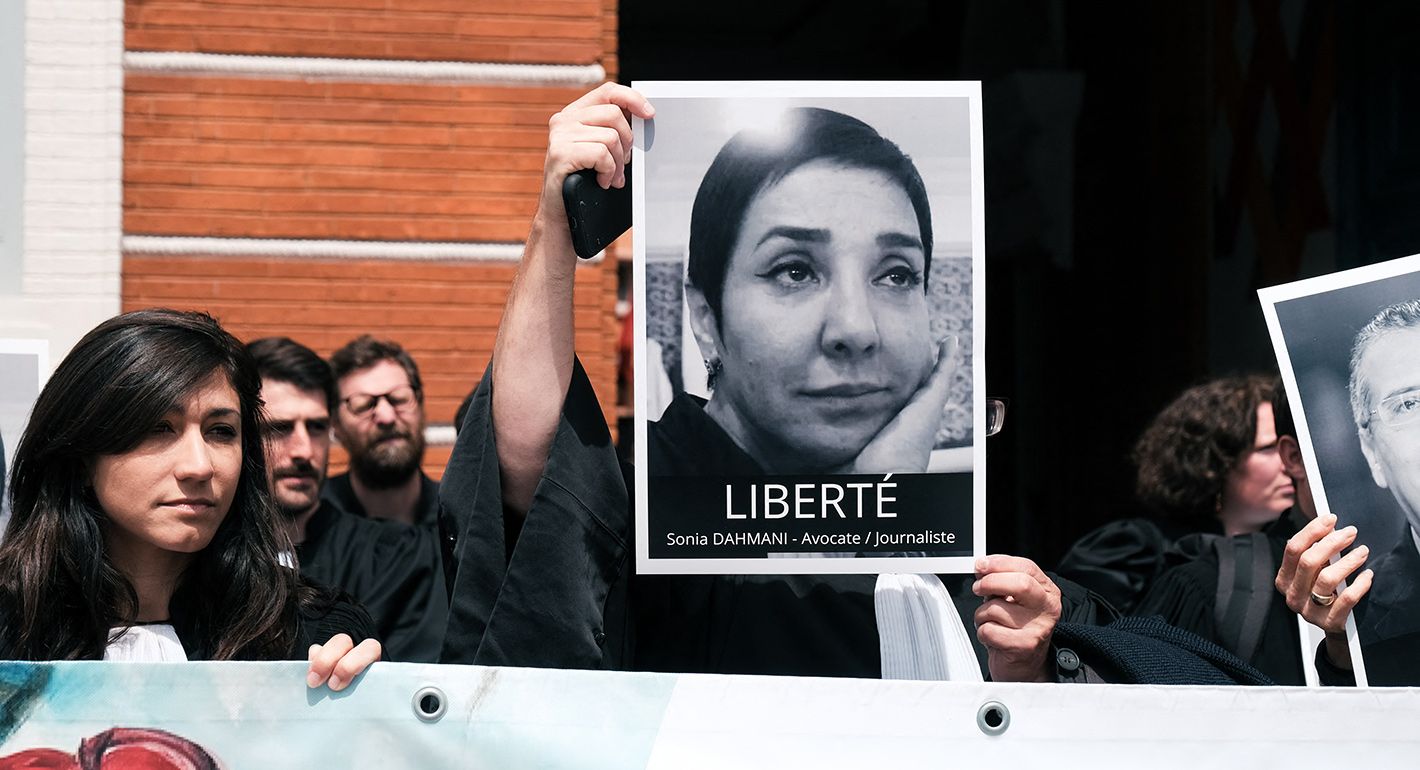
  • Rally organized by lawyers from the Toulouse Bar to protest against the arrest of their Tunisian colleague Sonia Dahmani and journalists, in front of the consulate in Toulouse, southwest of France, on May 16, 2024
    Commentary
    Diwan
    Why Tunisia Lost Faith in Democracy

    For many in the society, the post-Ben Ali years were mainly about successive economic crises and political instability.

      Jasmine Khelil

  • Commentary
    Diwan
    Rockin’ in An Unequal World

    Antony Blinken took his guitar to Kyiv to lift the spirits of Ukrainians, but Arabs are apparently denied his tunes.

      Michael Young

  • Commentary
    Diwan
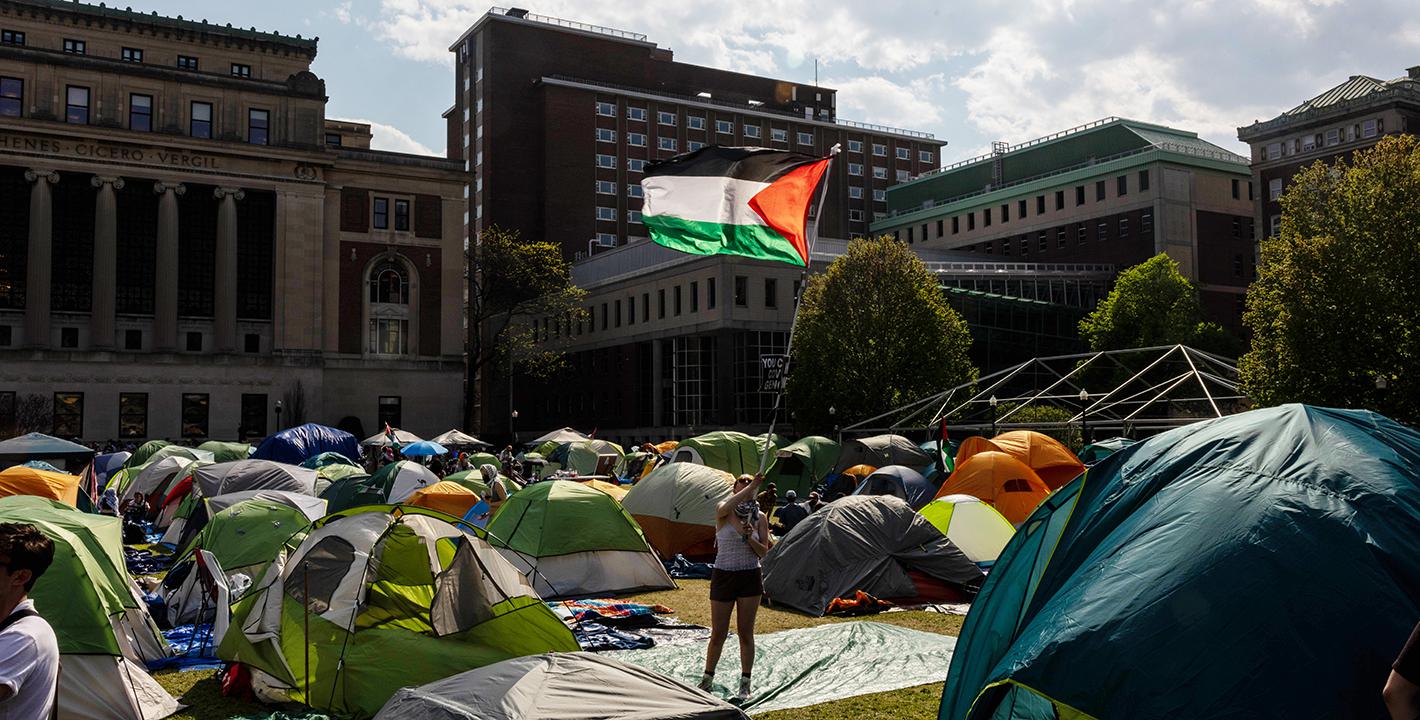
    Gaza and the Revolt in U.S. Colleges

    As students around the United States and Europe protest, the relationship of Western elites with Israel is being redefined.

      Michael Young

Get more news and analysis from
Malcolm H. Kerr Carnegie Middle East Center
Carnegie Middle East logo, white
  • Research
  • Diwan
  • About
  • Experts
  • Projects
  • Events
  • Contact
  • Careers
  • Privacy
  • For Media
Get more news and analysis from
Malcolm H. Kerr Carnegie Middle East Center
© 2026 Carnegie Endowment for International Peace. All rights reserved.