

Paper
Renée DiResta, Rachel Kleinfeld, Margot Treadwell
{
  "authors": [
    "Rachel Kleinfeld"
  ],
  "type": "legacyinthemedia",
  "centerAffiliationAll": "dc",
  "centers": [
    "Carnegie Endowment for International Peace",
    "Malcolm H. Kerr Carnegie Middle East Center"
  ],
  "collections": [],
  "englishNewsletterAll": "democracy",
  "nonEnglishNewsletterAll": "",
  "primaryCenter": "Carnegie Endowment for International Peace",
  "programAffiliation": "DCG",
  "programs": [
    "Democracy, Conflict, and Governance"
  ],
  "projects": [],
  "regions": [
    "Middle East",
    "Iraq",
    "Eastern Europe",
    "Ukraine",
    "Gulf"
  ],
  "topics": [
    "Security",
    "Democracy"
  ]
}
Source: Getty
Curbing corruption before it tips into Kalashnikov-carrying rebels and public crucifixions is good security policy. And the world needs to get better at it.
Source: Breaking Defense
For years, “realists” in foreign policy claimed that the kind of government inside another state didn’t matter – foreign policy was only about what countries did outside their borders. As Iraq and northern Syria join in a de-facto jihadist statelet, Ukraine’s east is dismantled, and Central American refugees pour into Texas, it might be time to rethink that logic.
The story about Iraq’s downfall has largely been painted in ethnic terms. The West finds: “those tribal peoples and their endless wars” an easy to understand story line. When Shiite Prime Minister Nouri al-Maliki took office, he immediately began to rule not on behalf of his country – but on behalf of the previously underserved Shi’a majority. He disbanded the Sunni militias that U.S. troops had painstakingly assisted, and reneged on his offer to help them join the military. Sunnis doubted they would ever be equals. When ISIS attacked, Sunnis were unwilling to fight to protect Maliki’s government.
This is true – and yet it is a half truth. In fact, Maliki ruled for an even smaller group: The corrupt elite who were eating the country away from the inside.Yes, Maliki’s militaries evaporated because he had appointed leading military officials who were Shia cronies. But also because he allowed his military to hollow out with corruption. While the security sector “had an annual budget greater than the budgets for education, health, and the environment combined,” according to Zaid Al-Ali, very little made its way into security. df“Ghost” soldiers who were paid monthly salaries but never showed up for duty were legion. “Ghost” trainings were never held, with the money lining elite pockets, faulty, overly expensive equipment was purchased to enrich still others. No surprise that morale among the rank and file was low and they wouldn’t – and couldn’t – fight. A few years of cronyism and corruption undid a decade of painstaking U.S. effort.
The corruption in Iraq has been growing before Maliki took office – in fact, ironically, he campaigned on an anti-corruption, state-building platform, in a political alliance titled the “State of Law”. The “State of Law” is, in fact, what Iraqis were voting to achieve.
Once in power, however, Maliki used his security forces to arrest those he disliked, favor his cronies, and ensure minimal oversight. As Ali describes, he forced out leading anti-corruption officials, and had his special forces target anti-corruption activists alongside other “opponents” he labeled security risks. And when thousands of Iraqis protested corruption in February 2011, he declared them terrorists and had his security forces arrest thousands and torture and kill a few score until the protests stopped.
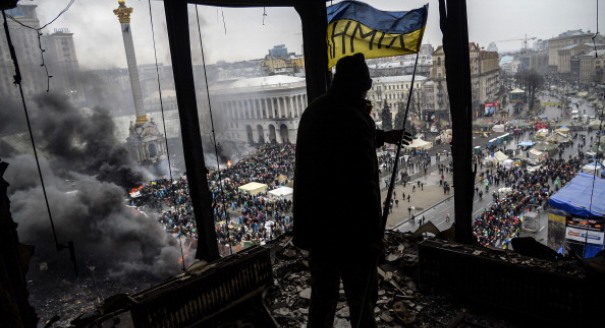
Nor is the security threat from corruption confined to Iraq. The Ukraine’s demise was also caused by thieving elites that reached a tipping point. Popular anger unseated the government – and also allowed Russia to capitalize on the fact that few are willing to fight to protect such a kleptocratcy. Putin used that popular anger to opportunistically eat away at the country’s most valuable areas.
Next stop: Central America, where corrupt elites both structured some of the world’s most unequal economies to their benefit, and disabled sectors that enable government oversight, such as the courts and police. The crime waves there, which are now sending refugees to our borders, were a completely predictable side effect of such extreme crony capitalism.
Corruption is seen as “low politics” – an “internal issue” – not something befitting the attention of high-level security leaders. ISIS, for example, had been running a major extortion racket in Mosul for years – but that sort of “crime” doesn’t fall into security officials’ inboxes. Instead, it is relegated to aid officials.
Yet the development community’s toolkit starts from the assumption that states govern on their peoples’ behalf. If their security services are failing, police are corrupt, or their banking system is leaky, the problem must be “capacity”. Clearly, these countries are too poor and uneducated to create working states. Technocratic experts from the West can help these states improve. The logic fails to even wink at the fact that government elites might be choosing to enrich themselves at the expense of their people.
My colleague at Carnegie, Sarah Chayes has been fighting to change this logic. Years on the ground in Afghanistan showed her firsthand how corruption was actually expanding the insurgency we were there to fight. She is now leading efforts to show Western security officials which corrupt countries pose a security threat, and how. More and more officials in the U.S. government are listening, as are other pundits.
Prevention is never as sexy as drones in the air and boots on the ground. But Iraq’s fall on the heels of Ukraine’s collapse should be compelling. Curbing corruption before it tips into Kalashnikov-carrying rebels and public crucifixions is good security policy. And we need to get better at it.
Senior Fellow, Democracy, Conflict, and Governance Program
Rachel Kleinfeld is a senior fellow in Carnegie’s Democracy, Conflict, and Governance Program, where she focuses on issues of rule of law, security, and governance in democracies experiencing polarization, violence, and other governance problems.
Recent Work
Renée DiResta, Rachel Kleinfeld, Margot Treadwell
Political Violence Researchers, Rachel Kleinfeld, ed., Dalya Berkowitz, ed.
Carnegie does not take institutional positions on public policy issues; the views represented herein are those of the author(s) and do not necessarily reflect the views of Carnegie, its staff, or its trustees.
As the U.S.-led Coalition withdraws, the Kurds’ reliance on Baghdad, and on themselves, will only increase.
Wladimir van Wilgenburg

As the U.S. stumbles in its war with Iran, we are likely to see an acceleration of its disengagement from the region.

Michael Young

The Zaidi government’s objective to collect weapons is constrained by regional conflict, but it can take certain measures at home.
Ali Al-Mawlawi

Middle Eastern states should welcome an accelerated U.S. disengagement from their region.
Michael Young

The accord represents a pivotal moment in the region to avert a security vacuum in the Gulf.


Azeema Cheema, Mohanad Hage Ali