

Q&A
Suzanne Maloney, Aaron David Miller, Karim Sadjadpour
{
  "authors": [
    "Karim Sadjadpour"
  ],
  "type": "legacyinthemedia",
  "centerAffiliationAll": "dc",
  "centers": [
    "Carnegie Endowment for International Peace"
  ],
  "collections": [
    "Iranian Proliferation"
  ],
  "englishNewsletterAll": "menaTransitions",
  "nonEnglishNewsletterAll": "",
  "primaryCenter": "Carnegie Endowment for International Peace",
  "programAffiliation": "MEP",
  "programs": [
    "Middle East"
  ],
  "projects": [],
  "regions": [
    "Middle East",
    "Iran"
  ],
  "topics": [
    "Foreign Policy",
    "Nuclear Policy"
  ]
}
Source: Getty
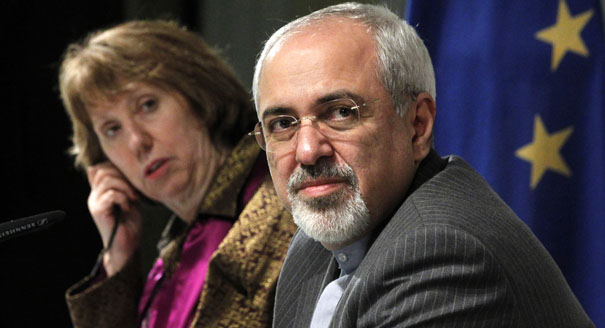
There was a fundamental mismatch of expectations between the United States and Iran over what a comprehensive deal would entail when the interim nuclear deal was reached in November 2013.
Source: NPR’s Here and Now
Negotiations over Iran’s nuclear program have been extended for four more months after the latest round of intense negotiations failed to meet an agreement. Speaking to NPR’s Here & Now, Carnegie’s Karim Sadjadpour said that when the interim nuclear deal was reached in November 2013, there was a fundamental mismatch of expectations about what a comprehensive deal would entail. While the United States believes that in order to reach a comprehensive deal Iran would need to curtail its nuclear program much further, he argued, Iran believes it should be able to retain what it now has of its nuclear program and the United States would push back its sanctions.
“Both parties recognize that a continuation of the negotiations is better than any alternative option,” Sadjadpour said. He added that Obama has two fundamental objects for Iran: to avert a nuclear armed Iran and avert having to take military action against Iran. A continuation of negotiations is a step toward both those objectives. Additional sanctions won’t be enough to force Iran to compromise and it could be enough to escalate into a dangerous position, he warned.

Senior Fellow, Middle East Program
Karim Sadjadpour is a senior fellow at the Carnegie Endowment for International Peace, where he focuses on Iran and U.S. foreign policy toward the Middle East.
Recent Work


Suzanne Maloney, Aaron David Miller, Karim Sadjadpour

Aaron David Miller, Karim Sadjadpour, Robin Wright
Carnegie does not take institutional positions on public policy issues; the views represented herein are those of the author(s) and do not necessarily reflect the views of Carnegie, its staff, or its trustees.

Huawei pushed hard to enter the Egyptian data centers market, until the Americans made a better offer.

Angie Omar

Middle Eastern states should welcome an accelerated U.S. disengagement from their region.

Michael Young

In an interview, former ambassador Charles Freeman assesses the Trump administration’s war against Iran.
Michael Young

The accord represents a pivotal moment in the region to avert a security vacuum in the Gulf.


Azeema Cheema, Mohanad Hage Ali

In an interview, Jason Burke discusses his sweeping account of the “revolutionists” who so shaped the 1970s and early 1980s.
Michael Young