

Q&A
Suzanne Maloney, Aaron David Miller, Karim Sadjadpour
{
  "authors": [
    "Karim Sadjadpour"
  ],
  "type": "legacyinthemedia",
  "centerAffiliationAll": "dc",
  "centers": [
    "Carnegie Endowment for International Peace",
    "Malcolm H. Kerr Carnegie Middle East Center"
  ],
  "collections": [
    "Iranian Proliferation"
  ],
  "englishNewsletterAll": "menaTransitions",
  "nonEnglishNewsletterAll": "",
  "primaryCenter": "Carnegie Endowment for International Peace",
  "programAffiliation": "MEP",
  "programs": [
    "Middle East"
  ],
  "projects": [],
  "regions": [
    "North America",
    "United States",
    "Middle East",
    "Iran"
  ],
  "topics": [
    "Political Reform",
    "Foreign Policy",
    "Nuclear Policy"
  ]
}
Source: Getty
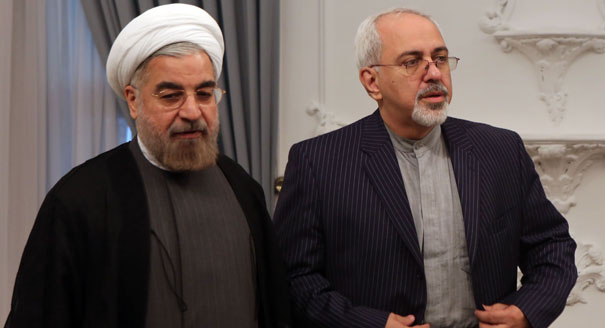
A big challenge for the Iranian nuclear negotiations is finding a technical resolution to what is really a political conflict.
Source: Charlie Rose
Speaking on Charlie Rose about the Iranian nuclear talks, Carnegie’s Karim Sadjadpour said that a big challenge is finding a technical resolution to what is really a political conflict. Both Washington and Tehran recognize that no one wants to go back to the status quo ante, to escalation, he said.
For the Iranian government, and in particular for the Supreme Leader Khamenei, not doing a nuclear deal is a big economic risk, but there’s a potentially larger political risk in agreeing to a nuclear deal, Sadjadpour argued, because Khamenei has prioritized hostilities with the United States for 25 years. The real challenge for the United States is that the policies which are used to counter Iran’s nuclear aspirations, political and economic isolation, in many ways entrench these very hardline forces in Iran, he added. “We have to think more creatively about how we get on the right side of the Iranian people’s aspiration as well, not just against the nuclear aspiration of the Iranian government.”

Senior Fellow, Middle East Program
Karim Sadjadpour is a senior fellow at the Carnegie Endowment for International Peace, where he focuses on Iran and U.S. foreign policy toward the Middle East.
Recent Work


Suzanne Maloney, Aaron David Miller, Karim Sadjadpour

Aaron David Miller, Karim Sadjadpour, Robin Wright
Carnegie does not take institutional positions on public policy issues; the views represented herein are those of the author(s) and do not necessarily reflect the views of Carnegie, its staff, or its trustees.

In an interview, Rozina Ali discusses her new book on the rise and manifestations of Islamophobia in the United States.

Michael Young

In an interview, Ian Lustick and Eli Clifton discuss their new book on why a prominent ally has so much influence in America.
Michael Young

As the U.S. stumbles in its war with Iran, we are likely to see an acceleration of its disengagement from the region.
Michael Young

Middle Eastern states should welcome an accelerated U.S. disengagement from their region.
Michael Young

In an interview, former ambassador Charles Freeman assesses the Trump administration’s war against Iran.
Michael Young