

Research
- +4
Milan Vaishnav, Rahul Verma, Rukmini S., …
{
  "authors": [
    "Christophe Jaffrelot"
  ],
  "type": "legacyinthemedia",
  "centerAffiliationAll": "dc",
  "centers": [
    "Carnegie Endowment for International Peace"
  ],
  "collections": [],
  "englishNewsletterAll": "ctw",
  "nonEnglishNewsletterAll": "",
  "primaryCenter": "Carnegie Endowment for International Peace",
  "programAffiliation": "SAP",
  "programs": [
    "South Asia"
  ],
  "projects": [],
  "regions": [
    "South Asia",
    "India"
  ],
  "topics": [
    "Political Reform"
  ]
}
Source: Getty
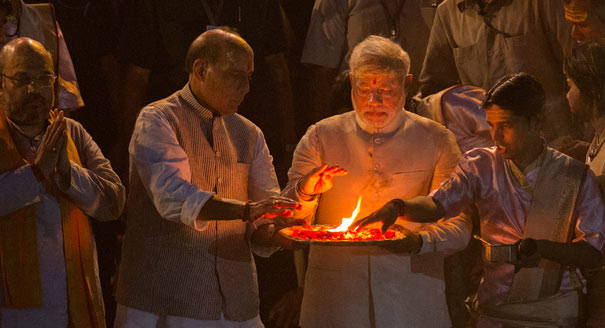
Every sector of society is now represented in the Sangh Parivar, and their perspectives may not necessarily converge with the government’s policies.
Source: Indian Express
The meeting of Maharashtra Chief Minister Devendra Fadnavis and some of his ministers at the RSS headquarters in Nagpur, scheduled for December 2, has attracted the attention of the media. But it is, in fact, standard practice. Sangh Parivar leaders have already met Union ministers in order to put in place a mechanism for “better coordination” between them and the government. The RSS was not the only non-BJP organisation taking part in this meeting, which took place in late October.
The meeting with five ministers and a minister of state, who collectively were in charge of the agriculture, labour, power, and information and broadcasting portfolios, was also attended by representatives of the Swadeshi Jagaran Manch (SJM), Bharatiya Mazdoor Sangh (BMS), Bharatiya Kisan Sangh (BKS), Vanvasi Kalyan Ashram, Laghu Udyog Bharati and Sahakar Bharati.
Such a meeting was intended to harmonise the positions of the BJP-led government and other members of the parivar. Like any “family”, this one also harbours a certain diversity, resulting from the very scope of its embrace: each and every sector of society is now represented in the Sangh Parivar and their perspectives may not necessarily converge with the government’s policies. Economic liberalisation and globalisation are cases in point. The BKS has, for instance, not unreservedly supported the decision of the Genetic Engineering Appraisal Committee to approve field testing of genetically modified food crops. The BMS has expressed some reservations about the Factories (Amendment) Bill, 2014, and the Apprentices (Amendment) Bill, 2014. Moreover, it has asked the government to regularise contract workers. The SJM objected to the opening of defence and railways to foreign investors, and to other initiatives, too, as evident from the Swadeshi Sangam that it held last month in Jaipur, about which The Organiser, the RSS weekly, wrote: “The swadeshi thinkers assembled at the sangam termed foreign direct investment (FDI) as dangerous for the nation and appealed to the government to specifically refrain [from allowing] FDI in agriculture, trade, commerce, insurance, defence and the service sectors. They stressed on the need for cultural, technological and economic nationalism to protect the country from all such dangers. Convener of the sangam, Prof Bhagwati Prakash Sharma, said the grip of multinational companies is getting stronger on our commerce, business, industries, agriculture.”Another domain the Sangh Parivar has traditionally invested in is education. It has set up a consultative body, the Bharatiya Shiksha Niti Ayog (BSNA), brainchild of the RSS-affiliated Shiksha Sanskriti Utthan Nyas, to suggest steps to “Indianise” the education system. Among the most prominent members of the BSNA is Dina Nath Batra. The HRD minister, Smriti Irani, had also met representatives of the Sangh Parivar to discuss the reform of education in October.
Besides its interactions with chief ministers and ministers, in order to evolve the correct public policies, the RSS is guiding the BJP directly. Ram Madhav, former member of the RSS executive committee, who had been its spokesman since 2003, has been appointed BJP general secretary. Shiv Prakash, also a former pracharak, has been deputed to the BJP. These nominations are nothing new and are part of a pattern — as is evident from the fact that the BJP’s organisation secretaries are usually RSS cadres. But what is new is the decision of the RSS kendriya karyakari mandal (central executive committee) to form committees from the district level upwards, consisting of RSS office bearers and representatives of other branches of the Sangh Parivar, to ensure that the activities of these various wings “remain in conformity with the larger objectives of the Sangh”.
Among the Sangh Parivar components guided by the RSS, the BJP occupies a particularly important position, now that it is in power. The Sangh has traditionally seen itself as the “raj guru”, as in K.R. Malkani’s formulation, vis-a-vis the BJP and before that the Jana Sangh as well as the Janata Party. Balasaheb Deoras mentioned this architecture of power when the RSS tried to advise Morarji Desai’s government, but the “dual membership” controversy (during which Atal Bihari Vajpayee and L.K. Advani were accused by the socialists and Charan Singh of owing allegiance as much to the RSS as to the Janata Party) quickly undermined this possibility. Then, the Vajpayee government abstained from fully implementing the RSS agenda because it depended on NDA partners who were not in favour of building the Ram Temple in Ayodhya, abolishing Article 370 or creating a uniform civil code. In the present context, with the BJP having a majority in the Lok Sabha, these articles of faith may not be bones of contention any more. Amit Shah, the newly elected BJP president, who visited the RSS headquarters in Nagpur even before his appointment was ratified by the BJP’s national executive, agreed in October with the sah sarkaryawah of the RSS, Dattatreya Hosabale, who, in reference to the construction of the Ram Temple, declared that the Central government had time until 2019. The Article 370 question may also be revisited after the Jammu and Kashmir assembly elections — if the results prove conducive to the reopening of this debate.
Besides chief ministers, ministers and the BJP apparatus, the RSS would naturally like to work in tandem with the prime minister’s office. Relations between the Sangh and Modi were not always easy when he was chief minister of Gujarat. According to Nilanjan Mukhopadhyay’s biography of Modi, at one point, the prant pracharak resented the fact that the chief minister did not report to him (to clear the list of election candidates, for instance). Other components of the Parivar, including the VHP and the BKS, objected to some of his policies, including the power-tariff hikes, which were seen as penalising peasants. But, for the RSS, these past tensions may not have a bearing on relations with the new dispensation if it has access not only to the power centres mentioned above but also to the bureaucracy, including the security apparatus. (Last month, the BSF explained “the present security system”to RSS sarkaryavah Bhaiyaji Joshi when he visited the Tin Bigha corridor in Cooch Behar.) Ideologically, too, the RSS and Modi are on the same page, not just because of their shared Hindu nationalism, but also because Modi puts stronger emphasis on the socio-psychological transformation of India. His Red Fort speech, where he described Independence Day as an opportunity “to resolve ourselves to lead a life where our character is refined further”, was in tune with the RSS’s investment in samskar-based “character-building”. In this speech, Modi also asked parents to bring their children back to the right path if they had embraced Naxalism and advised “mothers and sisters not to sacrifice daughters in the hope of a son”. The state was not named in any public policy, but only via references to the work culture of the bureaucracy. In contrast, the private sector was requested to help the state’s work by using funds from their corporate social responsibility budget. The cleaning of India by its citizens is also a societal move that echoes the RSS modus operandi — which has affinities with Gandhism in that domain — at the expense of state-sponsored action. Politics, more than policies, is the order of the day, and that may continue to please the RSS so long as it is in tune with its agenda.
This article was originally published in the Indian Express.
Former Nonresident Scholar, South Asia Program
Jaffrelot’s core research focuses on theories of nationalism and democracy, mobilization of the lower castes and Dalits (ex-untouchables) in India, the Hindu nationalist movement, and ethnic conflicts in Pakistan.
Recent Work

Milan Vaishnav, Rahul Verma, Rukmini S., …
Christophe Jaffrelot
Carnegie does not take institutional positions on public policy issues; the views represented herein are those of the author(s) and do not necessarily reflect the views of Carnegie, its staff, or its trustees.
A humanitarian crisis in Lebanon deepens, and Syrian refugees face a perilous choice: remain in a war-torn environment or return to Syria where they risk encountering significant dangers and discrimination. There are significant challenges and risks to their search for safety in Syria.
Haid Haid
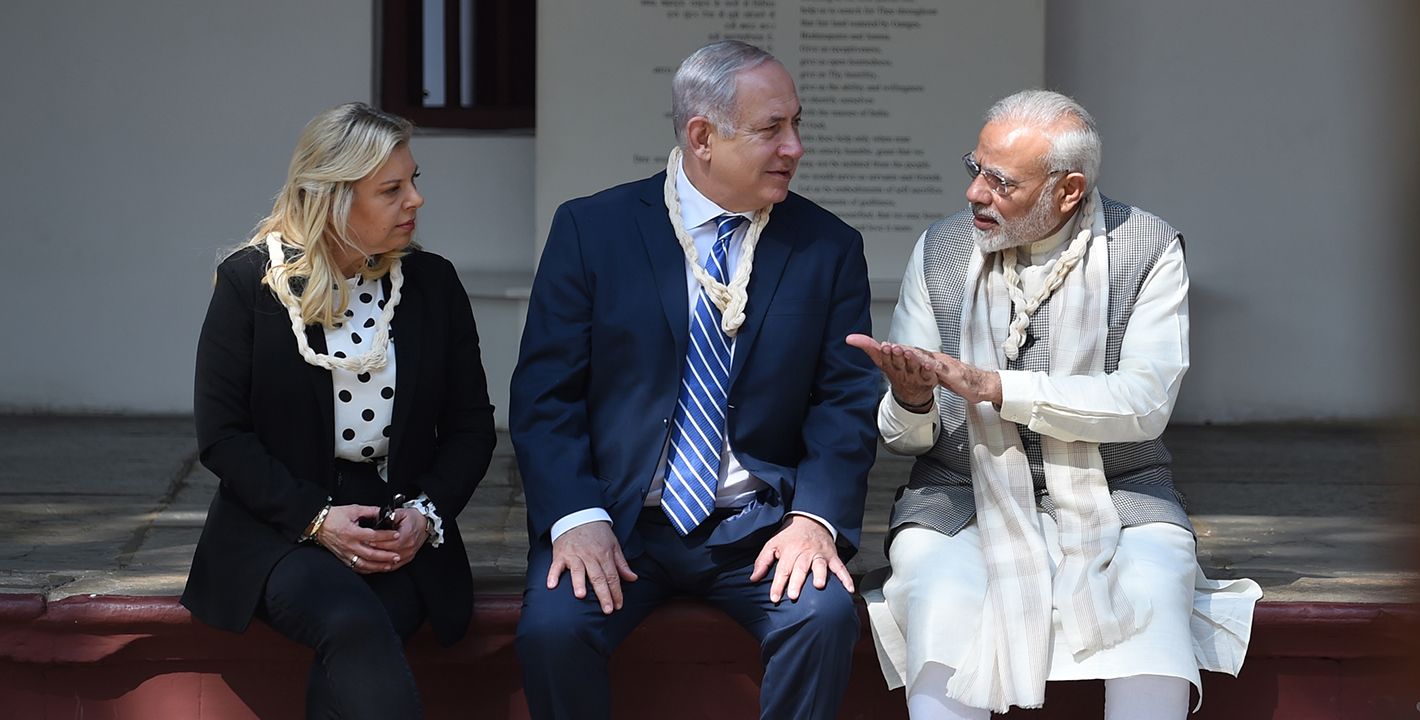
In an interview, Abhinav Pandya discusses the multiple facets of India’s ties with the Middle East.

Armenak Tokmajyan
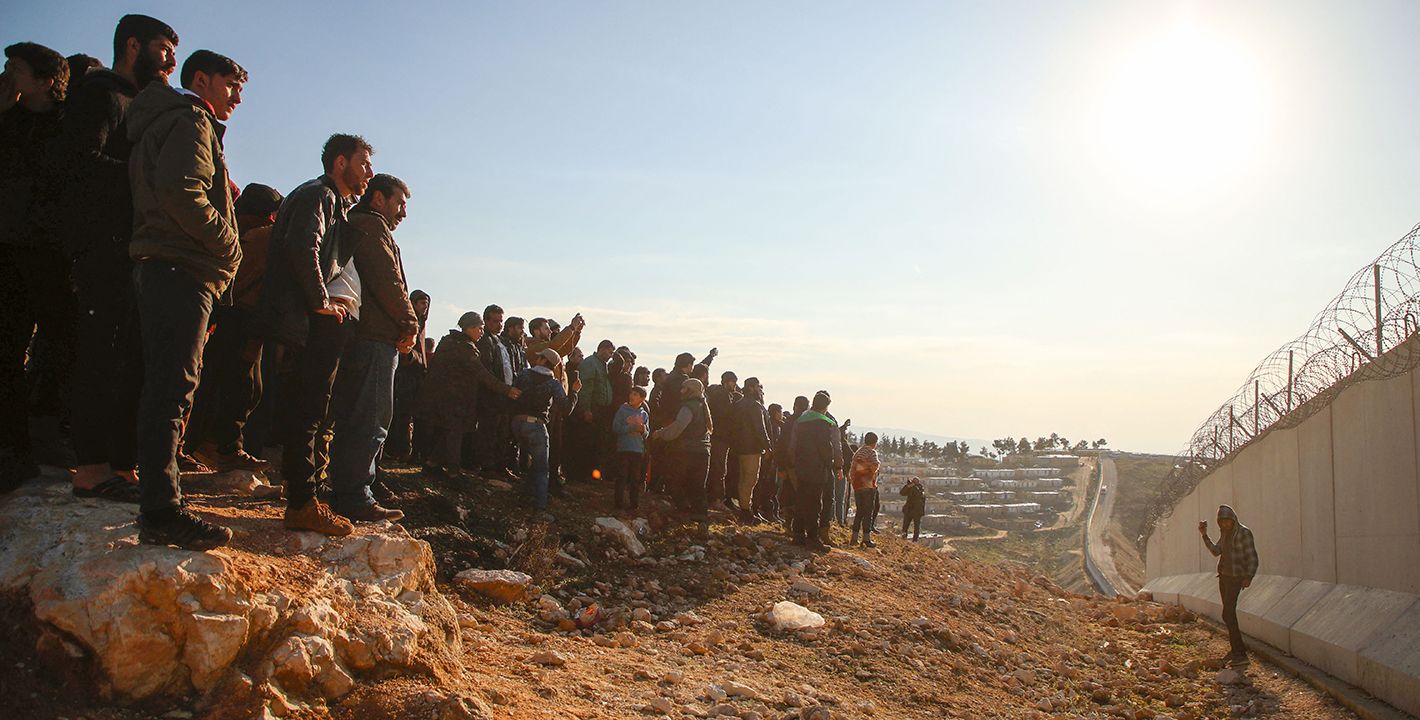
In Syria’s border regions, changes in demographics, economics, and security mean that an inter-Syrian peace process will require consensus among main regional powers that Syria must remain united, that no one side can be victorious, and that perennial instability threatens the region.

Kheder Khaddour, Armenak Tokmajyan
The interaction of national armed forces and private business sectors offers a useful lens for viewing the politics of numerous countries of the so-called Global South. A rising trend of military political activism—often accompanied by military commercial activity—underlines the importance of drivers and outcomes in these relationships.

Yezid Sayigh, Hamza Meddeb
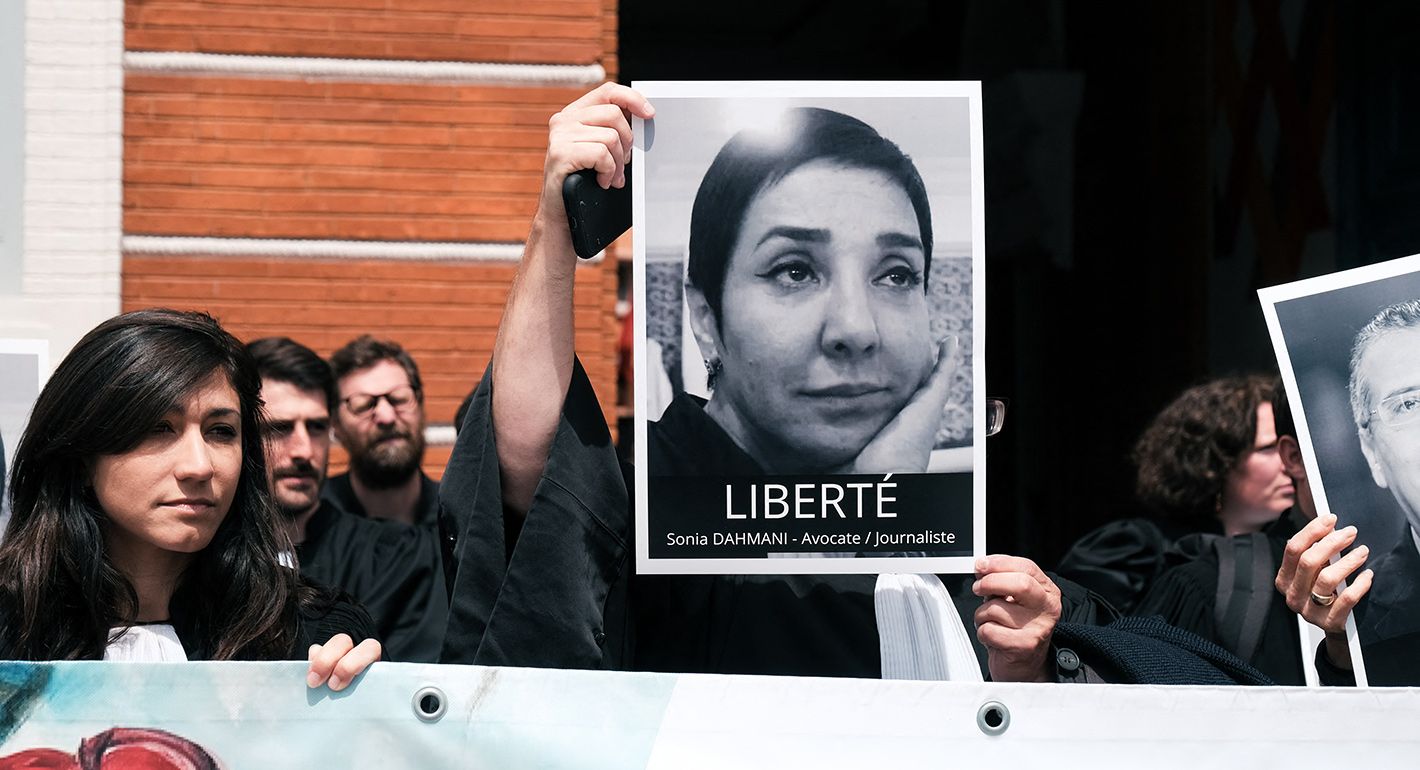
For many in the society, the post-Ben Ali years were mainly about successive economic crises and political instability.
Jasmine Khelil