

Q&A
Suzanne Maloney, Aaron David Miller, Karim Sadjadpour
{
  "authors": [
    "Karim Sadjadpour"
  ],
  "type": "legacyinthemedia",
  "centerAffiliationAll": "dc",
  "centers": [
    "Carnegie Endowment for International Peace",
    "Malcolm H. Kerr Carnegie Middle East Center"
  ],
  "collections": [],
  "englishNewsletterAll": "menaTransitions",
  "nonEnglishNewsletterAll": "",
  "primaryCenter": "Carnegie Endowment for International Peace",
  "programAffiliation": "MEP",
  "programs": [
    "Middle East"
  ],
  "projects": [],
  "regions": [
    "Middle East",
    "Iran"
  ],
  "topics": [
    "Political Reform",
    "Foreign Policy"
  ]
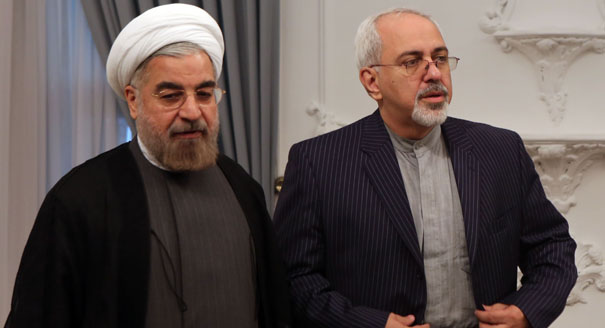
}
Source: Getty
While the United States and Iran have shared numerous adversaries, such as the Soviet Union, the Taliban, al-Qaeda, and now the Islamic Staet, the strategic enmity between the two countries has prevailed.
Source: European Council on Foreign Relations
“When you look at the main conflicts in today’s Middle East—Syria, Yemen, Bahrain, Lebanon, Iraq—one common element that transcends all these conflicts is the Iran-Saudi rivalry,” said Carnegie’s Karim Sadjadpour at the European Council on Foreign Relations. He explained that this conflict has three dimensions to it: ethnic, sectarian, and ideological. Both countries are confident that they’re the natural leader of the Islamic world and the Middle East, Sadjadpour continued.
In regards to the relationship between the United States and Iran, he argued that while both countries have shared numerous adversaries, such as the Soviet Union, the Taliban, al-Qaeda, and now the Islamic State, the strategic enmity between the United States and Iran has prevailed, driven more by Tehran than Washington. There’s a real fundamental incongruence between the urgent national security concerns of Iran, such as radical Sunni jihadism and Iran’s revolutionary ideology.
This presentation was originally published by European Council on Foreign Relations.

Senior Fellow, Middle East Program
Karim Sadjadpour is a senior fellow at the Carnegie Endowment for International Peace, where he focuses on Iran and U.S. foreign policy toward the Middle East.
Recent Work


Suzanne Maloney, Aaron David Miller, Karim Sadjadpour

Aaron David Miller, Karim Sadjadpour, Robin Wright
Carnegie does not take institutional positions on public policy issues; the views represented herein are those of the author(s) and do not necessarily reflect the views of Carnegie, its staff, or its trustees.

The accord represents a pivotal moment in the region to avert a security vacuum in the Gulf.


Azeema Cheema, Mohanad Hage Ali

In an interview, Jason Burke discusses his sweeping account of the “revolutionists” who so shaped the 1970s and early 1980s.

Michael Young

By failing to address Palestinian representation, the current process is bound to lead to just another temporary arrangement.

Nathan J. Brown

Morocco and Algeria, each in its own way, are having to navigate the global economic fallout of the U.S.-Israeli military campaign against Iran.

Yasmine Zarhloule
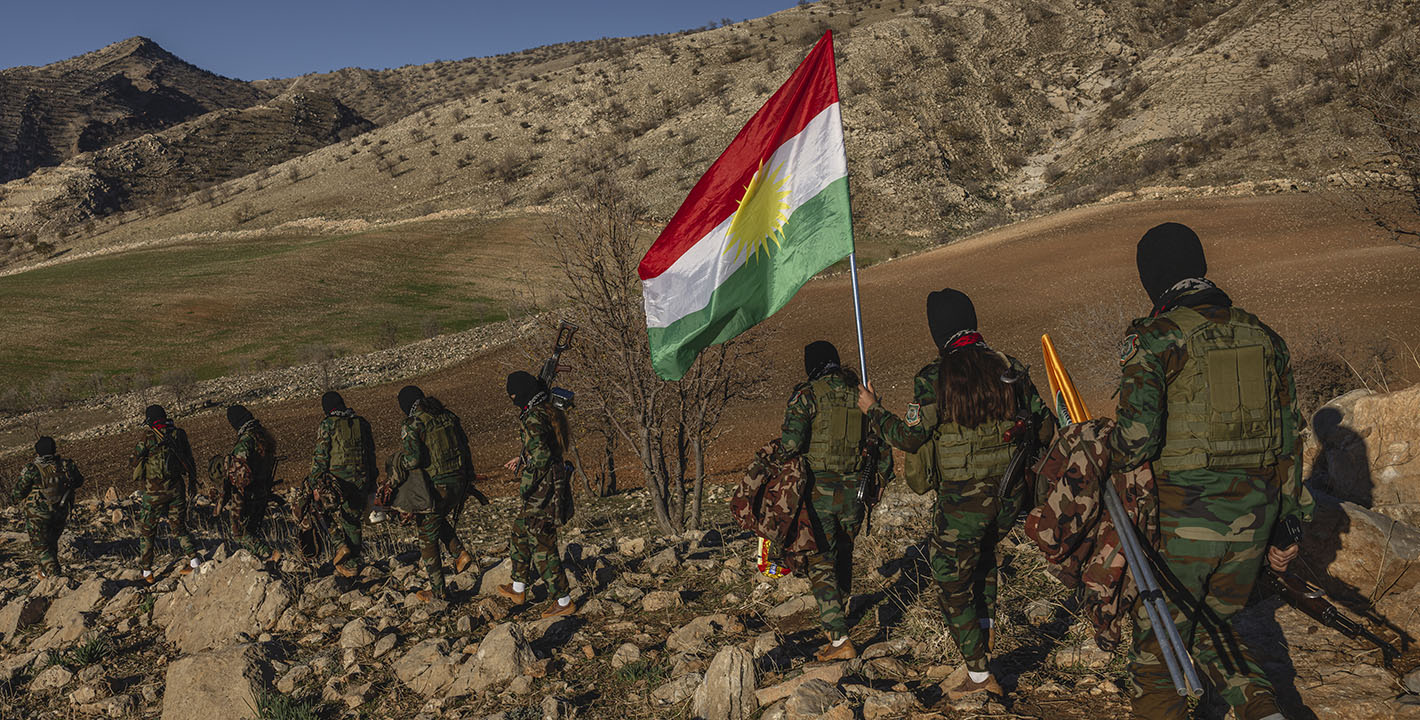
Following its deal with the United States, Iran may act against Iraq-based dissidents.
Wladimir van Wilgenburg