

Research
- +4
Milan Vaishnav, Rahul Verma, Rukmini S., …
{
  "authors": [
    "Christophe Jaffrelot"
  ],
  "type": "legacyinthemedia",
  "centerAffiliationAll": "dc",
  "centers": [
    "Carnegie Endowment for International Peace"
  ],
  "collections": [],
  "englishNewsletterAll": "ctw",
  "nonEnglishNewsletterAll": "",
  "primaryCenter": "Carnegie Endowment for International Peace",
  "programAffiliation": "SAP",
  "programs": [
    "South Asia"
  ],
  "projects": [],
  "regions": [
    "South Asia",
    "India"
  ],
  "topics": [
    "Political Reform"
  ]
}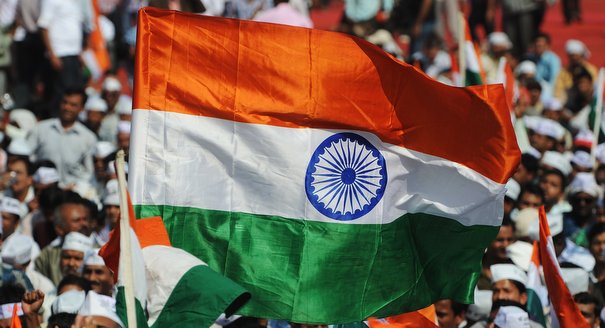
Source: Getty
Few analysts pay enough attention to either the phase that came before the Emergency or the phase after. Without this context, no good interpretation can emerge of the way the “political untouchability” of the Jana Sangh before the 1970s was attenuated.
Source: Indian Express
The ongoing discussion about the impact of the Emergency on the mainstreaming of Hindu nationalism is puzzling. Most analysts focus on this 18-month-long episode without paying enough attention to either the phase that came before, the “JP Movement”, or the phase after, the Janata Party government. Without this contextualisation, no good interpretation can emerge of the way the “political untouchability” (L.K. Advani’s words) of the Jana Sangh before the 1970s was attenuated, or even annihilated.
Till the 1970s, there were only few attempts by other opposition parties to relate to the Jana Sangh. Some were initiated by Ram Manohar Lohia in the framework of his strategy of non-Congressism in the 1960s, but they were short-lived. For most political forces, the Jana Sangh was a communal party that did not fit in the constitutional, secular order that the Indian republic had established in 1950.
Things started to change in the early 1970s, during the JP movement. Student organisations were at the forefront of this struggle, as is evident from the role played by the Chhatra Sangharsh Samiti (CSS, Student Struggle Committee) formed in Patna on February 17, 1974. That was the crucible of the first inclusion of the Sangh Parivar in a legitimate, united opposition front. One-third of the 24 members of the CSS governing body came from the ABVP, the students’ union of the RSS, whereas only four were socialist, two were from the Gandhian Tarun Shanti Sena and two were from the Congress(O).In March, the CSS turned to JP, who was already in touch with RSS leaders. In June 1973, JP had presided over a mourning ceremony in memory of M.S. Golwalkar and 20 years before, Nanaji Deshmukh, a senior RSS pracharak, had taken part in the bhoodan programme. After JP agreed to lead the student movement against the Congress, Deshmukh became his aide de camp and a key organiser of the protests.
One month later, in Delhi, JP presided over a meeting that resulted in the formation of a National Coordination Committee (NCC) headed by 20 people representing the Jana Sangh, Congress(O), Charan Singh’s BLD, the Socialist Party and Akali Dal. The Jana Sangh was not “untouchable” any more. It was even less so after JP agreed to take part in its annual function, where he said: “If you are a fascist, then I too am a fascist.”
JP then invited all the opposition forces to merge in order to give India a two-party system. Charan Singh was in favour of this arrangement, but the Jana Sangh had some reservations. All these parties contended themselves with contesting the Gujarat elections under the same umbrella, called the Janata Front. Instead of diluting their identity by merging their party into a new one, Sangh Parivar leaders preferred to take part in a coalition-like structure: Deshmukh became general secretary of the NCC, whose president was Morarji Desai, and Advani as well as D.P. Thengadi (the founder of the BMS, the workers’ union of the Parivar) were among its members.
In that context, the Emergency played the role of a catalyst — no more, no less. The fact that Indira Gandhi sent political leaders from different parties to the same jail was a major factor. In Rohtak, Advani and Bhairon Singh Shekhawat were imprisoned together with Ashok Mehta from the Congress(O), Chandra Shekhar (Congress dissident), and Madhu Dandavate (a socialist), Biju Patnaik, Piloo Mody and Raj Narain (BLD) as well as Charan Singh and Devi Lal, occasionally. In Tihar, Nanaji Deshmukh was held in a cell adjacent to those of Charan Singh and the socialist leader, Surendra Mohan.
When, in 1976, Charan Singh relaunched the idea of amalgamating the four main parties that had participated in the JP Movement, he was supported by Deshmukh. Similar developments took place in Rohtak, as Advani’s book, A Prisoner’s Scrap-Book, shows: “With the declaration of Emergency in June 1975, a new chapter has commenced… Those who believe in democracy have had to undergo many kinds of suffering and have had to make sacrifices. As a result of this the cordiality, closeness and mutual trust generated during this last one year among parties and persons committed to democracy could not have been ordinarily created even in one decade.”
Indeed, the fact that many important opposition leaders were together in jail prepared the ground for the Janata Party. But whether democracy was the main motivation of the Sangh Parivar needs confirmation. On August 25, the RSS chief, Balasaheb Deoras, who had been sent to jail on June 30, had written to Indira Gandhi a letter whose tone was conciliatory. He congratulated her for the level-headedness of her speech on Independence Day and asked her to lift the ban that had been imposed on the RSS. Since he did not get any response, he wrote again on November 10, proposing that the PM put the RSS to the service of the government’s development work. These letters are revealing of the top priority of the RSS leaders then: to save the organisation from being banned.
Whatever the reason for the decision that the jailed Jana Sanghis made to merge with other parties, it was conveyed by Advani on May 13, 1976, to those who were still outside.
While the integration of the Jana Sangh into mainstream politics had started before the Emergency, it was not a turning point, because the Janata Party broke over the dual membership controversy after socialists and BLD leaders realised that ex-Jana Sanghis continued to pay allegiance to the RSS. Then, the ex-Jana Sanghis created the BJP but could not join hands with any party except the Shiv Sena.
They could do it only in 1989, when the leaders of the Jan Morcha and Lok Dals decided to form an anti-Congress coalition in the name of their struggle against corruption. That coalition didn’t last either, but the BJP had become part of India’s mainstream politics for good, with the help of the Congress, which had started to communalise India’s polity with the Shah Bano affair. By the end of the 1980s, the non-secular repertoire had been legitimised from almost all quarters.
This article was originally published by the Indian Express.

Former Nonresident Scholar, South Asia Program
Jaffrelot’s core research focuses on theories of nationalism and democracy, mobilization of the lower castes and Dalits (ex-untouchables) in India, the Hindu nationalist movement, and ethnic conflicts in Pakistan.
Recent Work

Milan Vaishnav, Rahul Verma, Rukmini S., …
Christophe Jaffrelot
Carnegie does not take institutional positions on public policy issues; the views represented herein are those of the author(s) and do not necessarily reflect the views of Carnegie, its staff, or its trustees.
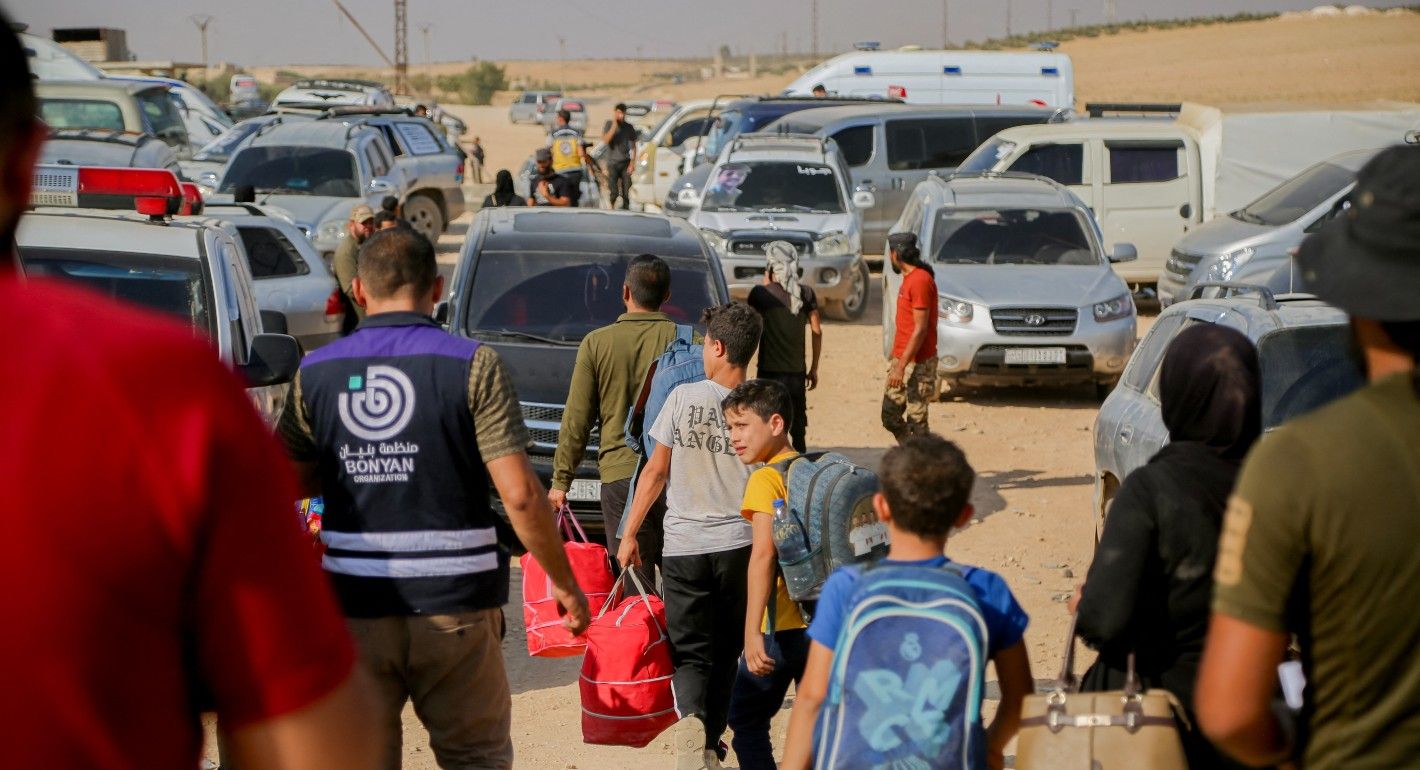
A humanitarian crisis in Lebanon deepens, and Syrian refugees face a perilous choice: remain in a war-torn environment or return to Syria where they risk encountering significant dangers and discrimination. There are significant challenges and risks to their search for safety in Syria.
Haid Haid
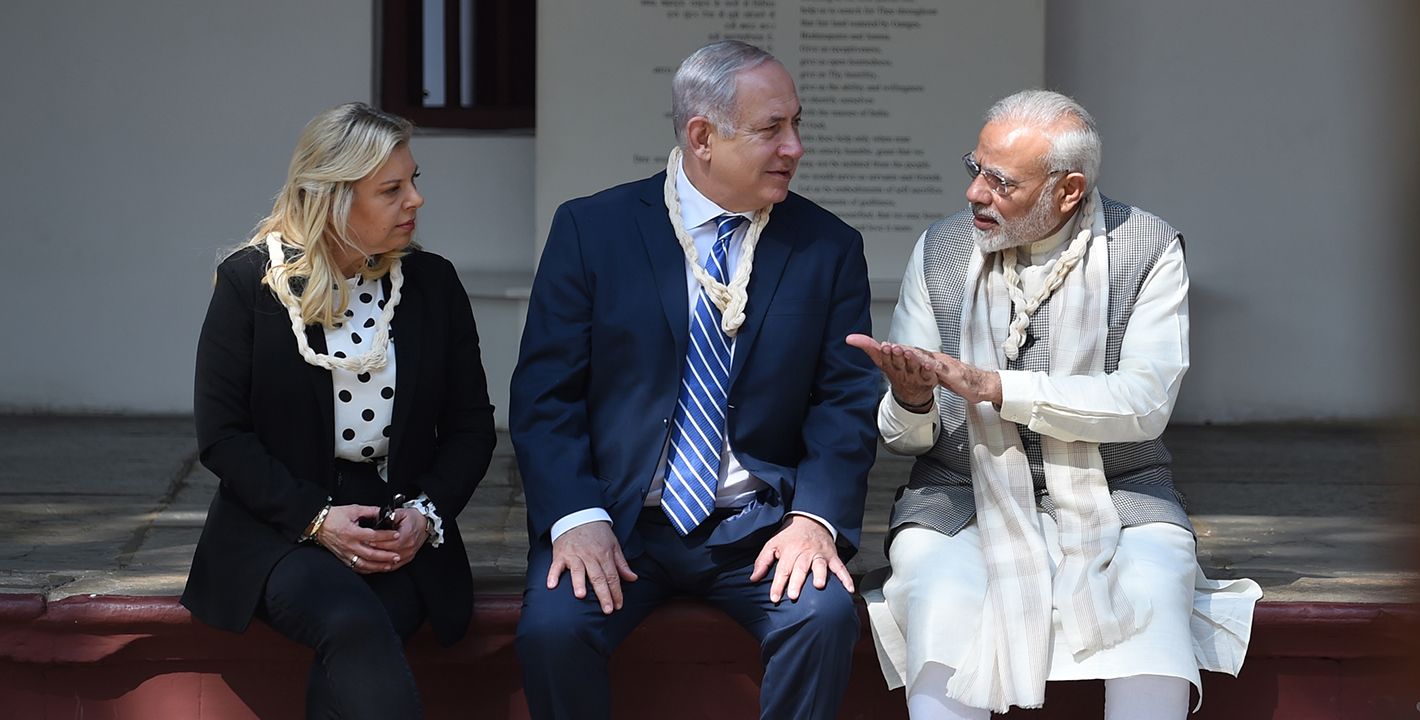
In an interview, Abhinav Pandya discusses the multiple facets of India’s ties with the Middle East.

Armenak Tokmajyan
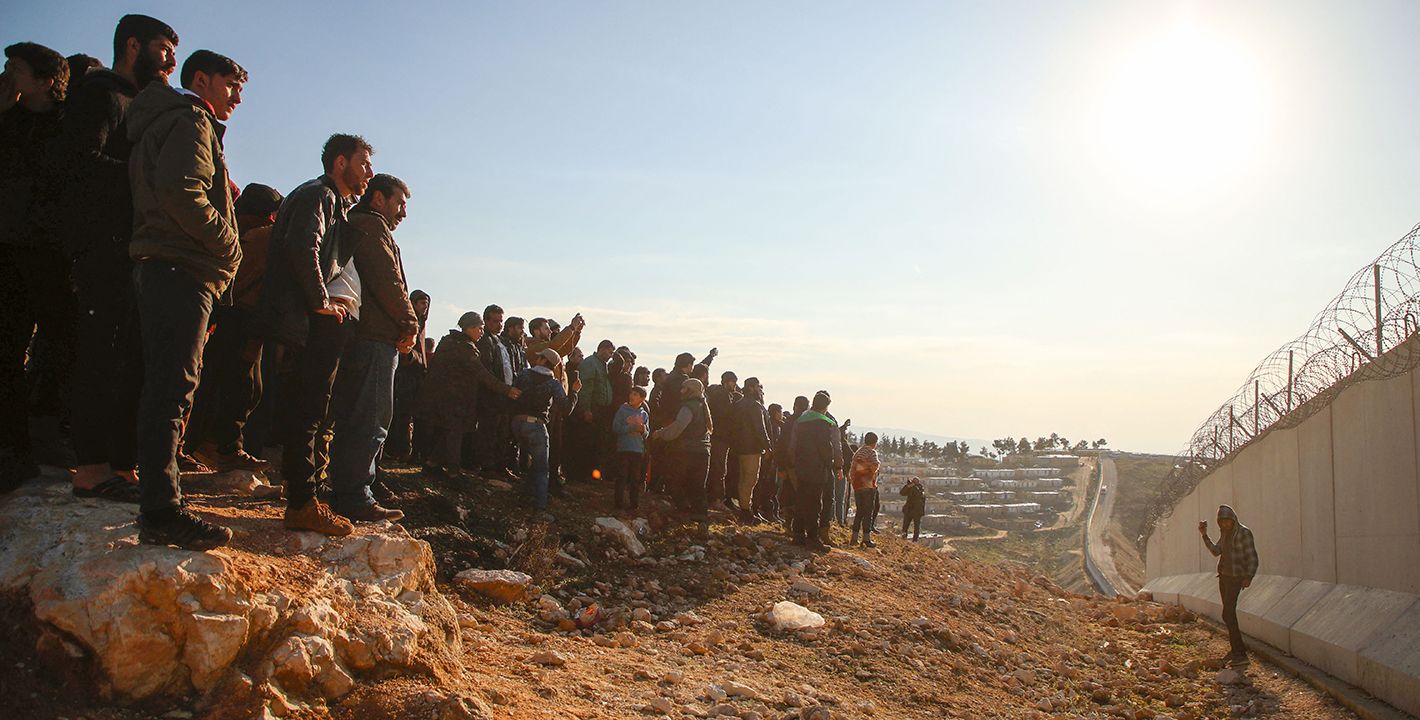
In Syria’s border regions, changes in demographics, economics, and security mean that an inter-Syrian peace process will require consensus among main regional powers that Syria must remain united, that no one side can be victorious, and that perennial instability threatens the region.
Kheder Khaddour, Armenak Tokmajyan
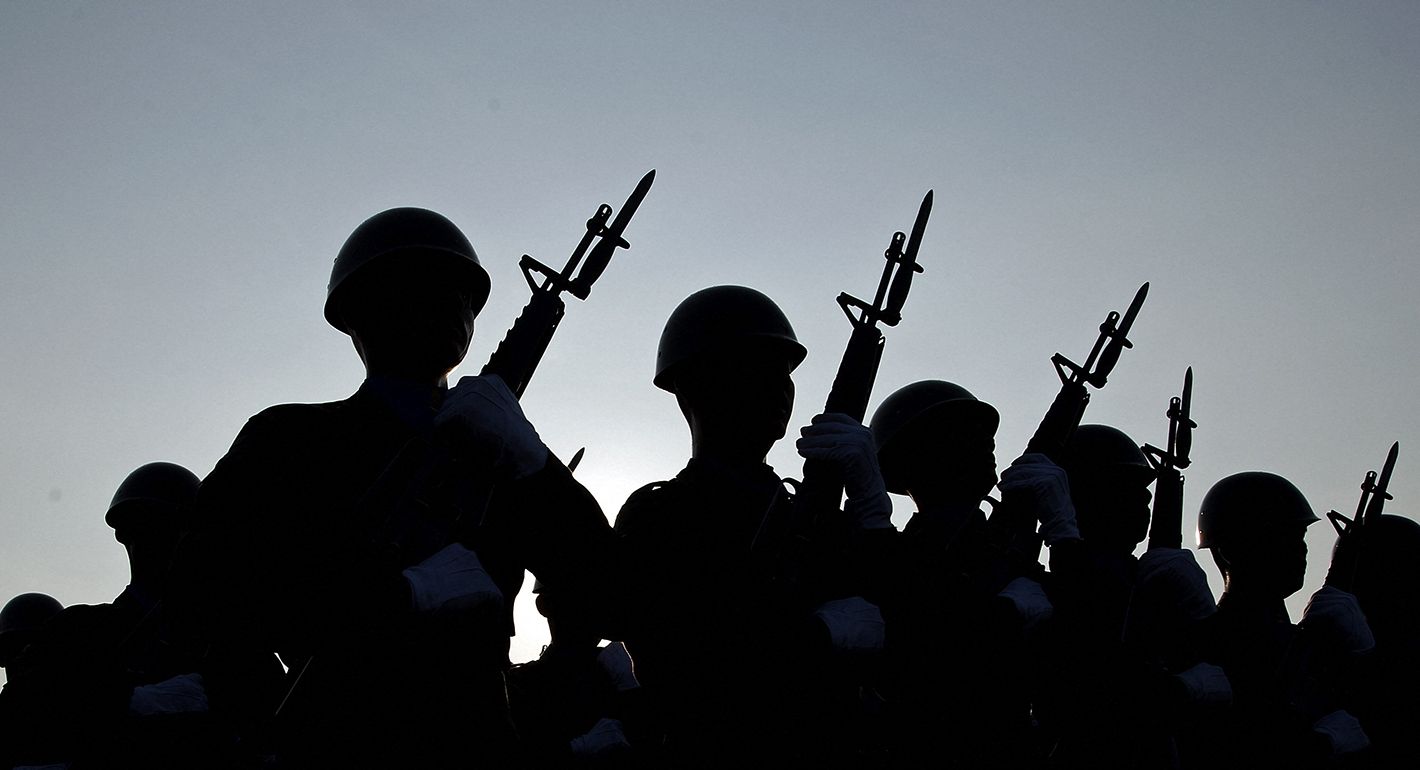
The interaction of national armed forces and private business sectors offers a useful lens for viewing the politics of numerous countries of the so-called Global South. A rising trend of military political activism—often accompanied by military commercial activity—underlines the importance of drivers and outcomes in these relationships.

Yezid Sayigh, Hamza Meddeb
For many in the society, the post-Ben Ali years were mainly about successive economic crises and political instability.
Jasmine Khelil