

Commentary
In an interview, Marc Lynch discusses his new book decrying the post-1990 U.S.-dominated order in the Middle East.
Michael Young
{
  "authors": [
    "Toby Dalton",
    "Michael Krepon"
  ],
  "type": "legacyinthemedia",
  "centerAffiliationAll": "dc",
  "centers": [
    "Carnegie Endowment for International Peace"
  ],
  "collections": [],
  "englishNewsletterAll": "ctw",
  "nonEnglishNewsletterAll": "",
  "primaryCenter": "Carnegie Endowment for International Peace",
  "programAffiliation": "NPP",
  "programs": [
    "Nuclear Policy"
  ],
  "projects": [],
  "regions": [
    "South Asia",
    "Pakistan"
  ],
  "topics": [
    "Nuclear Policy",
    "Nuclear Energy"
  ]
}
Source: Getty
Pakistan’s path to join the mainstream of the international nuclear order faces many obstacles.
Source: Dawn
Pakistan seeks to join the mainstream of the international nuclear order with Beijing’s support. Washington has offered words of qualified encouragement. A June 2015 US-Pakistan joint statement “emphasised the desirability of continued outreach to integrate Pakistan into the international nonproliferation regime.” But Pakistan’s path to the mainstream faces many obstacles.
The immediate objective of Pakistan’s mainstreaming diplomacy is to be accorded a civil nuclear deal like that given to India by the Nuclear Suppliers Group in 2008. Islamabad also seeks to become an NSG member, alongside India. Or, failing this, to block India from becoming a member. The NSG operates by consensus, meaning if India became a member it could block Pakistani membership in the future.India is pushing hard for admission in 2016, with support from the Obama administration and other NSG members, including Australia, Canada, France, Japan, Russia, and the UK. There is not yet consensus about Indian membership, but New Delhi’s case is advancing. The window for Pakistan’s mainstreaming into the global nuclear order is closing.
Since Pakistan is already receiving nuclear reactors from China — and since it cannot finance reactors elsewhere — why does it need or want to be an NSG member? Presumably, the answer has to do with standing in the nuclear order equivalent to India and not being frozen in an ‘inferior’ position.
India was able to secure a nuclear deal by leveraging international commercial interest in its nuclear market, and by offering improved strategic political relations to the US and others. Pakistan lacks these means of suasion, making a commercial N-power path to mainstreaming unlikely. For Pakistan, the path to success lies in n-weapon-related initiatives.
Pakistan has worked hard to build diverse nuclear capabilities, which it will retain as a necessary deterrent against perceived existential threats from India. At this juncture, Pakistan’s military leadership can choose to accept success in achieving a ‘strategic’ deterrent against India, sufficient to prevent nuclear exchanges and a major conventional war. Alternatively, it can choose to continue to compete with India in the pursuit of ‘full spectrum’ deterrence, which would entail open-ended nuclear requirements. These choices lead Pakistan to two starkly different nuclear futures and places in the global nuclear order.
Pakistani officials reiterate their intention not to enter an arms race with India, but the growth in Pakistan’s N-weapons complex suggests otherwise. More nuclear weapons and more fissile material will not deter India to a greater extent than is already the case. On the other hand, more nuclear weapons and more fissile material will not help Pakistan address its internal political, economic, and security challenges. Nor will these programmes help Pakistan join the nuclear mainstream.
By choosing to accept success in achieving the requirements of “strategic” deterrence, Pakistan is in a position to consider nuclear initiatives that would clarify its commitment to strengthening nuclear norms, regimes, and practices, and that would address widely held perceptions that its nuclear weapons are a major source of danger in South Asia. We propose that Pakistan consider five nuclear weapon-related initiatives that have previously been inconceivable: Shift declaratory policy from ‘full spectrum” to ‘strategic’ deterrence; commit to a recessed deterrence posture and limit production of short-range delivery vehicles and tactical nuclear weapons; lift Pakistan’s veto on FMCT negotiations and reduce or stop fissile material production; separate civilian and military nuclear facilities; sign the CTBT without waiting for India.
These initiatives are easy to dismiss — but none would impair Pakistan’s successful accomplishment of strategic deterrence against India. By rejecting them and continuing to compete with India, Pakistan is unlikely to be mainstreamed. By adopting them, Pakistan places India in a position of having to match Pakistan or risk losing entry into the NSG. Adopting these initiatives would, however, require difficult and fundamental adjustments to Pakistan’s thinking about nuclear weapons. Precisely because these initiatives would be so difficult and unusual for Pakistan, they would change perceptions about Pakistan and its place in the global nuclear order.
Taking even some of the five initiatives would clarify Pakistan’s commitment to adopt similar practices as other states with nuclear weapons. They would reduce risks of escalation that could lead to nuclear war. And they could facilitate Pakistan’s entrance into the nuclear mainstream, while strengthening nonproliferation norms, bolstering global disarmament hopes, and setting the bar higher for new entrants into the NSG.
The steps we propose lend themselves to mainstreaming. More importantly, these steps would advance Pakistan’s national, social, and economic security interests.

Senior Fellow and Co-director, Nuclear Policy Program
Toby Dalton is a senior fellow and co-director of the Nuclear Policy Program at the Carnegie Endowment. An expert on nonproliferation and nuclear energy, his work addresses regional security challenges and the evolution of the global nuclear order.
Michael Krepon
Michael Krepon co-founded the Stimson Center in 1989. He worked previously in the executive branch and on Capitol Hill.
Carnegie does not take institutional positions on public policy issues; the views represented herein are those of the author(s) and do not necessarily reflect the views of Carnegie, its staff, or its trustees.
In an interview, Marc Lynch discusses his new book decrying the post-1990 U.S.-dominated order in the Middle East.

Michael Young
The interaction of national armed forces and private business sectors offers a useful lens for viewing the politics of numerous countries of the so-called Global South. A rising trend of military political activism—often accompanied by military commercial activity—underlines the importance of drivers and outcomes in these relationships.

Yezid Sayigh, Hamza Meddeb
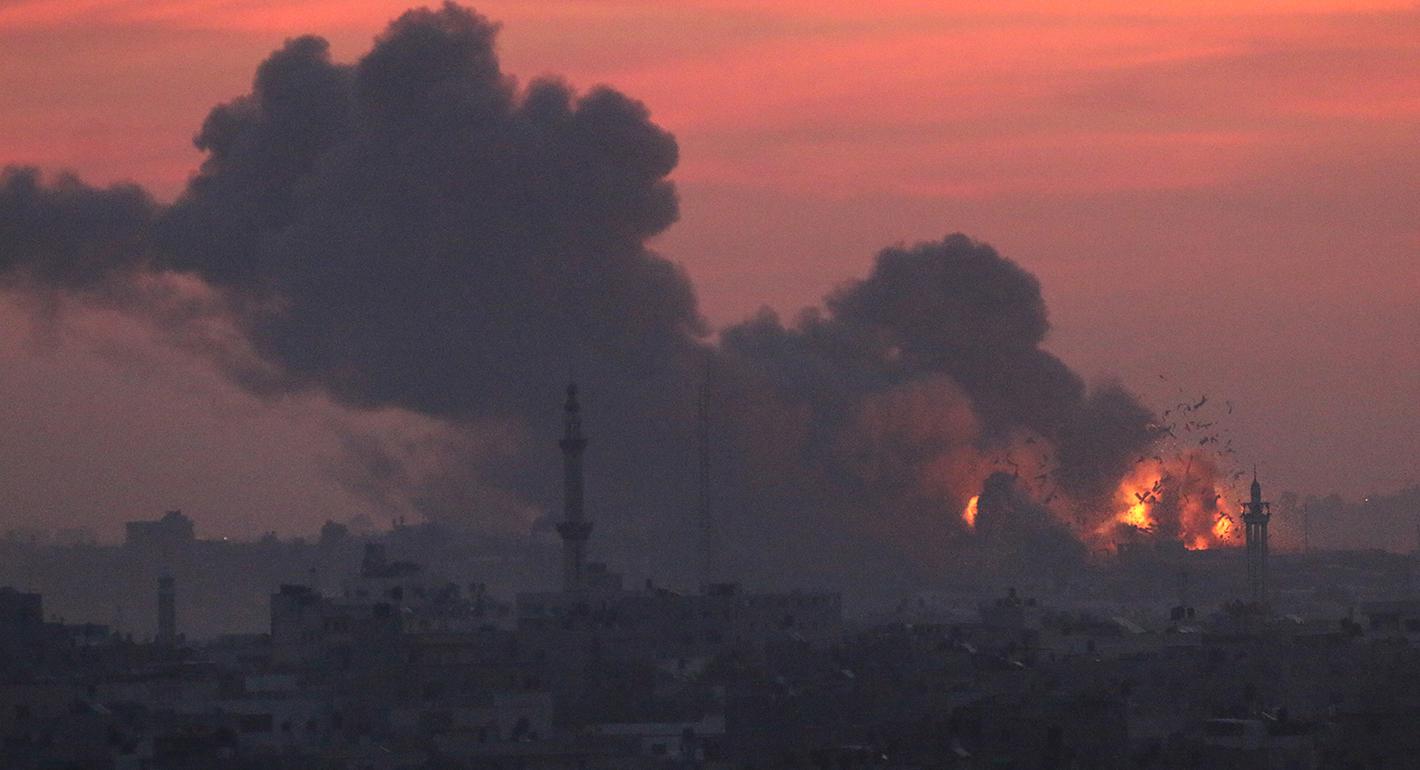
Scholars from Carnegie’s global network comment on how the ongoing conflict between Israelis and Palestinians is affecting their areas of interest, and what the implications of this may be.



Maha Yahya, Rosa Balfour, Judy Dempsey, …

Both events also could force Washington to rethink or revive its Middle East partnerships.

Karim Sadjadpour
Disagreement between the United States and Iran over a revived nuclear accord may anchor volatile competition.

George Perkovich