

Commentary
Farea Al-Muslimi
{
  "authors": [
    "Farea Al-Muslimi"
  ],
  "type": "legacyinthemedia",
  "centerAffiliationAll": "dc",
  "centers": [
    "Carnegie Endowment for International Peace",
    "Malcolm H. Kerr Carnegie Middle East Center"
  ],
  "collections": [],
  "englishNewsletterAll": "menaTransitions",
  "nonEnglishNewsletterAll": "",
  "primaryCenter": "Malcolm H. Kerr Carnegie Middle East Center",
  "programAffiliation": "MEP",
  "programs": [
    "Middle East"
  ],
  "projects": [],
  "regions": [
    "Gulf",
    "Yemen",
    "Middle East"
  ],
  "topics": [
    "Political Reform",
    "Security"
  ]
}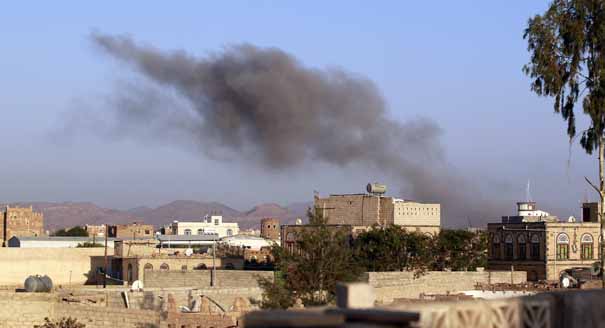
Source: Getty
The conflict in Yemen exposes a number of problems that the Middle East is facing in the post Arab Spring era, as more youths join extremist groups for varying reasons.
Source: Foreign Policy
Carnegie’s Farea al-Muslimi joined Elizabeth Dickinson to discuss the current situation in Yemen, and what it will take to end the conflict. Al-Muslimi talked about the political and security vacuum that is pushing more Yemeni youth toward radicalization and armed groups. A new social contract must be struck between people and the new governments in the Middle East to counter the rise of extremism, he said. Al-Muslimi argued that the war in Yemen is not essentially sectarian in nature, despite what many claim, and that a peaceful solution is still possible. However, the only way forward would be a comprehensive solution that addresses not only local grievances and but also regional rivalries, namely between Saudi Arabia and Iran.
This podcast was originally produced by Foreign Policy’s Global Thinkers podcast series.
Research fellow at Chatham House’s Middle East and North Africa Programme
Farea Al-Muslimi is a research fellow at Chatham House’s Middle East and North Africa Programme.
Recent Work
Farea Al-Muslimi
Farea Al-Muslimi
Carnegie does not take institutional positions on public policy issues; the views represented herein are those of the author(s) and do not necessarily reflect the views of Carnegie, its staff, or its trustees.

As the U.S. stumbles in its war with Iran, we are likely to see an acceleration of its disengagement from the region.

Michael Young

Huawei pushed hard to enter the Egyptian data centers market, until the Americans made a better offer.

Angie Omar

Middle Eastern states should welcome an accelerated U.S. disengagement from their region.
Michael Young

The accord represents a pivotal moment in the region to avert a security vacuum in the Gulf.


Azeema Cheema, Mohanad Hage Ali

In an interview, Jason Burke discusses his sweeping account of the “revolutionists” who so shaped the 1970s and early 1980s.
Michael Young