

Paper
Christopher S. Chivvis, Rohan Mukherjee, Milan Vaishnav
{
  "authors": [
    "Milan Vaishnav"
  ],
  "type": "legacyinthemedia",
  "centerAffiliationAll": "dc",
  "centers": [
    "Carnegie Endowment for International Peace"
  ],
  "collections": [],
  "englishNewsletterAll": "ctw",
  "nonEnglishNewsletterAll": "",
  "primaryCenter": "Carnegie Endowment for International Peace",
  "programAffiliation": "SAP",
  "programs": [
    "South Asia"
  ],
  "projects": [],
  "regions": [
    "South Asia",
    "India"
  ],
  "topics": [
    "Political Reform"
  ]
}
Source: Getty
How did the BJP lose Bihar? The easiest explanation is this: the Grand Alliance pulled a BJP on the BJP.
Source: Foreign Affairs
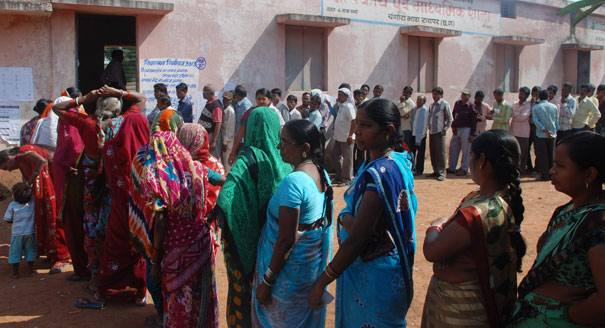
Over the last five weeks, voters in the northern Indian state of Bihar went to the polls to elect a new government. In India’s boisterous democracy, it is hard to get too worked up over a single regional election. But Bihar, which would be the world’s thirteenth-largest country in population terms and which holds a large chunk of federal power, is something of an exception.
The election was a hotly contested showdown between two coalitions. In one corner stood Prime Minister Narendra Modi’s Bharatiya Janata Party (BJP) and a host of smaller local allies. Since coming to power in the May 2014 general election, the BJP has quickly became the central pole of Indian politics, and it is looking to expand its electoral footprint. In the other corner was the “Grand Alliance,” a motley collection of largely regional concerns looking to halt Modi’s electoral juggernaut. This alliance comprised three strange bedfellows: the incumbent chief minister Nitish Kumar, his onetime enemy (and former chief minister) Lalu Prasad Yadav, and the remains of the once-dominant Indian National Congress party.The contest was replete with dramatic twists and turns, capped by inconclusive exit polls and—in a scene out of the Twilight Zone—totally different reported vote counts depending on the media outlet. On Sunday, when the state’s nearly 40 million ballots finally were tallied, the result was a stunning victory for the anti-BJP front, which bagged nearly three-quarters of seats in the state assembly.
How does one make sense of the triumph of the anti-BJP collective over the seemingly unstoppable Modi? The easiest explanation is this: The Grand Alliance pulled a BJP on the BJP. That party’s historic 2014 general election romp was built on three pillars: presidential-style leadership, the nationalization of the election, and the projection of sober economic stewardship. These, too, were the keys to the Grand Alliance’s success.
During the BJP’s national campaign, the most visible character was Modi, whose constant presence effectively turned a parliamentary contest into a presidential one. At the party’s June 2013 conclave, the BJP leadership anointed Modi as the chosen one—nearly one year ahead of the poll—and built a high-octane campaign around him. The BJP saturated the media with images, aphorisms, and the myriad accomplishments of the onetime Gujarat chief minister. “Ab ki baar, Modi sarkar” (This time, Modi’s government) became a defining motif of the campaign. This was a departure from past practice; historically, the Hindu nationalist BJP has functioned as a cadre-based outfit, often emphasizing its stable of local, regional, and national leaders.
Taking a page from the BJP, in 2015, the Grand Alliance turned the race in Bihar into a presidential contest of its own. Kumar became the primary face of the anti-BJP front. The BJP, in turn, opted to double-down on the “Modi magic” that had worked so handily in the national election and in subsequent state polls. (In several recent state elections, including in Haryana, Jharkhand, and Maharasthra, the BJP rejected calls to rally behind a local leader, choosing instead to ride the Modi wave to victory.) Modi’s unique charisma was sufficient to win other races, but Bihar is unique. Unlike the other states, in which anti-incumbent sentiment ran deep and no single political figure could go toe-to-toe with Modi, Bihar has Kumar, a popular two-term chief minister associated with relatively clean governance and an inclusive development model.
In turn, the Grand Alliance simply asked voters to choose between a Bihari leader they knew and a “bahari” (outsider) they did not. It is perhaps no coincidence that the only other election the BJP has lost since coming to power at the national level was February’s contest in Delhi, where the rabble-rousing anti-corruption activist Arvind Kejriwal dominates the political landscape.
A second aspect of the BJP’s successful 2014 campaign was its ploy to nationalize the poll, rendering it a pan-Indian referendum on the Congress Party as opposed to a series of state-level fights. Data compiled by the political scientist Neelanjan Sircar indicates that, where the BJP and Congress faced off head-to-head (as the two leading parties), the BJP won an astonishing 88 percent of contests. The ailing Congress, saddled with a slowing economy, epic graft accusations, and rudderless leadership, proved to be an easy punching bag.
The Grand Alliance deployed a similar tactic in Bihar—in two ways. First, it made the election a referendum on Kumar’s tenure by asking voters if they were better off today than they were a decade ago. Like him or not, few Biharis could dismiss the notion that life had, in fact, gotten better under Kumar’s tutelage. This put the BJP on the back foot, since it had been part of Kumar’s government from 2005 to 2013, when the two sides broke ties. The BJP was left trying to attack Kumar’s partner, Yadav, who is nearly the polar opposite of the technocratic, soft-spoken Kumar; he is a consummate retail politician, armed with a rapier wit and an uncanny knack for identity politics. During his years running Bihar, he also developed a reputation for brazen malfeasance; in 2013, he was finally convicted on corruption charges. But the BJP’s charge of guilt by association did not stick—Yadav pledged (genuinely or not, we will soon see) that his party would be the alliance’s junior partner and that Kumar would be in charge of post-election governance.
And second, the Grand Alliance also managed to make the vote a referendum on Modi. Campaign talking points included questions about what Modi had actually accomplished in his first 18 months in office, and whether the average Bihari had seen any material change in his or her well being. True, India is now the fastest growing major economy in the world; but jobs, especially for a country with a median age of 27, have been few and far between.
The third pillar of the BJP’s 2014 strategy was projecting economic competence. Back then, with growth rates nose-diving and inflation running amok, the BJP scarcely needed to lift a finger in order to hammer the Congress Party on its failing economic stewardship. And it could reliably point to Modi’s own record of growth and investment in the state of Gujarat (which Modi ran for over a dozen years) to advertise what he would do if elected.
In Bihar, both alliances paid lip service to development. Much like Modi had previously touted his record in Gujarat, Kumar skillfully marketed his “Bihar model” at the hustings. During his tenure, Kumar restored basic law and order, reversed the economic malaise he inherited, and championed popular social welfare schemes. Although Bihar remains India’s poorest state, its per capita income grew 8.4 percent in 2014–15, the second fastest pace among India’s states.
The BJP’s message was somewhat muddled; its opening salvo was the announcement of a “special package” of central assistance—a hallmark of India’s paternalistic state. Ironically, this was the kind of discretionary economics that then-candidate Modi had railed against in his march to power. The BJP’s economic message was further diluted and perhaps even drowned out by a series of uncomfortable gaffes. The head of the Rashtriya Swayamsevak Sangh (RSS), the BJP’s ideological guiding force, mused that it might be time to review India’s program of caste-based affirmative action, a red flag in the Hindi heartland. BJP President Amit Shah famously claimed, in a bout of fear mongering, that Pakistanis would celebrate a BJP defeat in Bihar by setting off firecrackers. Even Modi himself raised unnecessary controversy by claiming that his opponents sought to reduce benefits for low-caste Hindus, channeling them toward the minority Muslim community instead. These proclamations did receive more unfavorable media attention than questionable rhetoric from the other side, but that is the price of serving as the central pole of national politics.
The BJP’s 2014 electoral strategy was elegant in its simplicity, a perfect case study for campaign strategists. Bihar’s anti-BJP alliance proved a quick study, internalizing the lessons of Modi’s record run and putting on a show that the BJP was unprepared to confront. Now that the election is over, if the BJP is to regain its electoral mojo, Modi would be well advised to make changes in three areas.
First, Modi’s claims of being an economic miracle maker now ring hollow in part because, in his first 18 months, he has made only halting progress in fixing the national economy. Perhaps lulled into thinking that his party would be granted at least two terms in office thanks to its historic demolition of the Congress Party, the prime minister has pursued an incremental reform agenda. India’s restless young population, intensifying urbanization, and huge infrastructure gaps demand a sharper break with past policies.
Politically, there is no doubt that Modi has been an electoral shot-in-the-arm for the BJP. There is growing concern, however, that the gains could be fleeting if they rest on Modi’s shoulders alone. In contrast to the dynastically-ruled Congress, the BJP has traditionally bred strong regional leaders and cultivated a collaborative style of governance. Indeed, two days after the Bihar verdict, a group of BJP elders complained that Modi and Shah’s domineering approach had “emasculated” the party in the regions. If Modi does not reverse course, he could find a mutiny on his hands.
Finally, the BJP’s controversial, communally tinged statements during the Bihar campaign have raised eyebrows both inside and outside India. Although Modi may have portrayed himself as India’s economic superman in last year’s parliamentary campaign, many affiliated with or inspired by his party have been fanning religious flames in recent months. Unfortunately, Modi too had dipped his toe into these murky waters, possibly reducing his moral authority to take corrective action. If Modi wants to keep his place in Indian politics, though, he would do well to remind himself of another of his 2014 campaign’s slogans: “Sab ka saath, Sab ka vikas” (Together with all, development for all).

Director and Senior Fellow, South Asia Program
Milan Vaishnav is a senior fellow and director of the South Asia Program and the host of the Grand Tamasha podcast at the Carnegie Endowment for International Peace. His primary research focus is the political economy of India, and he examines issues such as corruption and governance, state capacity, federalism, and electoral behavior. He also conducts research on the Indian diaspora.
Recent Work

Christopher S. Chivvis, Rohan Mukherjee, Milan Vaishnav



Sophia Besch, Eric Ciaramella, Steve Feldstein, …
Carnegie does not take institutional positions on public policy issues; the views represented herein are those of the author(s) and do not necessarily reflect the views of Carnegie, its staff, or its trustees.
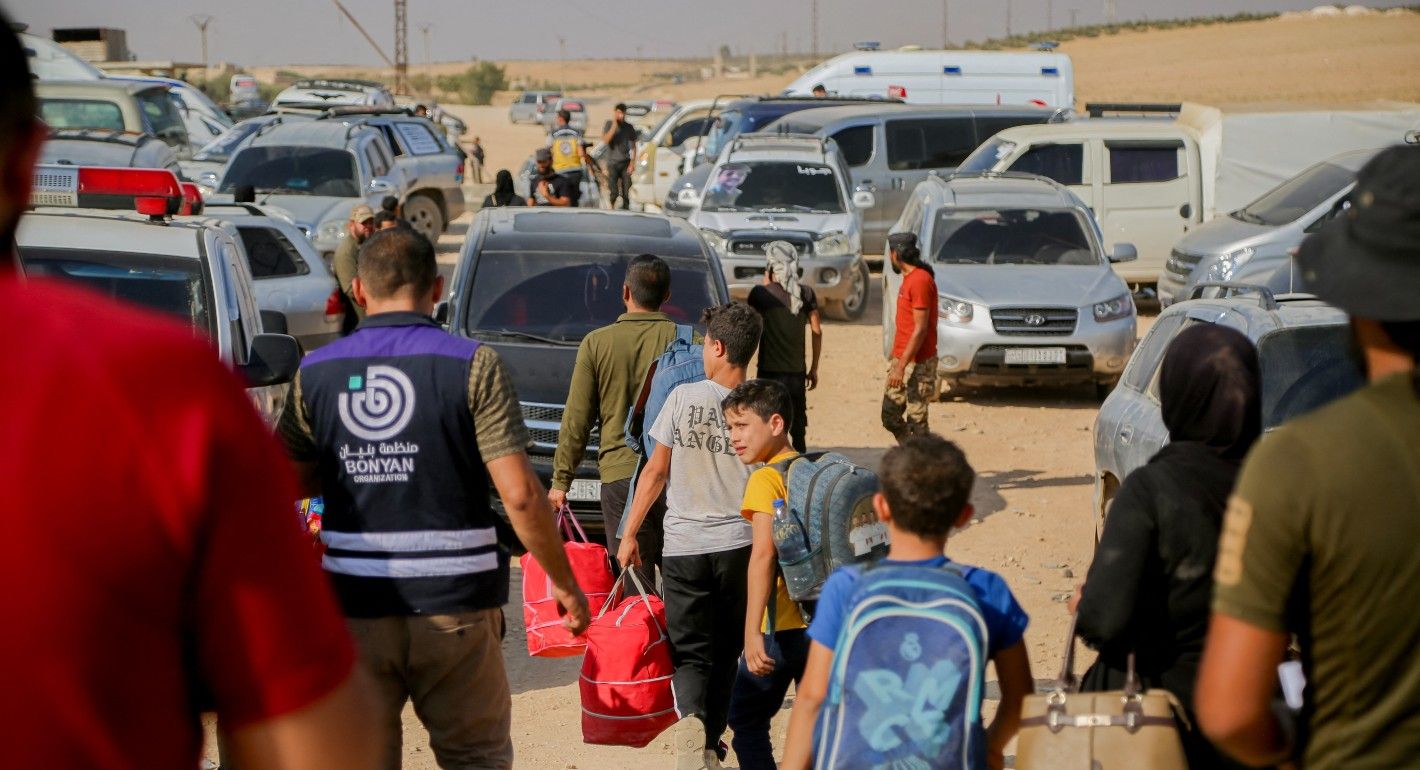
A humanitarian crisis in Lebanon deepens, and Syrian refugees face a perilous choice: remain in a war-torn environment or return to Syria where they risk encountering significant dangers and discrimination. There are significant challenges and risks to their search for safety in Syria.
Haid Haid
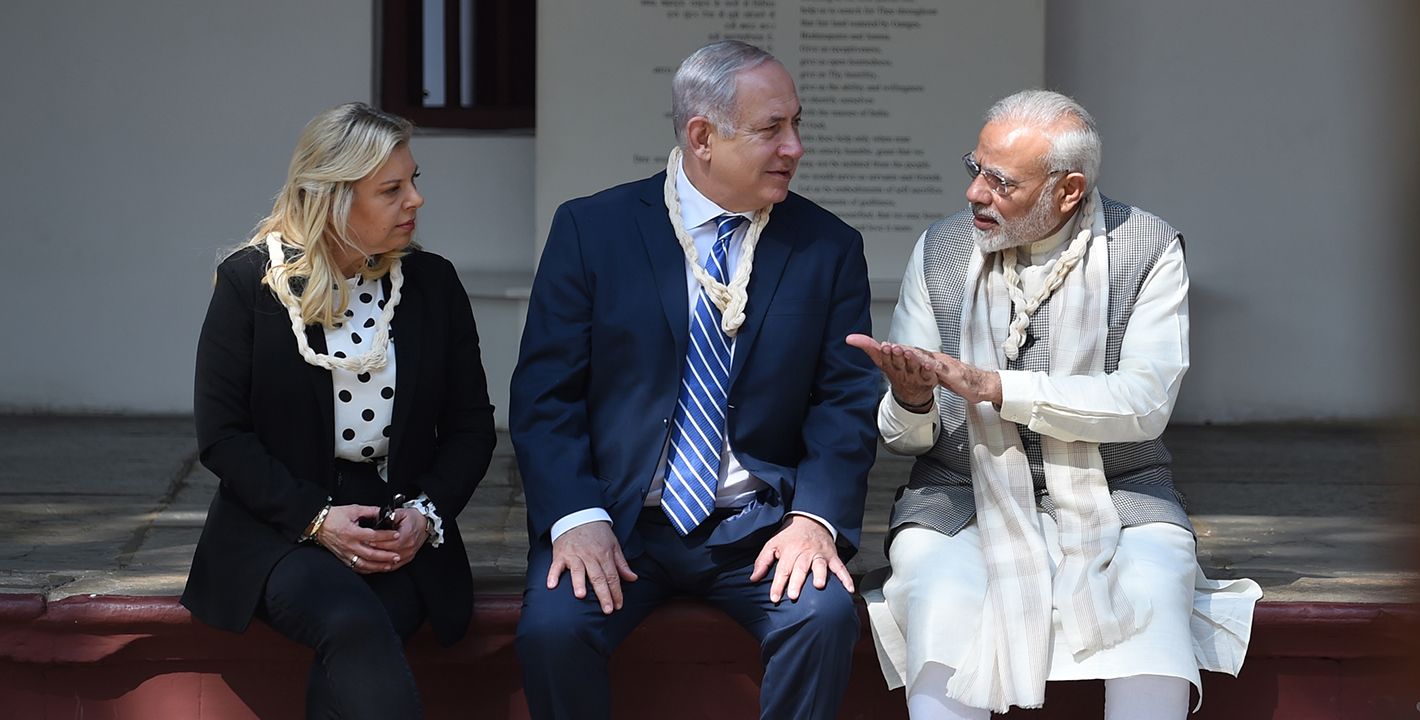
In an interview, Abhinav Pandya discusses the multiple facets of India’s ties with the Middle East.

Armenak Tokmajyan
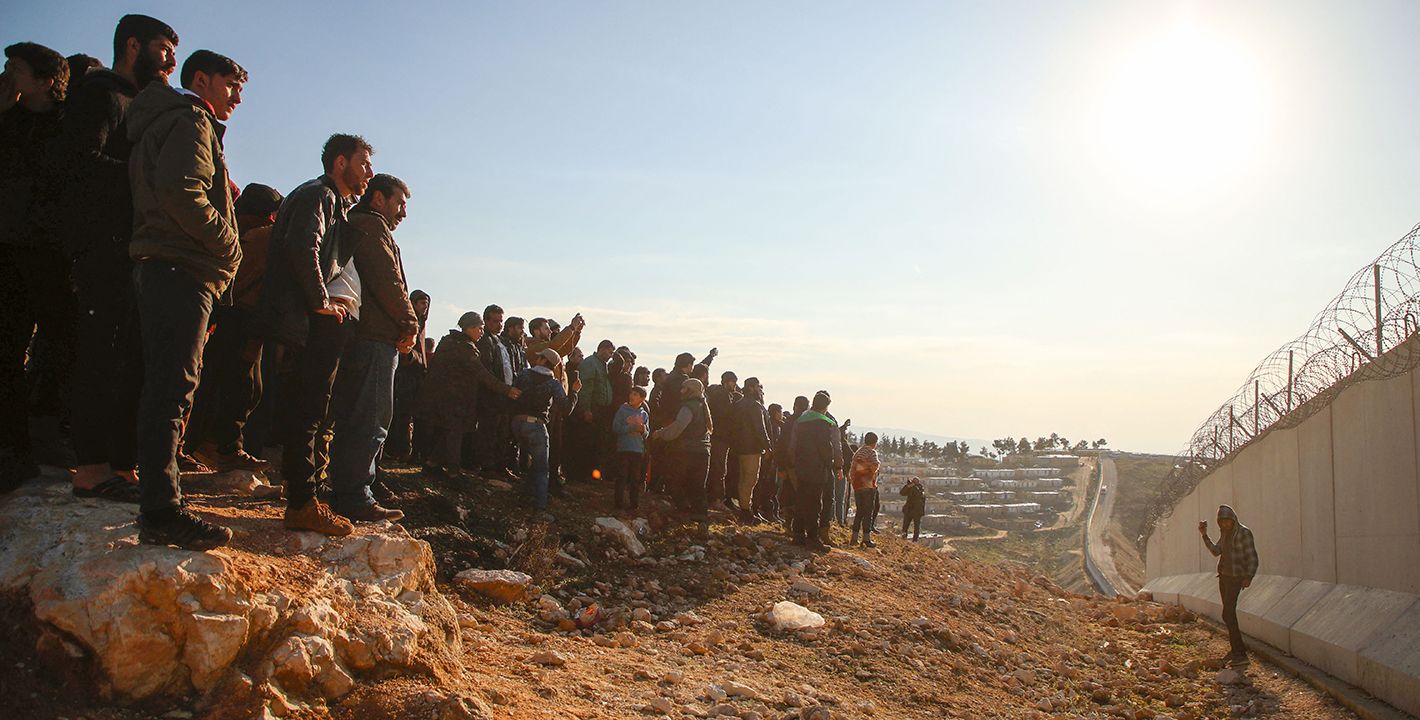
In Syria’s border regions, changes in demographics, economics, and security mean that an inter-Syrian peace process will require consensus among main regional powers that Syria must remain united, that no one side can be victorious, and that perennial instability threatens the region.
Kheder Khaddour, Armenak Tokmajyan
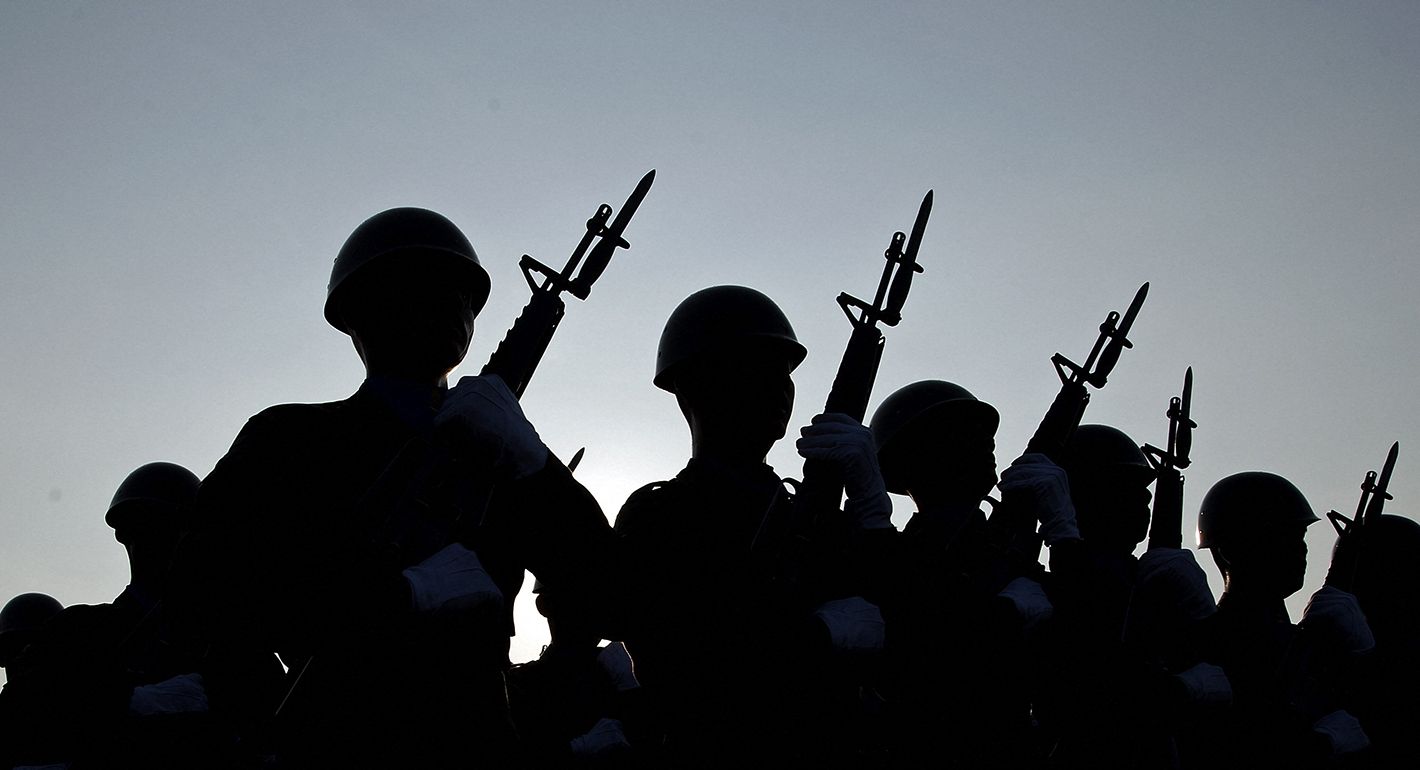
The interaction of national armed forces and private business sectors offers a useful lens for viewing the politics of numerous countries of the so-called Global South. A rising trend of military political activism—often accompanied by military commercial activity—underlines the importance of drivers and outcomes in these relationships.

Yezid Sayigh, Hamza Meddeb
For many in the society, the post-Ben Ali years were mainly about successive economic crises and political instability.
Jasmine Khelil