

Commentary
Uri Dadush
{
  "authors": [
    "Uri Dadush"
  ],
  "type": "legacyinthemedia",
  "centerAffiliationAll": "",
  "centers": [
    "Carnegie Endowment for International Peace"
  ],
  "collections": [],
  "englishNewsletterAll": "",
  "nonEnglishNewsletterAll": "",
  "primaryCenter": "Carnegie Endowment for International Peace",
  "programAffiliation": "",
  "programs": [],
  "projects": [],
  "regions": [
    "North America",
    "United States",
    "South America"
  ],
  "topics": [
    "Economy",
    "Trade"
  ]
}
Source: Getty
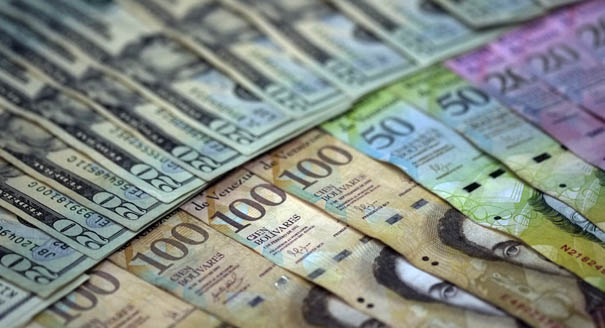
The Federal Reserve’s rate hike is unlikely to be a cause of major disruption in Latin America this time around.
Source: Latin America Advisor
The U.S. Federal Reserve on Dec. 16 raised interest rates, ending what Fed Chairwoman Janet Yellen called an “extraordinary seven-year period” during which policymakers kept the federal funds rate near zero in an effort to support the economy. How will the Fed’s action affect Latin American economies, many of which are struggling with anemic growth and low prices for their commodity exports? How will the interest rate hike affect Latin American countries’ ability to pay off their dollar denominated debt? Which nations are most at risk, and which countries in the region might see any benefit from the U.S. interest rate hike?
Uri Dadush, senior associate in the International Economics Program at the Carnegie Endowment for International Peace:“The worry about the Fed’s first interest rate increase in seven years is understandable, given weak growth in Latin America and memories of previous instances of U.S. monetary tightening that triggered large capital flow reversals and regional balance of payments crises. The China-driven stock market rout which ushered in the new year adds to the fear. However, I believe that the Fed’s move is unlikely to be a cause of major disruption in Latin America this time around. U.S. policy interest rates are barely budging from zero against a background of a recovering U.S. and European economy, and interest rates are likely to remain at record lows among all the world’s reserve currencies over at least the next 12 months. Moreover, the Fed’s actions as well as words suggest that future interest rate hikes will be gradual and come pari passu with continued U.S. recovery. Firms and banks in Latin America that owe dollars and are not naturally or financially hedged will suffer from the higher dollar, but there are already large offsetting benefits from the high dollar in the form of stronger exports and remittance inflows. The message here is not that Latin America is out of the woods, only that if it is attacked by a bear, this time it’s not the Fed. China’s weakness, collapsing oil and other commodity prices, domestic struggles, precarious fiscal situations and inappropriate policies are the more fearsome predators now. Thinking about vulnerabilities, what is striking is the diversity of the continent, especially between the U.S.-linked North and the commodity- and China-linked South, and between those whose policies are supportive and those whose policies are in a mess, such as Brazil, Venezuela, Ecuador and Argentina, where change appears to be finally afoot.”
This interview originally appeared in Latin America Advisor.

Former Senior Associate, International Economics Program
Dadush was a senior associate at the Carnegie Endowment for International Peace. He focuses on trends in the global economy and is currently tracking developments in the eurozone crisis.
Recent Work
Uri Dadush
Uri Dadush
Carnegie does not take institutional positions on public policy issues; the views represented herein are those of the author(s) and do not necessarily reflect the views of Carnegie, its staff, or its trustees.

By failing to address Palestinian representation, the current process is bound to lead to just another temporary arrangement.

Nathan J. Brown

The armed forces champion a form of capitalism that is generating revenue, but its reliance on rent faces diminishing returns, leaving the country with massive sunk costs and deferred returns, deepening dependency on external borrowing.

Yezid Sayigh

Morocco and Algeria, each in its own way, are having to navigate the global economic fallout of the U.S.-Israeli military campaign against Iran.

Yasmine Zarhloule
Any move by the United States to make good on Trump’s suggestion that Washington persuade Damascus to confront Hezbollah militarily would have catastrophic consequences.
Kheder Khaddour
As talks begin between Washington and Tehran, Beirut has an opening to advance a regional plan for the party’s disarmament.

Michael Young