

Commentary
Togzhan Kassenova
{
  "authors": [
    "Togzhan Kassenova"
  ],
  "type": "legacyinthemedia",
  "centerAffiliationAll": "dc",
  "centers": [
    "Carnegie Endowment for International Peace"
  ],
  "collections": [],
  "englishNewsletterAll": "ctw",
  "nonEnglishNewsletterAll": "",
  "primaryCenter": "Carnegie Endowment for International Peace",
  "programAffiliation": "NPP",
  "programs": [
    "Nuclear Policy"
  ],
  "projects": [],
  "regions": [],
  "topics": [
    "Nuclear Policy",
    "Arms Control",
    "Nuclear Energy"
  ]
}
Source: Getty
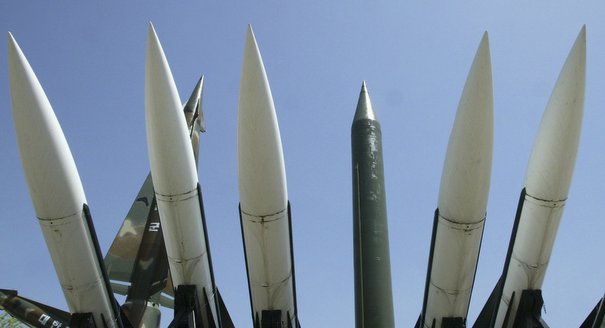
The 2016 Nuclear Security Summit highlighted some major successes in nuclear security, but also some of the serious challenges that still must be overcome.
Source: CCTV America
Speaking on CCTV America, Carnegie’s Togzhan Kassenova commented on the successes and failures of the 2016 Nuclear Security Summit. While noting global successes, such as the fact that nuclear security has become a more mainstream issue understood by many more government officials, she also highlighted problems with the Summit, such as the fact that, unlike highly-enriched uranium, not enough progress has been made concerning plutonium, indicating that much work still needs to be done on this issue. She also acknowledged the risk of nuclear material being stolen by terrorist organizations, and touched on China’s nuclear energy ambitions.

Former Nonresident Fellow, Nuclear Policy Program
Kassenova was a nonresident fellow in the Nuclear Policy Program at the Carnegie Endowment.
Recent Work
Togzhan Kassenova

Toby Dalton, Togzhan Kassenova, Lauryn Williams
Carnegie does not take institutional positions on public policy issues; the views represented herein are those of the author(s) and do not necessarily reflect the views of Carnegie, its staff, or its trustees.
In an interview, Marc Lynch discusses his new book decrying the post-1990 U.S.-dominated order in the Middle East.

Michael Young
Both events also could force Washington to rethink or revive its Middle East partnerships.

Karim Sadjadpour
Disagreement between the United States and Iran over a revived nuclear accord may anchor volatile competition.

George Perkovich
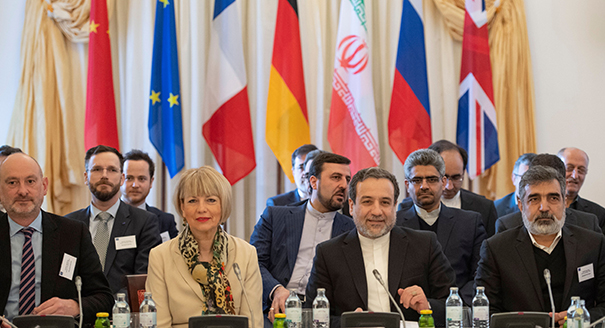
A regular survey of experts on matters relating to Middle Eastern and North African politics and security.
Michael Young
The British, French, and German foreign ministers have formally accused Iran of breaking the terms of the 2015 Iran nuclear deal, a step that could lead to sanctions. Are the Europeans preparing to pull the plug?
Jarrett Blanc