

Commentary
In an interview, Marc Lynch discusses his new book decrying the post-1990 U.S.-dominated order in the Middle East.
Michael Young
{
  "authors": [
    "Toby Dalton",
    "George Perkovich"
  ],
  "type": "legacyinthemedia",
  "centerAffiliationAll": "dc",
  "centers": [
    "Carnegie Endowment for International Peace"
  ],
  "collections": [],
  "englishNewsletterAll": "ctw",
  "nonEnglishNewsletterAll": "",
  "primaryCenter": "Carnegie Endowment for International Peace",
  "programAffiliation": "NPP",
  "programs": [
    "Nuclear Policy"
  ],
  "projects": [],
  "regions": [
    "South Asia",
    "India",
    "Pakistan"
  ],
  "topics": [
    "Nuclear Policy"
  ]
}
Source: Getty
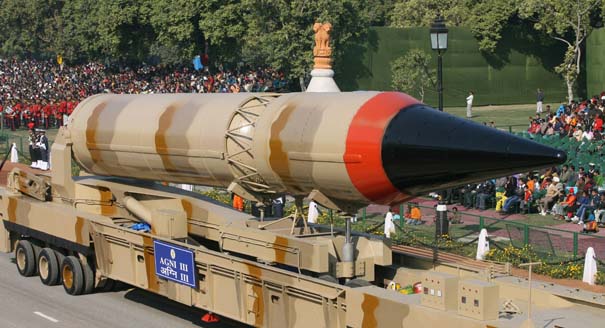
A substantial gap exists between Indian offensive conventional military planning for Pakistan contingencies and its defensive nuclear policy that seeks to deter aggression with threat of massive retaliation.
Source: Wire
When news emerges that Pakistan has tested another short-range missile or increased its stockpile of nuclear weapons, debate resumes in New Delhi over whether India should revise its nuclear doctrine and forces. If Indian leaders do not actually intend to put army boots on Pakistani soil, then nuclear escalation is unlikely and India’s nuclear doctrine need not be concerned with Pakistan’s battlefield nuclear weapons. But if they do intend to send Indian armed forces across the border, India’s current nuclear doctrine has a credibility problem.
The root of the problem is the substantial gap that exists between Indian offensive conventional military planning for Pakistan contingencies and its defensive nuclear policy that seeks to deter aggression with threat of massive retaliation. Indians know that nuclear weapons are not suited to deter terrorism. Rather, nuclear weapons back up the threat to project conventional military forces into Pakistan in response to another major terrorist attack, as envisioned by proactive defence plans proffered by figures in and around the Indian Army. India’s nuclear weapons would need to deter Pakistan from using nuclear weapons to rebuff such punitive attacks.In the parlance of nuclear theorists, India is missing rungs on its conflict escalation ladder. This creates a large jump from what could be relatively limited conventional military operations envisioned under the so-called ‘Cold Start’ doctrine to massive nuclear retaliation. In theory, Pakistan’s tactical nuclear weapons provide such rungs, giving it more options for escalation than India, which appears to have no plans or capabilities for calibrated ‘tit-for-tat’ escalation.
Many Indian strategists have identified this gap and offered various prescriptions intended to enhance the credibility of India’s threat to use nuclear weapons in response to a nuclear attack by Pakistan. Some Indian and American strategists argue that India should develop its own tactical nuclear weapons to provide options below massive retaliation. Such options, if developed, could bridge the gap between Cold Start and massive nuclear retaliation in a way – according to the theory – that would strengthen Indian deterrence.
However, the gap between the theory and practice of nuclear deterrence is substantial, at least when it comes to keeping an escalating nuclear conflict limited. There simply is – fortunately – no real-world data to draw upon. If India were take this leap into the unknown, its leaders and military planners would need to address important questions about necessary capabilities and the logic of limited nuclear war.India does not today possess all of the technical capability it would need to employ tactical nuclear weapons. To be sure, it has accurate delivery platforms, such as the Prahaar battlefield missile system, which many Pakistanis already believe will be used for nuclear weapons. And one of the claimed ‘low yield’ nuclear weapon designs India tested in 1998 perhaps could be engineered into a warhead for such a short-range missile. Harder would be the development and integration of information and decision-making networks that would allow for the successful targeting of mobile military targets in Pakistan, which is much more difficult than targeting cities with massive retaliation. Necessary real-time information fusion, relying on satellites, and other technical and human intelligence to link up with civilian and military decision-making systems, is incredibly complex to engineer. And very costly. India certainly has many capable scientists and engineers, but to date it has not accorded its nuclear program this level of budget priority.
The decision-making factors are invariably harder. If deterrence fails and India is faced with the decision to retaliate proportionally after a Pakistani nuclear first strike, how could Indian leaders be confident that there would not be further nuclear escalation, resulting in casualties and damage of greater magnitude than the instigating terrorism incident? How might they terminate such a conflict on terms that would leave India better off than if it hadn’t used nuclear weapons? Would Indian nuclear weapons and the threat of punitive retaliation increase the likelihood that Pakistani commanders would use a greater number of its nuclear weapons first, rather than risk losing them in an Indian counterstrike? There are no easy answers to these questions.
Even if Indian decision makers decide to develop tactical nuclear weapons, as did American, Soviet and now Pakistani leaders, it is not clear that an evolved deterrence doctrine and force posture would address the cross-border terrorism issue. Nuclear weapons are useful for deterring large-scale military invasions. But these weapons have not spared the US, Israel, France, the UK and indeed Pakistan from cross-border terrorism. Pakistani leaders and militants have perceived this. They believe that nuclear deterrence has favoured Pakistan in crises and conflict since the early 1990s. It is thus quite unlikely that the addition of tactical nuclear weapons to India’s nuclear planning would change these fundamentals of Pakistani thinking to the point that leaders in Islamabad and Rawalpindi would be sufficiently motivated to crack down on militant groups that attack India.
Nuclear debates in India have covered this ground, but remain unresolved. Fundamentally these challenges are unresolvable, at least as far as nuclear weapons are concerned. India clearly needs options to motivate Pakistan to do more to prevent cross-border terrorism, but its political and military leaders are wise to continue looking for alternatives – ranging from coercion to inducement – that do not carry the same risks of conflict.

Senior Fellow and Co-director, Nuclear Policy Program
Toby Dalton is a senior fellow and co-director of the Nuclear Policy Program at the Carnegie Endowment. An expert on nonproliferation and nuclear energy, his work addresses regional security challenges and the evolution of the global nuclear order.

Japan Chair for a World Without Nuclear Weapons, Senior Fellow
George Perkovich is the Japan Chair for a World Without Nuclear Weapons and a senior fellow in the Carnegie Endowment for International Peace’s Nuclear Policy Program. He works primarily on nuclear deterrence, nonproliferation, and disarmament issues.
Carnegie does not take institutional positions on public policy issues; the views represented herein are those of the author(s) and do not necessarily reflect the views of Carnegie, its staff, or its trustees.
In an interview, Marc Lynch discusses his new book decrying the post-1990 U.S.-dominated order in the Middle East.

Michael Young
In an interview, Abhinav Pandya discusses the multiple facets of India’s ties with the Middle East.

Armenak Tokmajyan
The interaction of national armed forces and private business sectors offers a useful lens for viewing the politics of numerous countries of the so-called Global South. A rising trend of military political activism—often accompanied by military commercial activity—underlines the importance of drivers and outcomes in these relationships.


Yezid Sayigh, Hamza Meddeb

The Gulf Cooperation Council has shifted its energy export focus to Asia, particularly India and China. This is part of a broader shift as GCC members look to expand their geopolitical alliances away from the West.

Alexandre Kateb
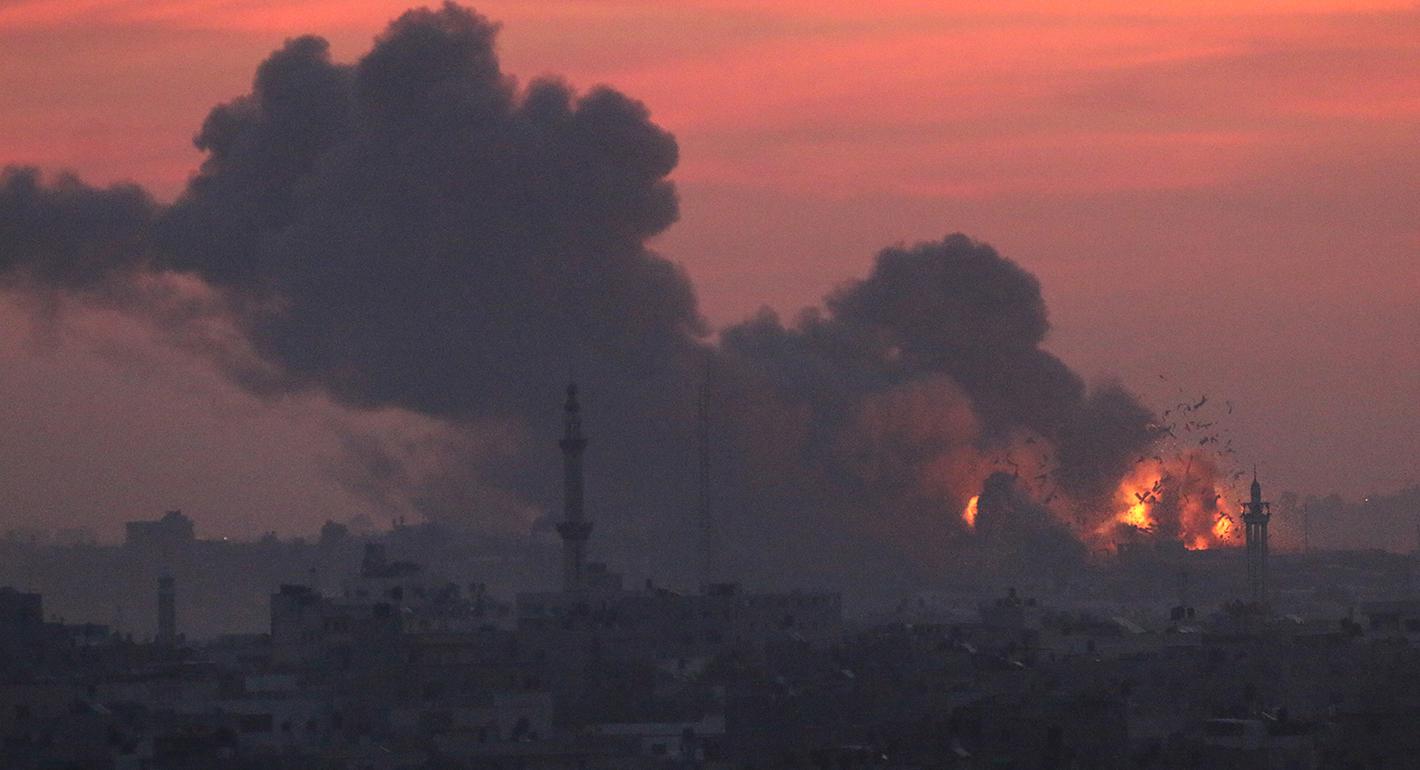
Scholars from Carnegie’s global network comment on how the ongoing conflict between Israelis and Palestinians is affecting their areas of interest, and what the implications of this may be.



Maha Yahya, Rosa Balfour, Judy Dempsey, …