

Research
- +4
Milan Vaishnav, Rahul Verma, Rukmini S., …
{
  "authors": [
    "Christophe Jaffrelot"
  ],
  "type": "legacyinthemedia",
  "centerAffiliationAll": "dc",
  "centers": [
    "Carnegie Endowment for International Peace"
  ],
  "collections": [],
  "englishNewsletterAll": "ctw",
  "nonEnglishNewsletterAll": "",
  "primaryCenter": "Carnegie Endowment for International Peace",
  "programAffiliation": "SAP",
  "programs": [
    "South Asia"
  ],
  "projects": [],
  "regions": [
    "Middle East",
    "Saudi Arabia",
    "South Asia",
    "Pakistan"
  ],
  "topics": [
    "Security",
    "Foreign Policy"
  ]
}
Source: Getty
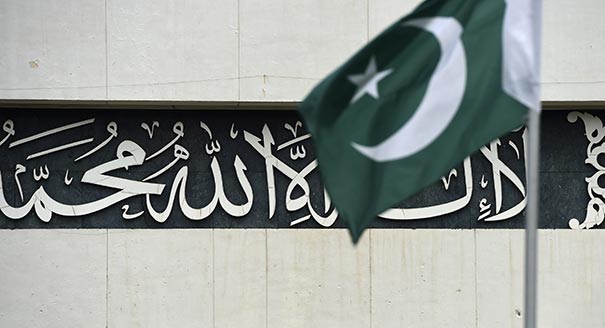
Pakistan’s dependence on Saudi Arabia stands in the way of the two working against Islamic terrorism.
Source: Indian Express
Earlier this month, Saudi Arabia experienced a series of devastating terrorist operations that have been attributed to the ISIS. The kingdom was hit by simultaneous attacks. One in Prophet Muhammad’s mosque in Medina, one in the Shia-populated province of Qatif and one in Jeddah not far from the US consulate, which was celebrating the American Independence Day.
The author of the last blast was a 35-year old Pakistani who had migrated from the “land of the pure” with his family 12 years ago. Twelve of the 19 people arrested after the attacks were Pakistanis, echoing a common view that South Asian migrants get imbued with a fundamentalist form of Islam in Saudi Arabia and the Gulf nations, one likely to translate into affinities with jihadism — and they may bring this back home.
This suspicion is reinforced by the way Saudi notables fund madrassas in South Asia in order to propagate Salafi creeds. Pakistan is a case in point. In 2009, a secret memo, signed by then US secretary of state Hillary Clinton, noted: “Donors in Saudi Arabia constitute the most significant source of funding to Sunni terrorist groups worldwide”.
After the 2014 Peshawar tragedy, Pakistan’s minister for inter-provincial coordination, Riaz Hussain Pirzada accused the Saudi government of creating instability across the Muslim world by the distribution of money to promote its ideology. Pakistan’s National Action Plan (NAP) spelt out soon after the Peshawar mass killings noted the commitment to control such foreign influence.
How far can Pakistani implement this chapter of the NAP? Reviewing what had been achieved in this framework in 18 months, the academic Imtiaz Gul wrote, “Where is the madrassa curricula reform or the oversight mechanism needed to check: a) hate speech; and b) source of financing of madrassas. Does the state really have the will and the capacity… to perform these functions…” Besides the points raised by Gul, the state’s control over the madrassas will partly be a function of the degree of independence Islamabad can, or wants to, regain vis-à-vis the Saudis. In 2015, Pakistan refused to support Saudia Arabia militarily against the Iran-supported Houthis. Lately, Islamabad has probably provided some unofficial support to Riyadh in Yemen — like in Bahrain before.
Pakistan has also joined a Saudi-led coalition against terror set up to not only fight the ISIS but also to contain the Iranian influence. Islamabad has also agreed to take part in the Saudi-led “most important military manœuvres” ever staged in the region. Pakistan’s relations with Saudi Arabia are evident from the aborted attempt at mediating between the kingdom and Iran. Riyadh denied that any such endeavour had been undertaken, and that was the end of the story.
Pakistan’s lack of political independence vis-à-vis Saudi Arabia largely reflects economic considerations. Riyadh has repeatedly supported Islamabad financially — it gave $ 1.5 billion in 2014, for instance — and almost five million Pakistanis work in the Gulf countries, including Saudi Arabia and some of its closest allies. They send home a large proportion of the remittances. These remittances were more than the country’s foreign reserves in 2015-2016: $19 billion against $ 16 billionLast but not the least, the Saudis can rely on deeply entrenched actors of the Pakistani political system. Nawaz Sharif established a close relation with the House of Saud, during his exile in the kingdom — where he also developed business interests — and Riyadh can get the support of parties like the JUI and movements like Jamaat-ud- Dawa (and its main branch, Lashkar-e-Taiba) which have orchestrated several demonstrations in favour of the Pakistani military in Yemen.
Lately, these movements have been selectively targeted by the army, but in early July, Sartaj Aziz, Nawaz Sharif’s foreign affairs adviser, told a US congressional delegation that terrorists would hit back if the repression intensified — and this is definitely true of some of the groups close to the Gulf countries, including the Haqqani network. Last year, Wikileaks revealed that in February 2012, Nasiruddin Haqqani, then chief financier of the network, met the Saudi ambassador in Islamabad to convey his father’s request for treatment at a Saudi hospital. Jalaluddin, the founder of the network, carries a Saudi passport.
The ball is in the court of Riyadh if Pakistan, as a true client state, is not prepared to fight Saudi-related militant groups. The growing influence of Iran in the region has led Saudi Arabia to diversify its security partnerships by relating to countries like India. In February 2014, both countries signed an agreement on defence cooperation in New Delhi and Narendra Modi’s visit to Riyadh in April was dominated by security issues.
Will the rise of the ISIS persuade Riyadh and Islamabad to fight Islamism? The fact that the ISIS elements claimed responsibility for the Karachi bus shooting in May 2015, in which 45 Ismailis were killed, has reinforced Pakistan’s will to eradicate an organisation that had already become a target after it attracted TTP commanders from the FATA. But it doesn’t mean the attitude of Islamabad (and Rawalpindi) will change regarding groups that are still considered potentially “useful” vis-à-vis Afghanistan and India.
Riyadh will certainly take new security measures after the recent attacks. But much more needs to be done, from the point of view of Muslims in general (after all Islamists kill more Muslims than non-Muslims) and South Asians in particular. What the Saudis may never acknowledge is the link that exists between the promotion of Wahhabism and militant Islamism. This relation is far from direct . But this brand of Salafism fosters anti-Shia feelings and hostility to popular forms of Islam in South Asia — a hostility that may result in terrorist attacks against dargahs and other shrines. Such violence is undermining a civilisation known for its openness, directly as well as indirectly by fostering the fear of Islam, even Islamophobia.
This article was originally published in the Indian Express.
Former Nonresident Scholar, South Asia Program
Jaffrelot’s core research focuses on theories of nationalism and democracy, mobilization of the lower castes and Dalits (ex-untouchables) in India, the Hindu nationalist movement, and ethnic conflicts in Pakistan.
Recent Work

Milan Vaishnav, Rahul Verma, Rukmini S., …
Christophe Jaffrelot
Carnegie does not take institutional positions on public policy issues; the views represented herein are those of the author(s) and do not necessarily reflect the views of Carnegie, its staff, or its trustees.

Huawei pushed hard to enter the Egyptian data centers market, until the Americans made a better offer.

Angie Omar

The accord represents a pivotal moment in the region to avert a security vacuum in the Gulf.


Azeema Cheema, Mohanad Hage Ali
In an interview, Jason Burke discusses his sweeping account of the “revolutionists” who so shaped the 1970s and early 1980s.

Michael Young

By failing to address Palestinian representation, the current process is bound to lead to just another temporary arrangement.

Nathan J. Brown
There is a disturbing structural parallel between the old global energy economy and the new green transition.
Angie Omar