

Research
- +5
Alper Coşkun, Fatih Ceylan, Tacan İldem, …
{
  "authors": [
    "Sinan Ülgen"
  ],
  "type": "legacyinthemedia",
  "centerAffiliationAll": "dc",
  "centers": [
    "Carnegie Endowment for International Peace",
    "Carnegie Europe"
  ],
  "collections": [
    "Turkey’s Transformation",
    "Transatlantic Cooperation"
  ],
  "englishNewsletterAll": "ctw",
  "nonEnglishNewsletterAll": "",
  "primaryCenter": "Carnegie Europe",
  "programAffiliation": "EP",
  "programs": [
    "Europe"
  ],
  "projects": [],
  "regions": [
    "Europe",
    "North America",
    "Türkiye",
    "Middle East",
    "Iran"
  ],
  "topics": [
    "Foreign Policy"
  ]
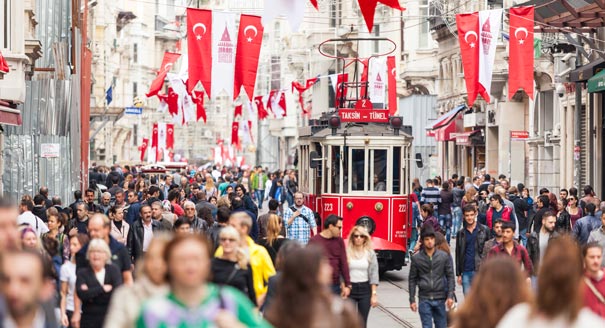
}
Source: Getty
Washington and Brussels need to rebuild trust with Turkey. That is the only way to counter the country’s swelling anti-Americanism and alienation from the West.
Source: Financial Times
Next week Joe Biden, US vice-president, visits Turkey, a Nato country whose relations with the west are in deep crisis following July’s botched coup. A vast majority of Turkish people believe, rightly or wrongly but nonetheless firmly, that Washington was complicit with the plotters. If it was not involved, the argument goes, the reclusive Islamic cult leader Fethullah Gulen — accused of masterminding the coup — could not continue to live peacefully, undisturbed by the US justice system in rural Pennsylvania. The EU is likewise criticised for failing to show solidarity in the wake of the military’s attempt to depose the democratically elected government.
The community of western nations needs to reassure Turks of its enduring friendship, and of its commitment to Turkey’s future within that community. That is the only way to counter swelling anti-Americanism and alienation from the west.The pro-western elements within this nation — one that is ever more essential to the west as a strategic ally — sorely need this reassurance to combat the atmosphere of accusation and disenfranchisement that could harm Turkey’s transatlantic relations. The task for Washington and Brussels, therefore, is to rebuild trust.
For Washington the key to doing that will be formally to initiate, sooner rather than later, the process of extradition for Mr Gulen requested by Ankara. It is clear that a political decision by the White House will not be sufficient to achieve this goal. The administration of President Barack Obama has said it would require credible evidence to comply with any such request, and that such a request should go through a judicial review. Nonetheless the administration can choose to ease the tension in bilateral relations by initiating the judicial process and supporting, as a matter of principle as well as a foreign policy objective, the extradition request.
For the EU, the formula is more complex. Brussels should first devise a diplomatic response to show solidarity with the Turkish body politic. Despite the apparent reluctance of individual EU leaders to meet President Recep Tayyip Erdogan, a visit by a representative delegation of the European Parliament would still be welcomed.
For the medium term, however, European and Turkish policymakers should seek to develop a new, more constructive European narrative for Turkey. The time has come to do away with the pretence that accession remains a realistic option for the foreseeable future; it is leading to acrimony rather than convergence. Since the coup, criticism of Ankara — justified as it may be — on the grounds of its status as an EU candidate carries no weight.
EU influence over Turkish affairs remains of mutual benefit — but a more realistic goal is needed to keep this critical relationship alive. The country’s recent history proves influence from Brussels can create a virtuous cycle of reform and democratic progress.
Ideally the new framework would complement the accession track and not replace it. The refugee package — whereby Turkey accepts refugees who have reached Europe in exchange for funding and the prospect of access to EU visas — has been successful in stemming the flow of incomers and should be a core component. More advanced economic integration, improved co-operation on counter-terrorism and closer co-ordination of policies towards the common neighbourhood, including Syria and the wider Middle East, could be other defining features of this renewed relationship.
Washington and Brussels should now move to preserve liberal democracy in Turkey and to consolidate Turkey’s western vocation. Their apathy in the face of an existential danger barely contained by Turkish democracy is doing the exact opposite.
This article was originally published by the Financial Times.

Senior Fellow, Carnegie Europe
Sinan Ülgen is a senior fellow at Carnegie Europe in Brussels, where his research focuses on Turkish foreign policy, transatlantic relations, international trade, economic security, and digital policy.
Recent Work

Alper Coşkun, Fatih Ceylan, Tacan İldem, …
Carnegie does not take institutional positions on public policy issues; the views represented herein are those of the author(s) and do not necessarily reflect the views of Carnegie, its staff, or its trustees.

Huawei pushed hard to enter the Egyptian data centers market, until the Americans made a better offer.

Angie Omar

Middle Eastern states should welcome an accelerated U.S. disengagement from their region.

Michael Young

In an interview, former ambassador Charles Freeman assesses the Trump administration’s war against Iran.
Michael Young

The accord represents a pivotal moment in the region to avert a security vacuum in the Gulf.


Azeema Cheema, Mohanad Hage Ali
In an interview, Jason Burke discusses his sweeping account of the “revolutionists” who so shaped the 1970s and early 1980s.
Michael Young