Source: Economic Times
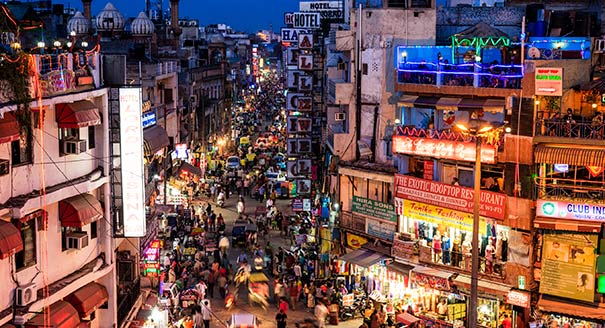
If you travel to any of the states that figure in the top 10 of the latest ‘ease of doing business’ ranking prepared by the World Bank and the Indian government’s department of industrial policy and promotion and released last month, you’ll realise that the true power of Indian business comes not from just big business houses but also from millions of small and medium enterprises (SMEs). These account for 40 per cent of India’s GDP.
A 2016 RBI study also concluded that more than 2.5 lakh unlisted SMEs outpaced the earnings growth of listed entities in the last three years. Surely, the states realise that SMEs are a sleeping giant, which when awakened can make a state more attractive to both small and big investors alike.
Arecent Organisation for Economic Cooperation and Development (OECD) survey found that SMEs make up more than 90 per cent of all businesses in most economies, providing a majority of most countries’ jobs. In India, the SME sector accounts for more than 17 per cent of the GDP and contributes to about 45 per cent of India’s industrial output and 40 per cent of total exports.
In 2014, the UN Secretary General called for data revolution to achieve sustainable development goals. The Global Partnership for Sustainable Development Data was launched soon after, as was Digital India. The fortune of SMEs, Indian states and India as a nation are interlinked. And this is where Digital India can play a crucial role.
One, it challenges the traditional definition and establishes that size really doesn’t matter in today’s digital age having redefined what size means. Two, digital connectivity makes small companies more powerful than ever before. It gives them reach to markets, access to finance and the power to grow bigger that can help them to create value, provide more jobs and get better at what they do.
Three, innovation makes oneness or integration of markets and other resources a reality. Marketplace solutions are no longer just provided only for end retail consumers, there is also a very solid business case in the business-to-business (B2B) side. Small companies that can’t afford to buy expensive machines now have access due to startups providing intime solutions.
Cheaper Finance
Four, technology is forcing banks to innovate a lot more for SMEs than ever before. The SME divisions are making finance more easily available. Trends such as analytics-based lending, peer-to-peer lending and various other variants are making banks reach out to SMEs that, until now, had tougher access to expensive finance despite having a good payment record.
SME owners are also realising that digital tools are gender-agnostic. It allows anyone, a man or a woman, with a good business idea to dream big. This is one single reason why the entire SME sector can be a game changer where the traditional societal approach has held back the true potential of Indian women. If governments can’t guarantee safe physical spaces, online digital tools provide a huge opportunity for the potential of women business leaders.
A continuing challenge is the percentage of women-owned businesses or women in management control.
The statistics in the SME sector are also depressing with only 11 per cent of women in leadership roles — one of the lowest among the 22 countries surveyed in the recent Facebook, OECD and World Bank Future of Business report.
However, there are some encouraging trends of market innovations from services to brick-and-mortar businesses that are not only unlocking economic opportunity but also driving social change.
Swatisouls.com was started by a young millennial. Swati was thrown out of her home for resisting a forced marriage. She turned her personal difficulties into a liberating tool. An artist, she set up an online commercial platform to put her art and those of other artisans on a mainstream platform.
An early stage venture, she has provided a platform to 30 artisans and completed over 50 commercial projects. Coming from Jaipur, she’s also taken on patriarchy, creating hope and opportunity for herself and many other young girls.
As the race to scale unfolds to make small business better and stronger — not necessarily bigger — India needs to provide more online tools and connectivity to the last mile. What is now needed for states is to integrate digital into their DNA as they reach out to attract business.
Royal Treatment
Some states like Telangana and Andhra Pradesh are doing this as they know SMEs will be its biggest beneficiary. At this point, an in-depth study being explored by Carnegie India and IDF supported by Facebook on how states are preparing for this next wave of ‘Small is Big’ will surely help to unleash the true power of SMEs in India.
Beyond just ranking, what is truly needed is to measure ‘Rate of Change’ that acts as a guide and objective tool to give insights and tips to make the entrepreneurial ecosystem strong and vibrant. For sure, small is big and can be the true game-changer for providing jobs to millions of Indians.
This article was originally published in the Economic Times.