

Commentary
Chung Min Lee
{
  "authors": [
    "Chung Min Lee"
  ],
  "type": "legacyinthemedia",
  "centerAffiliationAll": "dc",
  "centers": [
    "Carnegie Endowment for International Peace"
  ],
  "collections": [
    "Inside Korea"
  ],
  "englishNewsletterAll": "asia",
  "nonEnglishNewsletterAll": "",
  "primaryCenter": "Carnegie Endowment for International Peace",
  "programAffiliation": "AP",
  "programs": [
    "Asia"
  ],
  "projects": [],
  "regions": [
    "East Asia",
    "South Korea"
  ],
  "topics": [
    "Political Reform"
  ]
}
Source: Getty
South Korea’s core challenges are so deeply structural that even with strong presidential leadership, supported by a bureaucracy that’s willing to follow through, progress is going to be extremely incremental.
Source: Washington Post
Park Geun-hye’s departure is a tipping point for South Korea — and it has little to do with the fact that she was the country’s first female president or that she was the first to be impeached. The reality is whoever replaces her in the next election is going to face unparalleled challenges.
South Korea faces an uphill struggle on five major fronts: The country needs to revise the problematic 1987 constitution, has to cope with an increasingly unstable North Korea, must reduce its enormous dependence on the Chinese market, must fundamentally reform its educational system, and needs to address the demographic challenge of having the world’s fastest-aging population along with rapidly declining birthrates. In short, regardless of how well-intentioned or prepared he is, the next chief executive officer of Korea Inc. will likely be unable to deliver on most of his domestic and foreign policy promises.
This is because South Korea’s core challenges are so deeply structural that even with strong presidential leadership, supported by a bureaucracy that’s willing to follow through, progress is going to be extremely incremental. Moreover, given the tightly interconnected nature of Korea’s core problems, any attempt to push through structural reforms will be met with counter-pressure from deeply embedded interest groups, such as teachers, labor unions, partisan parties, parliamentarians and the powerful family-owned conglomerates known as the chaebols.
The next occupant of the presidential office or the Blue House is likely to be from the opposition Minju (Democratic) Party, given the discredited conservatives who have already splintered into pro- and anti-Park parties with only limited public backing. If current opinion polls serve as a guide, 32 percent of the electorate feel that Moon Jae-in of the Minju Party should become the country’s next president whereas 17 percent are supporting Moon’s rapidly rising rival — Gov. An Hee-jung — who has assumed a much more centrist view on core national security issues. The election must be held by May 9.
While South Korea’s rapid economic rise has been heralded as the “Miracle on the Han River,” the country’s fundamental situation today can be better characterized as the “Major Bottleneck of the Han River.” The single five-year presidency that was instituted as Korea democratized in 1987 has run its course. Every president since 1988 has ended his or her term with extremely low ratings. Two former presidents were tried for instigating a military coup in December 1979 and sentenced to death but their sentences were later commuted and they were released. Tragically, former president Roh Moo-hyun, who faced corruption charges, committed suicide after he left office.
Korea’s president is extremely powerful for the first two or three years of his or her term, then rapidly becomes a lame duck or worse. Past presidents promised during their campaigns to revise the 1987 constitution, aiming to reshape it to resemble either the American presidential system of greater checks and balances or even a parliamentary democracy. But once in office, none of them wanted to spend their political capital or cut short their term by pushing reform through a bipartisan effort. While candidate Moon and a majority of the presidential aspirants on the left and the right have promised to revise the 1987 constitution as soon as they enter the Blue House, Koreans will be happily shocked if their next president actually follows through with his promise.
Moreover, despite the candidates’ promises to jump-start the lackluster Korean economy, the next commander in chief is unlikely to fundamentally reshape it.
Once known as one of the fastest-growing economies in the world, South Korea remains one of the top 10 exporters ($495 billion in 2016). However, its growth rate has hovered between 2 percent and 3 percent over the past decade. The youth unemployment rate stands at a historic high of 12.5 percent. In 2015, welfare accounted for 31 percent of the national budget (42 percent if education is included), while the defense budget remained at 10 percent — even as the nuclear threat from North Korea continued to grow and China assumed a much more aggressive stance toward South Korea.
Indeed, just as Japan’s economy hit a brick wall in the late 1990s with anemic growth rates and domestic spending, South Korea’s core advantages in shipbuilding, automobiles and consumer electronics have been hurt by rapidly rising Chinese products that undersell Korean goods. Much more worrisome is South Korea’s declining population, lower tax base and the growing competition for resources between national security and social security. The harsh reality is that the Korean economy no longer responds to presidential edicts given its size and complexity; creating new jobs will require a Herculean effort in an era of diminishing demand of Korean exports and an inability to quickly reduce dependence on the Chinese market.
As Koreans go to the polls in early May they will have to also bear responsibility for the structural problems Korea suffers from, such as unprecedented spending on extraordinarily expensive private cram schools that reduces household savings and contributes to lower birthrates.
South Korea’s next president must undertake extremely painful bipartisan reforms. To emerge from ongoing crises, a new social contract must be made that includes a fully bipartisan approach toward North Korea, major cuts in social-welfare benefits, labor reforms and reduced power for Korea’s chaebols. And for South Korean voters, they must lower their expectations of their next leader. If the country is to overcome its problems, they have no other choice.
This article was originally published in the Washington Post.
Senior Fellow, Asia Program
Chung Min Lee is a senior fellow in Carnegie’s Asia Program. He is an expert on Korean and Northeast Asian security, defense, intelligence, and crisis management.
Recent Work
Chung Min Lee
Carnegie does not take institutional positions on public policy issues; the views represented herein are those of the author(s) and do not necessarily reflect the views of Carnegie, its staff, or its trustees.
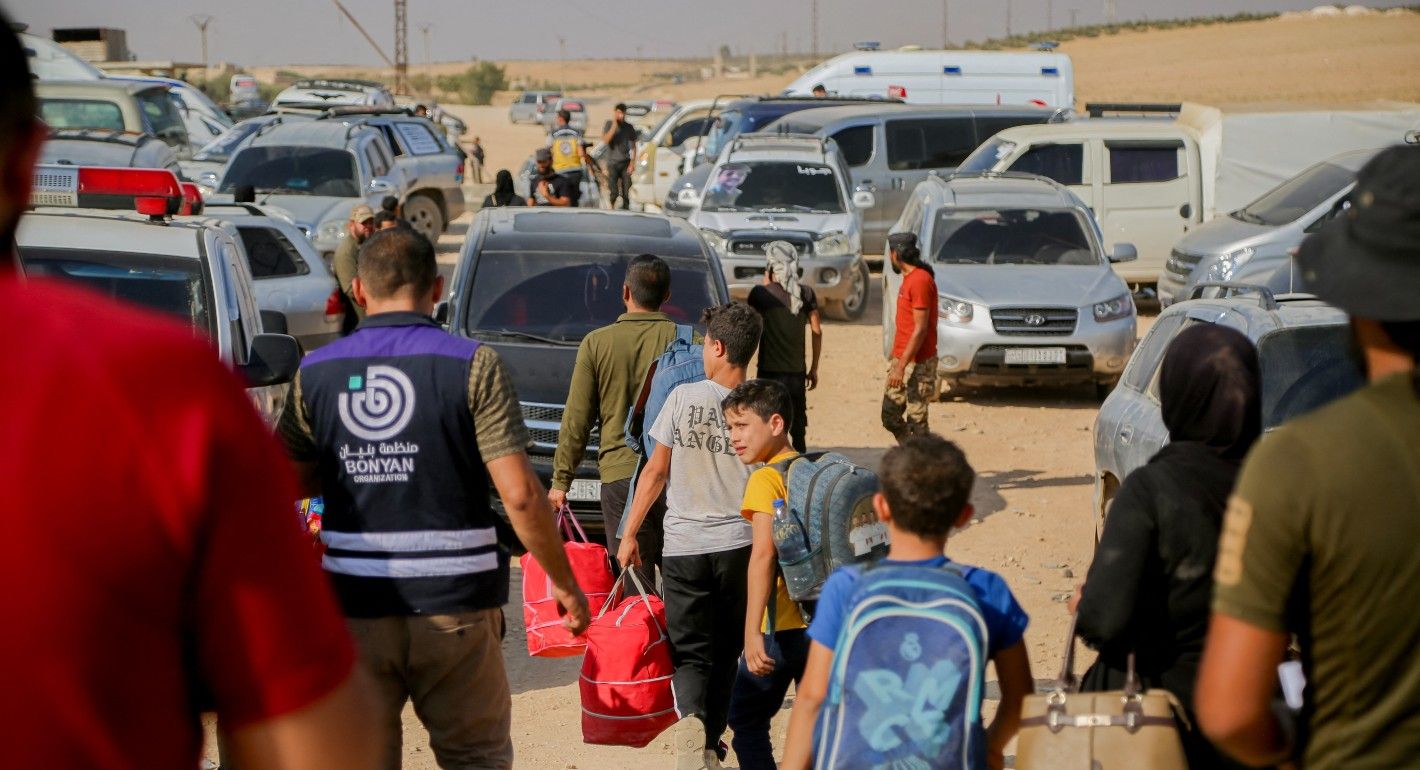
A humanitarian crisis in Lebanon deepens, and Syrian refugees face a perilous choice: remain in a war-torn environment or return to Syria where they risk encountering significant dangers and discrimination. There are significant challenges and risks to their search for safety in Syria.
Haid Haid
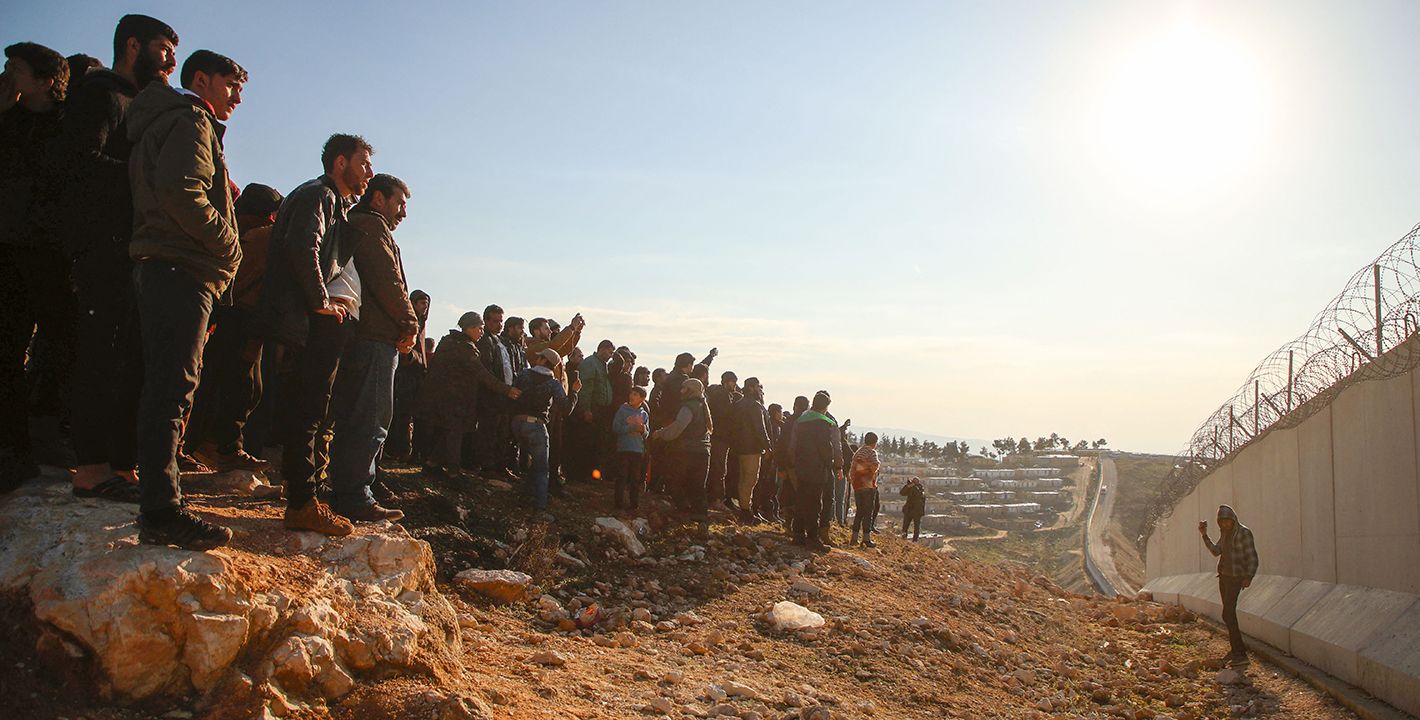
In Syria’s border regions, changes in demographics, economics, and security mean that an inter-Syrian peace process will require consensus among main regional powers that Syria must remain united, that no one side can be victorious, and that perennial instability threatens the region.

Kheder Khaddour, Armenak Tokmajyan
For many in the society, the post-Ben Ali years were mainly about successive economic crises and political instability.
Jasmine Khelil
As students around the United States and Europe protest, the relationship of Western elites with Israel is being redefined.

Michael Young
When U.S. Patriots shot down an Iranian missile over Erbil on April 15, Kurds wondered why such defenses weren’t activated when they were attacked.
Wladimir van Wilgenburg