

Commentary
John Kerry
{
  "authors": [
    "John Kerry"
  ],
  "type": "legacyinthemedia",
  "centerAffiliationAll": "",
  "centers": [
    "Carnegie Endowment for International Peace"
  ],
  "collections": [],
  "englishNewsletterAll": "",
  "nonEnglishNewsletterAll": "",
  "primaryCenter": "Carnegie Endowment for International Peace",
  "programAffiliation": "",
  "programs": [],
  "projects": [],
  "regions": [
    "North America",
    "United States"
  ],
  "topics": [
    "Climate Change"
  ]
}
Source: Getty
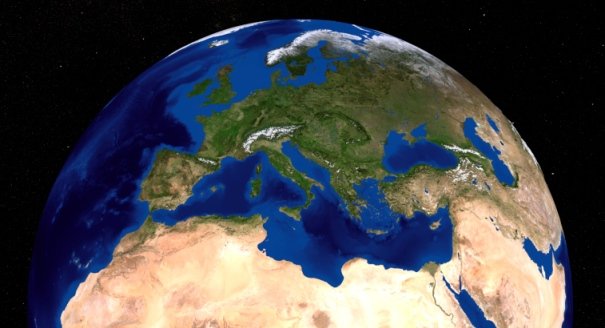
The U.S. energy market is in the middle of a fundamental transformation.
Source: Washington Post
Despite all the reasons for concern and condemnation that I could dwell on, I’m an optimist this Earth Day. I’m an optimist because of the lesson I learned on the first Earth Day 47 years ago when I was one of 20 million Americans who took to the streets to demand that leaders protect our environment. Before that first Earth Day, there was no Environmental Protection Agency, no Clean Water Act, no Clean Air Act as we know it. Citizens created the demand signal — and politicians followed because they had no choice.
What a journey from 1970 to Earth Day 2016, when I joined leaders from more than 100 nations to sign the Paris Agreement on climate change. When it was my turn to take the pen, my 2-year-old granddaughter was on my lap. Earth Day was no longer just an American impulse — it was the entire world coming together to protect the future for Isabelle and children everywhere.
I know that on Earth Day 2017, that future feels a little less certain, and understandably so. But — for the same reason 1970’s people-powered activism turned power structures upside down — something big has already begun around the world that can be slowed but not stopped.
The U.S. energy market is in the middle of a fundamental transformation — and that’s true regardless of Washington’s policies. Last year was the third consecutive year in which renewable technologies — especially wind and solar — made up more than half of the new generating capacity added to the U.S. grid. And it’s clear that the energy transformation is truly global. Last year roughly twice as much was invested in renewables capacity worldwide than in fossil-fuel generation.
Leaders everywhere are seeing the opportunities ahead. The Indian government is advancing plans to install 100 gigawatts of solar capacity by 2020. Chinese President Xi Jinping recently announced a $361 billion investment in clean energy. No wonder U.S. oil and gas companies are imploring Washington to stay committed to the Paris Agreement — they recognize it is in the interests of their bottom line to have their government deeply engaged in the energy transformation. A president who spent a long career in business, surrounded by Cabinet secretaries who headed Fortune 500 companies, should be persuaded by these arguments.
America’s businesses and state and local governments know well what the future holds and are planning accordingly. That’s why I am confident the United States will not only meet but also exceed the bold emissions-reduction targets President Barack Obama set — even if the new administration takes the misguided step of revoking them.
More concerning to me are the potential reverberations our policy changes could have around the equator and from pole to pole.
The Paris Agreement wasn’t written overnight; it was the product of decades of negotiations and debates over which countries needed to do what and when. We brought the global community together around a shared understanding that, ultimately, every one of our nations had to act. The final text is not legally binding. It is rooted instead in mutual accountability. The international community committed to work together for maximum impact. Each country would determine how ambitious its climate policies could be, given its unique circumstances, but all would strive to be as forward-leaning as possible. The countries that needed extra support — in the form of technical or financial assistance — to achieve their goals would get it. And critically, all would report regularly on their progress and hold one another accountable.
I would imagine that most countries thought that the United States would be leading the charge when it came to applying pressure and holding others accountable to their pledges — so did I. Nonetheless, the United States was just one of the 196 parties to adopt the agreement. We can’t allow dysfunction in Washington to give other leaders in the world a free pass to back away from the bold sense of cooperation that permeated our long meetings in Paris. Mutual accountability has never been more important.
I spent Election Day 2016 headed to Antarctica, where I talked with researchers who didn’t mince words. A scientist named Gavin Dunbar described what they’re seeing there as an unmistakable “canary in the coal mine.” He warned that “some thresholds, if we cross them, cant be reversed.” The Trump administration may decide to bet against scientists like Dunbar and his colleagues. But rest assured: Most Americans stand with the world in making a different bet — a bet on science, a bet on reality. We understand that we have to move forward, with or without Washington.
It is up to each of us to dial up the demand signal — to ensure that the climate solutions don’t just happen — but that they happen in time to save our planet. That’s a bet I’ll make every time — and that’s why everything I know about the citizens of the United States and the world leads me to bet on optimism this Earth Day.
This article was originally published in the Washington Post.
Nonresident Scholar, Sustainability, Climate, and Geopolitics Program
John Kerry is a nonresident scholar the Carnegie Endowment for International Peace.
Recent Work
John Kerry
John Kerry
Carnegie does not take institutional positions on public policy issues; the views represented herein are those of the author(s) and do not necessarily reflect the views of Carnegie, its staff, or its trustees.

By failing to address Palestinian representation, the current process is bound to lead to just another temporary arrangement.

Nathan J. Brown

Morocco and Algeria, each in its own way, are having to navigate the global economic fallout of the U.S.-Israeli military campaign against Iran.

Yasmine Zarhloule
Any move by the United States to make good on Trump’s suggestion that Washington persuade Damascus to confront Hezbollah militarily would have catastrophic consequences.

Kheder Khaddour
As talks begin between Washington and Tehran, Beirut has an opening to advance a regional plan for the party’s disarmament.

Michael Young
What is behind Marco Rubio’s announcement that the body is now an international nongovernmental organization?
Zaha Hassan