

Commentary
Andrei Kolesnikov
{
  "authors": [
    "Andrei Kolesnikov"
  ],
  "type": "commentary",
  "centerAffiliationAll": "",
  "centers": [
    "Carnegie Endowment for International Peace",
    "Carnegie Russia Eurasia Center"
  ],
  "collections": [
    "Inside Russia"
  ],
  "englishNewsletterAll": "",
  "nonEnglishNewsletterAll": "",
  "primaryCenter": "Carnegie Endowment for International Peace",
  "programAffiliation": "",
  "programs": [],
  "projects": [],
  "regions": [],
  "topics": [
    "Economy"
  ]
}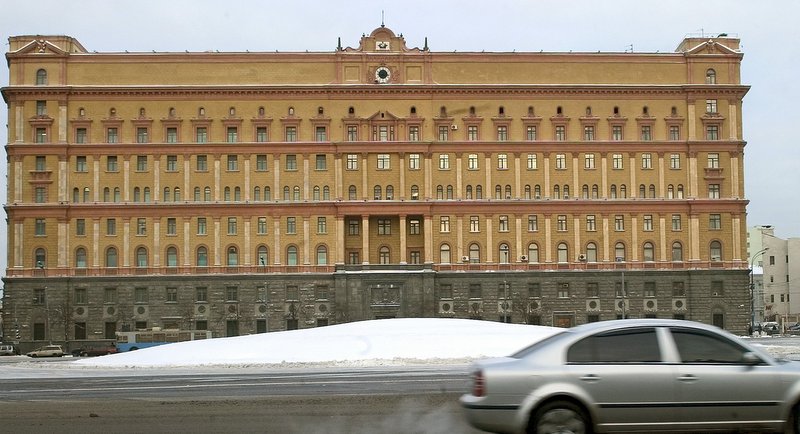
Source: Getty
By refusing to open the archives of the interrogation of Raoul Wallenberg, the Russian intelligence service is proving that it aspires to be the heir of Stalin’s NKVD.
The mystery surrounding the death of Swedish diplomat Raoul Wallenberg in Moscow in 1947 may not be solved even seventy years on. Last month, a Moscow court dismissed a lawsuit in which Wallenberg’s niece Marie Dupuy sought to obtain documents regarding the circumstances of his death. The court agreed with Russia’s domestic intelligence service, the FSB, that the petition should be denied under the pretense of “privacy” and “lack of legal jurisdiction.”
The verdict, of course, is ludicrous. It demonstrates a modern Russian state still refusing to come to terms with its troubling Stalinist legacy. If the FSB—heir of the KGB and the Stalinist NKVD—bears no responsibility for Stalin’s crimes, why won’t it disclose the whole truth in this high-profile case? Instead, the security services use the cloak of secrecy to mask the country’s shameful history and uphold a morally compromised system.
Raoul Wallenberg was a Swedish diplomat who famously saved thousands of Hungarian Jews during World War II. After the Red Army entered Budapest, the Soviet counterintelligence agency, SMERSH, arrested him on suspicion of espionage for either the Germans or the Americans—perhaps even for being a double agent. When it became evident that Wallenberg presented no value for the intelligence services, the NKVD decided to eliminate him.
A medical report dated July 17, 1947, was eventually made public. The official cause of death was listed as a heart attack, and an attached note read “body to be cremated without an autopsy.”
Yet another version of the diplomat’s death, corroborated by multiple independent sources, suggests that he was in fact murdered.
In recently published memoirs, former KGB chief Ivan Serov claims that Wallenberg was killed on orders from Minister of State Security Viktor Abakumov in 1947. “When questioned, Abakumov recalled Wallenberg’s case in particular and cited direct orders from Stalin and Molotov. Likewise, the director of Lubyanka’s Laboratory 1, Grigory Mairanovsky, confirmed that there were a number of foreign citizens poisoned in the two years around Wallenberg’s death.”
Serov also recalls that he discussed the case with Stalin’s successor Nikita Khrushchev, who listened carefully and then said, “These scoundrels Stalin, Molotov, and Vyshinsky stirred up this damn mess, and now we’re the ones dealing with this crap.”
After Serov’s book was published, Wallenberg’s relatives requested further transcripts of Abakumov’s interrogation. Yet the FSB refused to provide the documents, and the court has now supported its position. The security service claimed that the documents contained sensitive and private information about third parties. They further argued that the FSB is not the NKVD’s legal successor, and thus is not obligated to furnish Wallenberg’s documents.
The way the FSB has handled this case demonstrates it actually to be a worthy successor to the NKVD, MGB, and KGB. The present-day security service has treated the Wallenberg case no differently than its predecessors who concealed the diplomat’s death for decades and covered up Stalin’s atrocities. The cover-up drove Wallenberg’s mother and stepfather to suicide. That culture of secrecy has cast a pall over Russia’s relations with Sweden for decades.
The gravity of these allegations cannot be overstated. This isn’t a case about someone’s private life but evidence of the state abusing its own citizens and foreign nationals. These are real histories of the Stalinist regime and its mass murder machine—subjects about which there can be no moral ambiguity.
A modicum of transparency would reflect well on the current Russian regime and separate it from the legacy of the Stalin regime. But a case like this suggests that Russia’s current rulers are not so different from their predecessors after all. Today’s elites in Russia seemingly aspire to live like the oligarch Roman Abramovich but also to rule like Stalin.
From Stalinist times the Russian authorities have inherited the notion that secrecy is a powerful weapon that must be defended as fiercely as the idea of “sovereignty.” Even if, as in this case, secrecy means defending long-dead interrogators whose names do not even figure in the archival documents—and keeping hidden the truth about the death of a man who is honored for his heroism in every country of the world except Russia.
This article originally appeared in Russian in Moskovskiy Komsomolets.
Former Senior Fellow, Carnegie Russia Eurasia Center
Kolesnikov was a senior fellow at the Carnegie Russia Eurasia Center.
Recent Work
Andrei Kolesnikov
Andrei Kolesnikov
Carnegie does not take institutional positions on public policy issues; the views represented herein are those of the author(s) and do not necessarily reflect the views of Carnegie, its staff, or its trustees.

The armed forces champion a form of capitalism that is generating revenue, but its reliance on rent faces diminishing returns, leaving the country with massive sunk costs and deferred returns, deepening dependency on external borrowing.

Yezid Sayigh
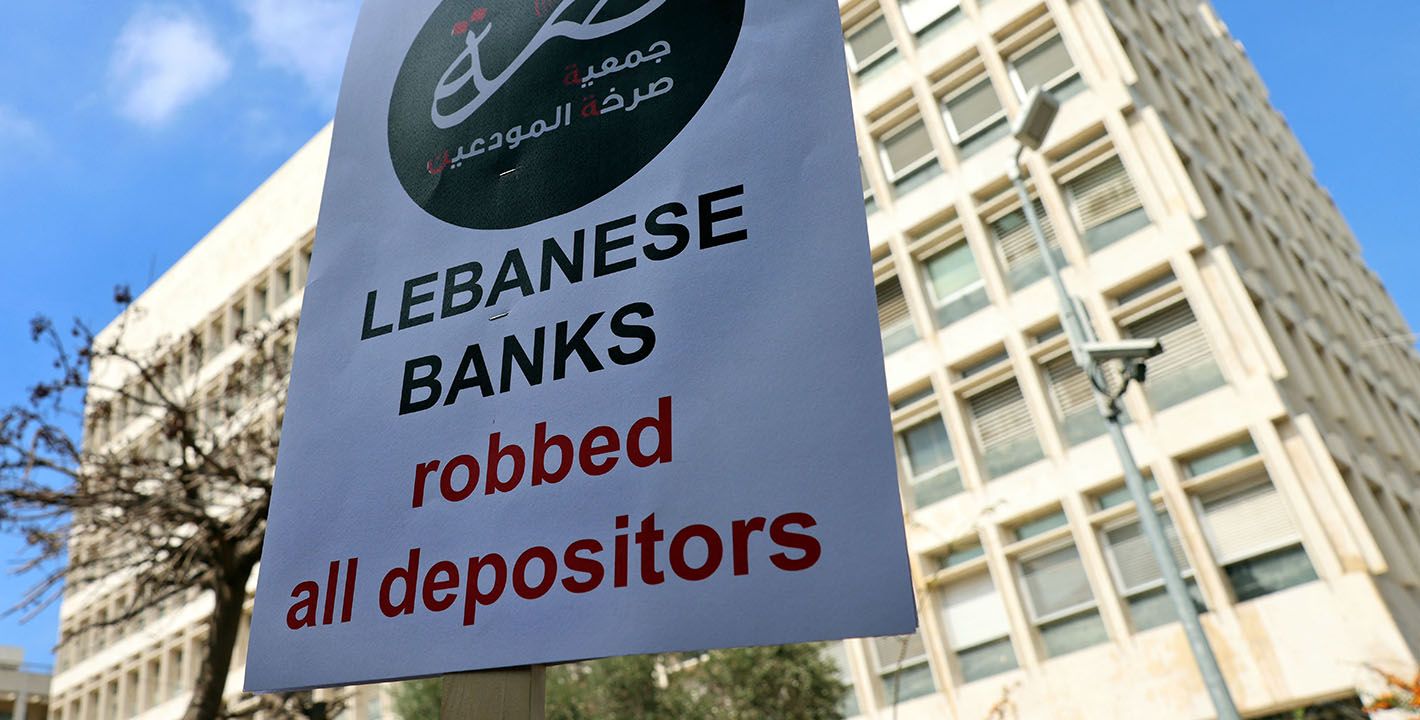
In an interview, Ishac Diwan looks at the merits and flaws in the draft legislation distributing losses from the financial collapse.

Michael Young

Mustaqbal Misr has expanded its portfolio with remarkable speed, but a lack of transparency remains.
Yezid Sayigh

Arab diaspora business communities in Egypt often mirror the same systemic challenges facing Egyptian businesses.
Nur Arafeh, Yezid Sayigh, Qaboul al-Absi, …

Largely characterized thus far by a single-minded focus on extractivism, Riyadh must commit to greater equitability in its approach to investment and development deals with Sudan, Ethiopia, and Eritrea.

Hesham Alghannam