Source: Indian Express
After decades, Gujarat is back to caste politics. In the 1980s, it was the first state to see violent protests against caste-based reservations after Madhavsinh Solanki introduced new quotas, first for Dalits and then OBCs. From the 1990s onwards, the rise of Hindutva politics blurred caste identities, and in the 2000s, communal polarisation further accentuated this process. In the early 2010s, a class-based sense of belongingness asserted itself at the expense of caste, evident from the way Narendra Modi promoted the notion of the “neo-middle class” in the 2012 election campaign. This idea, which referred to the emergence of a new, aspirational category has disappeared from the BJP discourse — much like the correlative concept of the “Gujarat model”.
Certainly, religious polarisation remains the order of the day, as seen from the minuscule number of Muslim candidates: As in 2007 and 2012, the BJP has not nominated any in 2017, while the Congress has given tickets to only six Muslims (out of 182 candidates) — the same number as in 2007 and down one from 2012, when it had nominated seven Muslim candidates. But caste politics is back, although not necessarily in the sense one would expect.
While the equation that Hardik Patel has developed with the Congress suggests that the grand old party is aligning itself with the largest dominant caste of Gujarat, the BJP has nominated more candidates from this community: Twenty-eight per cent against 24 per cent on the list of the Congress, which has nominated just a few more Patel candidates in 2017 than in 2012 (43 against 39). The BJP has distributed four less tickets to Patel candidates compared to 2012, cutting down the distribution of tickets to Patel candidates by half in South Gujarat.
The Congress is not playing the Patel card as much as the election campaign and media coverage would suggest. It remains more generous to OBCs, to whom it has given 38.5 per cent of its tickets — almost twice the number in 2012. The Congress is promoting OBC representation at the expense of the upper castes, which represent only 10 per cent of its candidates, against 25 per cent in 2012.
The BJP is also chasing the OBC vote, although to a lesser extent than the Congress. The latter’s number of OBC candidates has increased from 20 per cent to 30 per cent. Three castes make up for 70 per cent of the tickets distributed to OBCs: Kolis, Kshatriyas and Thakores. The BJP has favoured the first two groups more (respectively 10 per cent and 7 per cent of its candidates) while the Congress has given more space to Thakores than its rival (respectively 11.5 per cent, 7 per cent and 7 per cent of its candidates). For both parties, 61 per cent of these OBC candidates are running in rural constituencies. Ironically, observers focus on urban or semi-urban Patels when the two parties clearly consider rural OBCs as key targets.
The October Lokniti-CSDS survey showed that, while both parties were credited with 43 per cent of the valid votes, the BJP came first among upper castes and Kolis, whereas the Congress was ahead of the BJP among Patels, Kshatriyas, Dalits, Adivasis and Muslims. This medley of castes looks like a remake of the KHAM coalition of the 1980s, plus some Patels.
Indeed, caste politics is not obliterating other variables for good, or completely: Class continues to play a role. If the “neo-middle class” seems to be an idea of the past, the urban/rural divide remains salient, particularly in the context of the agrarian crisis: While 41 per cent of non-farmers may vote for the BJP according to the Lokniti-CSDS survey, 51 per cent of the farmers intend to do so.
A close look at both parties’ candidates reveals other aspects of electoral politics in Gujarat. First, the phenomenon of turncoats persists, but only to the benefit of the BJP, which is fielding 11 incumbent Congress MLAs. Congress turncoats include the two sitting MLAs from Somnath and Godhra, Jashabhai Barad and C.K. Raulji. The discontent that is reported to have swept across the state against the BJP does not seem to have extended to its own representatives.
Second, the BJP has retained most of its sitting MLAs, while the Congress is fielding more fresh faces. This is a reversal of sorts as the BJP is traditionally more inclined to discard incumbent MLAs — usually half — to avoid local anti-incumbency and maintain discipline within its ranks. This time, as in 2012, it has retained 68 per cent of its MLAs (79 tickets). The Congress, on the other hand, has either discarded or lost half of its 61 MLAs, mainly as a result of changing caste equations. This situation bears two risks for the Congress. First, it is fielding many inexperienced candidates little known to the public. Out of 181 candidates — including its ally, the BTP — 121 are contesting for the first time, against 76 for the BJP. Most of these new candidates were selected at the last moment, which has given them scant time to campaign.
The second risk is having many disgruntled sitting MLAs re-running on different tickets. In 2007 and 2012, 15 sitting Congress MLAs ran either on different party tickets, or as independents. These candidates cut into the Congress’ local vote base and in 2012 potentially cost the party as many as 10 seats.
Finally, both the Congress and BJP have fielded fewer women candidates, compared to previous years: 21 in all — 9 for the Congress and 12 for the BJP — against 36 and 33 in 2007 and 2012. In times of uncertainty, parties tend to be more risk-averse when it comes to distributing tickets to women contenders, as they are perceived to be less effective than their male counterparts.
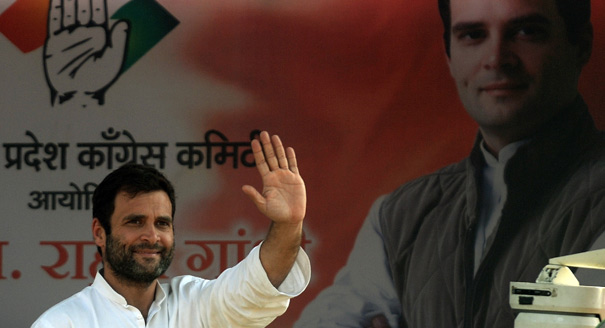
The caste analysis of candidates bears no predictive value as far as the outcome is concerned, but it enables us to understand how parties read the electorate. It reveals the kind of signals they seek to send to voters. Both the Congress and BJP have adapted their strategies to a new reading of politics in Gujarat. As a result, the differences between the two parties in terms of electoral strategy are more flimsy than in previous elections. If, locally, the candidates appear as relatively undifferentiated, it puts the accent of the election even more on the battle of leadership, that is, between the PM contesting in his home state and the newly elected Congress president, who may be seen as an outsider.
This article was originally published in the Indian Express.