

Commentary
Peter Kellner
{
  "authors": [
    "Peter Kellner"
  ],
  "type": "legacyinthemedia",
  "centerAffiliationAll": "dc",
  "centers": [
    "Carnegie Endowment for International Peace",
    "Carnegie Europe"
  ],
  "collections": [
    "EU Integration and Enlargement",
    "Brexit and UK Politics"
  ],
  "englishNewsletterAll": "ctw",
  "nonEnglishNewsletterAll": "",
  "primaryCenter": "Carnegie Europe",
  "programAffiliation": "EP",
  "programs": [
    "Europe"
  ],
  "projects": [],
  "regions": [
    "Europe",
    "Western Europe",
    "United Kingdom",
    "Iran"
  ],
  "topics": [
    "EU"
  ]
}
Source: Getty
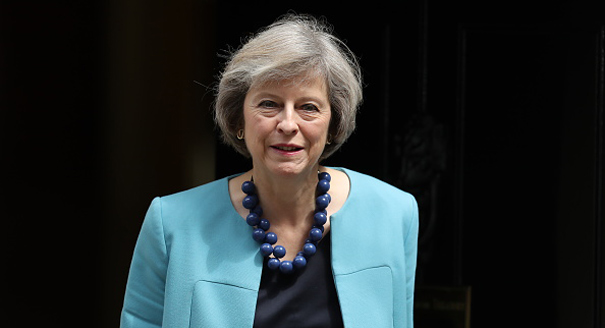
The UK prime minister has failed to present a compelling vision for post-Brexit Europe and remains indecisive about Britain’s future trade relationship with the EU.
Source: Axios
In her address last Friday about Britain’s impending withdrawal from the European Union, Prime Minister Theresa May failed to present a compelling vision for post-Brexit Europe. To lay the groundwork for trade negotiations in Brussels, the speech needed to meet three objectives but accomplished one at most.
May’s goals:May failed to meet either of her last objectives. On the economy, she expressed her desire for “frictionless” trade with the EU, but rejected the existing means that EU members currently use to achieve this. In a further display of indecision, May dropped her support of “binding commitments” to EU rules, which implies legally enforceable arrangements, opting instead for “strong” commitments, which implies no such thing. Discussion of the UK’s larger objectives was similarly muddled.
What’s next: The U.K. is due to leave the EU next March. To meet that deadline, members must agree to a deal by October. Since the EU insists that at least six months are needed to sort out the economic, technical and legal issues (still an optimistic time frame), that leaves only one month before negotiations must begin.

Former Nonresident Scholar, Carnegie Europe
Kellner was a nonresident scholar at Carnegie Europe, where his research focused on Brexit, populism, and electoral democracy.
Recent Work
Peter Kellner
Peter Kellner
Carnegie does not take institutional positions on public policy issues; the views represented herein are those of the author(s) and do not necessarily reflect the views of Carnegie, its staff, or its trustees.

As the U.S. stumbles in its war with Iran, we are likely to see an acceleration of its disengagement from the region.

Michael Young

Middle Eastern states should welcome an accelerated U.S. disengagement from their region.
Michael Young

In an interview, former ambassador Charles Freeman assesses the Trump administration’s war against Iran.
Michael Young

Morocco and Algeria, each in its own way, are having to navigate the global economic fallout of the U.S.-Israeli military campaign against Iran.

Yasmine Zarhloule

Following its deal with the United States, Iran may act against Iraq-based dissidents.
Wladimir van Wilgenburg