

Commentary
In an interview, Ian Lustick and Eli Clifton discuss their new book on why a prominent ally has so much influence in America.
Michael Young
{
  "authors": [
    "Richard Youngs",
    "Michael H. Smith"
  ],
  "type": "other",
  "centerAffiliationAll": "dc",
  "centers": [
    "Carnegie Endowment for International Peace",
    "Carnegie Europe"
  ],
  "collections": [
    "Democracy and Governance"
  ],
  "englishNewsletterAll": "ctw",
  "nonEnglishNewsletterAll": "",
  "primaryCenter": "Carnegie Europe",
  "programAffiliation": "EP",
  "programs": [
    "Europe"
  ],
  "projects": [],
  "regions": [
    "Europe",
    "Western Europe",
    "Iran"
  ],
  "topics": [
    "Foreign Policy",
    "Democracy"
  ]
}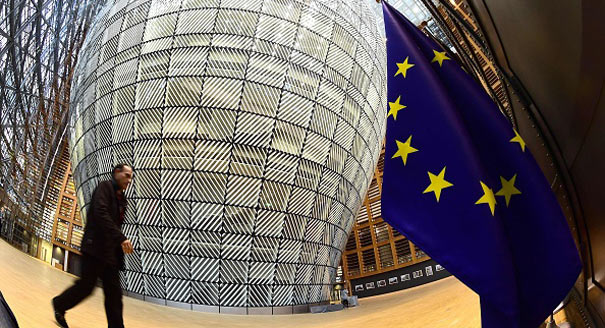
Source: Getty
The EU’s approaches to global order and international challenges are increasingly more selective.
Source: The International Spectator
The European Union has gained a reputation for being the strongest proponent and defender of the liberal global order. It is widely presumed that the EU defends liberal order almost reflexively, as part of its core identity and beyond rationalised cost-benefit calculation. This ostensibly involves firm support for multilateral institutions and norms; open markets and trade liberalisation; cooperative approaches to security; and human rights and democratic values. With the United States and other actors increasingly ambivalent towards the liberal global order, the EU’s commitment to these norms is of unprecedented importance. In some areas of policy, however, the EU’s record in defending the liberal order looks increasingly mixed. Compared to the other actors covered in this special issue, the EU’s trade, foreign and security policies are indeed relatively strongly imbued with liberal principles. Yet, in recent years the EU’s own approaches to global order and international challenges have adopted a more selective or contingent liberalism.
The 2016 EU Global Strategy (EUGS1) contains standard commitments to “rules-based order” but also gestures towards a more flexible or “principled pragmatism” in foreign policy. The strategy does not specify what this might mean in practice, although it does not talk of an especially thick form of liberal order. Instead of trying to second guess the meaning of the Global Strategy’s still largely unimplemented text, we look at actual EU policy changes and assess how ‘liberal’ these are in the way they approach concrete order-related challenges.
We demonstrate the shift to a more contingent liberalism by examining the EU’s recent record in relation to four different challenges: international trade; US leadership; Russian actions in the eastern neighbourhood; and security in the Middle East. We speculate on what this may portend for the EU’s self-identity, European interests and the integrity of the prevailing global order. . . .
This article was originally published by The International Spectator, vol 53, no. 1 (2018)

Senior Fellow, Democracy, Conflict, and Governance Program
Richard Youngs is a senior fellow in the Democracy, Conflict, and Governance Program, based at Carnegie Europe. He works on EU foreign policy and on issues of international democracy.
Michael H. Smith
Carnegie does not take institutional positions on public policy issues; the views represented herein are those of the author(s) and do not necessarily reflect the views of Carnegie, its staff, or its trustees.

In an interview, Ian Lustick and Eli Clifton discuss their new book on why a prominent ally has so much influence in America.

Michael Young

As the U.S. stumbles in its war with Iran, we are likely to see an acceleration of its disengagement from the region.
Michael Young

Middle Eastern states should welcome an accelerated U.S. disengagement from their region.
Michael Young

In an interview, former ambassador Charles Freeman assesses the Trump administration’s war against Iran.
Michael Young

By failing to address Palestinian representation, the current process is bound to lead to just another temporary arrangement.

Nathan J. Brown